Graphic and Digital Design
(BA, 4 Years)
Duration
4 years
Qualification Awarded
Bachelor of Arts in Graphic and Digital Design
Level of Qualification
Bachelor Degree (1st Cycle)
Language of Instruction
English
Mode of Study
Full-time or Part-time
Minimum ECTs Credits
240
Apply Today
Graphic and Digital Design (BA, 4 Years)
| Duration | 4 years |
| Qualification Awarded | Bachelor of Arts in Graphic and Digital Design |
| Level of Qualification | Bachelor Degree (1st Cycle) |
| Language of Instruction | English |
| Mode of Study | Full-time and Part-time |
| Minimum ECTS Credits | 240 |
Apply Today
Profile of the Programme
Graphic design and visual communication are evolving rapidly in response to continuous technological advancements and the increasing use of digital media. Visual communication shapes how we interact with brands, media, technology, and culture. In today’s digital world, designers must combine creative thinking, critical analysis and technical expertise to communicate ideas effectively in print and across a variety of platforms, digital interfaces, social media and emerging interactive technologies.
The Graphic and Digital Design programme is designed to develop students’ creative, analytical, and professional skills. Spanning typography, branding, information design, motion graphics, UI/UX design, the programme courses teach students to research, conceptualise, and produce innovative design solutions for real-world communication challenges. It also emphasises the responsible and critical use of AI tools within design practices.
The programme fosters critical thinking, problem solving, research, visual investigation, and the effective use of industry-standard software and technologies. Students develop strong communication, collaboration, and professional practice skills. They graduate with a strong professional portfolio reflecting contemporary design standards, and an awareness of social, cultural, and ethical contexts.
Career Prospects
Our BA offers excellent career prospects for aspiring professional typographers and graphic designers, photographers, illustrators, and digital designers. Graduates can pursue careers in publishing (magazines, books, academic, electronic media), information design, corporate identity and branding, advertising design, digital and online media, and work as designers or design advisors for museums, galleries, cultural institutions, technology companies, and UX/UI studios. They can also specialise in motion design, AI-assisted creative production, and digital content strategy. Many of our graduates also pursue careers in information management, research and teaching.
Some of our graduates have worked for the following companies in Cyprus and abroad: Better Collective (DK), Appway (Switzerland), TEDxZurich (Switzerland), Aga Khan University (Pakistan), Bazelevs Group (Russia), dunnhumby (Global Customer Data Science Company, UK), TBWA\Entelia (CY), Orb Communications, Top FX Global (CY), Investotech (CY), Pissis Ltd (CY), Wargaming (CY), NETinfo PLC (CY), Cardet (CY), GAP Vassilopoulos Group (CY), Medochemie (CY), University of Nicosia Department of Design & Multimedia (CY), iSignthis Ltd (CY), etc.
Access to Further Studies
Graduates of the programme can be accepted into Second Cycle degrees (Master’s Degree).
The programme admits students in both the Fall and Spring semesters. Applications will be considered only from candidates who fulfil the minimum entrance criteria, as described below:
Academic Admission
- The minimum requirement for admission to an undergraduate programme of study is a recognised High School Leaving Certificate (HSLC) or an equivalent internationally recognised qualification. Students with an HSLC grade below 7.5/10 or 15/20 (or equivalent, depending on the country’s grading system) receive additional academic support and monitoring during their first year.
- In addition to a strong academic record, we also consider the student’s involvement in extracurricular activities, leadership skills and other relevant information.
Portfolio and Interview
Applicants are expected to submit a portfolio of art/design/multimedia work, ideally in both digital and physical form.
The portfolio will be presented by the applicant during an interview, which may be conducted online and will be arranged by the University of Nicosia. The Department’s admissions panel will assess the portfolio. The interview will be a discussion about the applicant’s range of skills and interests, focusing on their graphic and/or multimedia design, arts, or related areas portfolio.
The interview and portfolio review is a two-way process and assesses students’ skills and interests; students are given the opportunity to ask questions about the programme and the Department and to view the facilities.
Students without a portfolio will be considered based on their individual merits. In exceptional circumstances, candidates who do not satisfy the academic requirements may be admitted to the programme based on the quality of their portfolio.
English Language Proficiency
The list below provides the minimum English Language Requirements (ELR) for enrollment to the programme of study. Students who do not possess any of the qualifications or stipulated grades listed below and hold IELTS with 4.5 and above, are required to take UNIC’s NEPTON English Placement Test (with no charge) and will receive English Language support classes.
- TOEFL – 525 and above
- Computer-based TOEFL – 193 and above
- Internet-based TOEFL – 80 and above
- IELTS – 6 and above
- Cambridge Exams [First Certificate] – B and above
- Cambridge Exams [Proficiency Certificate] – C and above
- GCSE English Language “O” Level – C and above
- Michigan Examination of Proficiency in English (CaMLA) – Pass
- Pearson PTE General – Level 3 and above
- KPG (The Greek Foreign Language Examinations for the State Certificate of Language Proficiency) – Level B2 and above
- Anglia – Level B2 and above
- IEB Advances Programme English – Pass
Examination for the Certificate of Proficiency in English (ECPE) Michigan Language Assessment by: Cambridge Assessment English & University of Michigan – 650 average score for ALL skills and above
Students’ progress is assessed continuously throughout the semester using various methods and techniques based on the Learning Outcomes and Objectives of the course.
Assessment Criteria: At the beginning of the semester, lecturers provide assessment criteria for both practical and theoretical courses.
Continuous feedback: Students are assessed and receive comprehensive feedback on their performance through formative or summative assessment methods. They also have the opportunity to raise any concerns with their instructors and/or Academic Advisors.
Final assessments for each course are conducted through a system of co-assessment and double grading. In the final year, assessments may also be carried out by a grading panel composed of lecturers teaching on the programme.
The student must complete 240 ECTS credits and all programme requirements.
A minimum cumulative grade point average (CPA) of 2.0 is required. Therefore, although a D- is a PASS grade, an average grade of ‘C’ is required to achieve a CPA of 2.0.
Upon successful completion of this programme, the students should be able to:
- Critically discuss concepts, principles and theories relating to the history and theory of the broad field of visual
- Employ the fundamental design principles and theories that underpin the implementation of different projects in areas such as: advertising and social media design, brand identity design, information design, packaging and sustainable design, publications design, typography and type design, art and illustration for graphic design, motion graphic design, UI/UX design, 3D design and modelling, generative AI design, and print production.
- Apply a range of critical enquiry and visual investigation strategies in order to evaluate problems and develop innovative design
- Design and execute an independent research project from the problem recognition stage through to the evaluation and appraisal of
- Create design work to a professional standard utilising software tools and emerging technologies, including generative AI, by taking into consideration the production constraints discussed in the
- Organise a portfolio of work that demonstrates their skills and competences and corresponds to the quality standards of the international and European graphic design
- Operate effectively in an interdisciplinary team applying the interpersonal skills acquired through the programme’s practical
- Explain their work in oral and written form using the appropriate terminology in the subject
- Identify the details of the business functions in the graphic design environment such as marketing, costing, and estimating.
- Appraise their role within a wider community and the potential of their skills to benefit people with special needs and to address broader social issues, including accessibility and inclusive design practice.
Section: A Major Requirements
ECTS: Min. 180 Max. 180
| Course ID | Course Title | ECTS Credits |
|---|---|---|
| ART-135 | Fundamentals of Drawing | 6 |
| ART-171 | History of Art | 6 |
| ART-290 | Figure Drawing | 6 |
| BIMA-160 | Introduction to Interactive Media and Animation | 6 |
| BIMA-164 | Creative Coding | 6 |
| BIMA-250 | Storyboarding and 2D Animation | 6 |
| BIMA-360 | User Interface (UI) and Spatial Design | 6 |
| BIMA-366 | User Experience (UX) Design | 6 |
| BIMA-367 | Generative Artificial Intelligence (AI) | 6 |
| GDES-116 | Fundamentals of 2D Design | 6 |
| GDES-126 | Typography I | 6 |
| GDES-136 | Typography II | 6 |
| GDES-156 | Creative Thinking in 3D Design | 6 |
| GDES-176 | Photography I | 6 |
| GDES-206 | Design for Branding | 6 |
| GDES-226 | Digital Imagemaking | 6 |
| GDES-256 | Editorial Design | 6 |
| GDES-266 | Photography in the Digital World | 6 |
| GDES-276 | Illustration | 6 |
| GDES-286 | Production Methods for Graphic Design | 6 |
| GDES-326 | Packaging Design | 6 |
| GDES-346 | Design for Social and Commercial Advertising | 6 |
| GDES-356 | Design for Publishing | 6 |
| GDES-366 | Information Design | 6 |
| GDES-376 | Visual Literacy | 6 |
| GDES-436 | Final Year Project I: Research | 6 |
| GDES-446 | History of Graphic Design | 6 |
| GDES-466 | Advanced Screen Typography | 6 |
| GDES-476 | Design for Impact | 6 |
| GDES-486 | Final Year Project II: Dissertation | 6 |
Section: B Major Electives
ECTS: Min. 18 Max. 42
| Course ID | Course Title | ECTS Credits |
|---|---|---|
| ART-110 | Introduction to Visual Arts | 6 |
| ART-180 | Process and Project Based Art Practice | 6 |
| ART-195 | Drawing II | 6 |
| ART-230 | Modern and Contemporary Art | 6 |
| ART-251 | Printmaking | 6 |
| BIMA-161 | Interactive Design for Social Media | 6 |
| BIMA-260 | Animation Overview and Studio Practice | 6 |
| BIMA-265 | Motion Graphics | 6 |
| BIMA-361 | 3D Modelling and Animation | 6 |
| COMM-117 | Video Production | 6 |
| GDES-106 | Design for Communication | 6 |
| GDES-386 | Photography II | 6 |
| GDES-426 | Graphic Design Work Placement | 6 |
| GDES-456 | Negotiated Project | 6 |
Section: C Language Expression
ECTS: Min. 6 Max. 12
Notes: Placement in English courses is done on the basis of a Placement Test or tests such as TOEFL or GCE.
| Course ID | Course Title | ECTS Credits |
|---|---|---|
| BADM-231 | Business Communications | 6 |
| BADM-332 | Technical Writing and Research | 6 |
| BENG-100 | College English | 6 |
| COMM-200 | Business and Professional Communication | 6 |
| ENGL-100 | Basic Writing | 6 |
| ENGL-101 | English Composition | 6 |
Section: D Marketing Electives
ECTS: Min. 0 Max. 6
| Course ID | Course Title | ECTS Credits |
|---|---|---|
| MKTG-291 | Marketing | 6 |
Section: E Humanities and Social Sciences Electives
ECTS: Min. 6 Max. 12
Notes: Or any EUS, FREN, GERM, ITAL, PSY, RUS, SOC, SPAN, TURK, GREK, HIST, PHIL courses
Semester 1
| Course ID | Course Title | ECTS Credits |
|---|---|---|
| ART-135 | Fundamentals of Drawing | 6 |
| DES-116 | Fundamentals of 2D Design | 6 |
| DES-260 | Photography I | 6 |
| MULT-160 | Introduction to Multimedia | 6 |
| ENGL-101 | English Composition | 6 |
Semester 2
| Course ID | Course Title | ECTS Credits |
|---|---|---|
| ART-281 | History of Art | 6 |
| DES-126 | Introduction to Typography | 6 |
| DES-156 | Fundamentals of 3D Design | 6 |
| MULT-161 | Interactive Design for Social Media | 6 |
| ART-180 | Process and Project Based Art Practice | 6 |
Semester 3
| Course ID | Course Title | ECTS Credits |
|---|---|---|
| DES-206 | Graphic Design | 6 |
| DES-226 | Digital Imaging | 6 |
| DES-236 | Typography and Graphic Communication | 6 |
| MULT-250 | Storyboarding and 2D Animation | 6 |
| COMM-117 | Video Production | 6 |
Semester 4
| Course ID | Course Title | ECTS Credits |
|---|---|---|
| ART-290 | Figure Drawing | 6 |
| DES-256 | Editorial Design | 6 |
| DES-286 | Production Methods for Graphic Design | 6 |
| DES-262 | Photography in the Digital World | 6 |
| MULT-164 | Programming Principles | 6 |
Semester 5
| Course ID | Course Title | ECTS Credits |
|---|---|---|
| DES-326 | Design for Packaging | 6 |
| DES-356 | Publishing | 6 |
| DES-306 | Illustration | 6 |
| MULT-360 | Interface Design and Development | 6 |
| COMM-200 | Business and Professional Communication | 6 |
Semester 6
| Course ID | Course Title | ECTS Credits |
|---|---|---|
| DES-346 | Graphic Design for Social and Commercial Advertising | 6 |
| DES-366 | Information Design | 6 |
| DES-376 | Visual Literacy | 6 |
| DES-270A | Photography II | 6 |
| PSY-110 | General Psychology I | 6 |
Semester 7
| Course ID | Course Title | ECTS Credits |
|---|---|---|
| DES-436 | Research Methodologies in Design | 6 |
| DES-446 | History of Graphic Communication | 6 |
| DES-426 | Graphic Design Work Placement | 6 |
| MULT-361 | 3D Modeling and Animation | 6 |
| MKTG-291 | Marketing | 6 |
Semester 8
| Course ID | Course Title | ECTS Credits |
|---|---|---|
| DES-456 | Negotiated Project in Graphic Design | 6 |
| DES-466 | Advanced Screen Typography | 6 |
| DES-486 | Graphic Communication Final Project | 6 |
| ART-251 | Printmaking | 6 |
| PHIL-120 | Ethics | 6 |
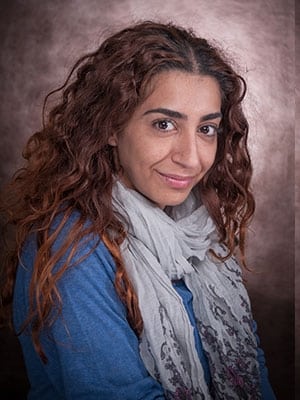


Dr Chris Christou
Associate Head of Department
Associate Professor
Department of Design & Multimedia
School of Humanities and Social Sciences


Professor Klimis Mastoridis
Dean of the School of Humanities and Social Sciences
Professor
Department of Design & Multimedia
School of Humanities and Social Sciences
Member of the Senate

Professor Paschalis Paschali
Head of Department
Professor
Department of Design & Multimedia
School of Humanities and Social Sciences

Dr Nicos Philippou
Head of Department
Lecturer
Department of Communications , School of Humanities and Social Sciences





Mr Ioannis Hadjipanayis
Art and Design Technical Officer

Ms Christalla Kyriacou
Adjunct Faculty

Dr Haris Pellapaisiotis
Adjunct Faculty

Mr Andreas Tomblin
Adjunct Faculty