Pharmacy
(MPharm, Integrated Master, 5 Years)
Duration
5 years
Qualification Awarded
Master of Pharmacy, Integrated Degree
Level of Qualification
Integrated Master (2nd Cycle)
Language of Instruction
English and Greek
Mode of Study
Full-time or Part-time
Minimum ECTs Credits
300
Apply Today
Pharmacy (MPharm, Integrated Master, 5 Years)
| Duration | 5 years |
| Qualification Awarded | Master of Pharmacy, Integrated Degree |
| Level of Qualification | Integrated Master (2nd Cycle) |
| Language of Instruction | English and Greek |
| Mode of Study | Full-time |
| Minimum ECTS Credits | 300 |
Apply Today
Profile of the Programme
Program’s purpose and objectives:
UNIC Pharmacy Programme is dedicated to the education of pharmacy scientists who can deliver high-quality, evidence-based, interprofessional, person-centred pharmaceutical care and advance centred pharmaceutical care and advance public health services.
The Pharmacy Program is recognized as a pioneer in educating Pharmacists in Cyprus and is known for its academic excellence and its iinnovative leadership. The programs’ graduates are be highly visible locally and nationally and engaged in advancing the profession of pharmacy.
More specifically, Pharmacy Program aims to:
- educate future pharmacists and researchers
- be an incubator of future leaders in transforming the pharmacy profession
- acquisition of professional rights of a Pharmacist according to Directive 2005/36/EC and Directive 2013/55/EU
- be recognised nationally and internationally as a leader in improving medication outcomes and pharmacy education research &
- establish relationships with key individuals and organisations to improve the quality use of medicines and health outcomes.
- provide quality research and education that can add to the quality of life of members of the community.
- attract strong candidates
- contribute to the advancement of the profession of pharmacy through advanced pharmacy practice, organisational involvement, and to provide scholarly contributions to the profession.
- achieve excellence in didactic, experiential education as showed by our students’ ability in translating basic science knowledge into clinical applications and in providing comprehensive pharmacist-delivered patient-centered care
- be consistently ranked among the top schools of pharmacy
- share expertise with the pharmaceutical and health– care industries and contribute to local and international professional or scientific organizations and committees.
- demonstrate a high level of understanding in all pharmacy disciplines including pharmaceutical technology, pharmacognosy, pharmacology, toxicology, medicinal chemistry, physics, and practice-based calculations (numeracy evaluation) relevant to pharmaceutical sciences, pharmacokinetics, therapeutics, and pharmacy practice including pharmaceutical care, public health, pharmacoepidemiology, social pharmacy and pharmacoeconomics
- evidenced by students’ proficiency in translating basic science knowledge into clinical applications and in providing comprehensive pharmacist-delivered personed-centered care
- support sustainable development goals (SDGs) by innovating practices to enhance global health equality and equity, and access to medications
- focus on reducing health inequalities and promoting inclusive health care solutions as well as to minimize environmental impact
The curriculum meets the academic and scientific requirements for the award of an integrated master, in accordance with the National Qualifications Framework since:
- It has a duration of ten (10) academic semesters
- The programme includes courses that ensure:
- Fundamental knowledge forming a strong academic background.
- Developing core courses, fully covering the discipline’s subject matter.
- Deepening and consolidating knowledge at an advanced level, enabling the acquisition of expertise in the field.
- Includes Compulsory Diploma Thesis:
- The program requires the completion of a thesis, which is one (1) academic semester in length. Through this thesis, the student demonstrates his/her ability to apply the acquired knowledge to a high-level research or practical project.
Career and Employability Prospects
Pharmacists in the EU are one of the six professions granted automatic recognition of qualifications under the Directive on the Recognition of Professional Qualifications [Directive 2013/55/EU]. No other health professionals have so much of their education devoted to medicinal products. On the other hand community pharmacist is recognised as a primary health care services provider.
As public and international interest on medicinal products and primary care grows rapidly, career opportunities for drug and healthcare products experts are expanding every year.
Pharmacists are highly trained professionals who participate in the R&D process, prepare and dispense medication to customers and patients.
The programme provides pharmacy students and graduates with a sound and balanced grounding in the natural, pharmaceutical and healthcare sciences that provide the essential foundation for pharmacy practice in a multi-professional healthcare delivery environment.
Pharmacists provide their services in a variety of settings in response to a dynamic and evolving set of primarily local health care priorities and needs.
There are five major sectors of employment:
- Community Pharmacy
- Hospital Pharmacy
- Primary Care Pharmacy
- Industrial Pharmacy & Regulatory Affairs
- Research and Development
Access to Further Studies
Graduates of the programme can be accepted into Third Cycle degrees (Doctoral Degree)
Academic Admission
The programme admits students in the Fall and Spring semesters. Applications for admission to the programme will be considered only from candidates that fulfill the minimum entrance criteria as described below:
- 17/20 at high school leaving certificate and 17/20 in Chemistry and Biology (subjects of choice) οr equivalent grades
OR
- 17/20 High School leaving certificate and GCE A ‘Level (or IAL) in Chemistry and Biology with Grade B or equivalent grades
OR
- Assessment of knowledge level in Chemistry and/or Biology for candidates with at least 15/20 or equivalent grades in Chemistry and Biology.
OR
Upon successful completion of the foundation semester where students must take four courses (Introduction to Organic and Biological Chemistry (IMPH-020), Elements of Biology (IMPH-010), Physics for Pharmaceutical Sciences (IMPH-110) and Pharmacy Calculus (IMPH-107) for candidates with grades lower than 15/20 and higher than 13/20 in Chemistry and Biology. Candidates must succeed grades no lower than 75% in all courses.
Graduates from other related fields like Chemistry, Medicine, Veterinary, Biology, Nursing etc can be admitted to the program. Evaluation for credit transfer is performed on a case by case basis. The maximum credits which can be transferred cannot exceed 150 ECTS. Same rule applies to Pharmacy transfer students from other accredited and recognised University.
The admissions process includes an interview with the candidate.
Course assessment usually comprises of a comprehensive final exam and continuous assessment. Continuous assessment can include amongst others, mid-terms, projects, laboratory reports, lab exams, quizzes, Objective Structured Clinical Examination (OSCE).
Letter grades are calculated based on the weight of the final exam and the continuous assessment and the actual numerical marks obtained in these two assessment components. Based on the course grades the student’s semester grade point average (GPA) and cumulative point average (CPA) are calculated.
The student must complete 300 ECTS and all programme requirements.
A minimum cumulative grade point average (CPA) of 2.0 is required. Thus, although a ‘D-‘ is a PASS grade, in order to achieve a CPA of 2.0 an average grade of ‘C’ is required.
Upon completion of the program students will be able to:
- Understand comprehensive and current knowledge in the field of pharmacy through academic and practical experiences, enabling critical evaluation of relevant literature and adaptation to scientific and technological developments, including emerging technologies.
- Demonstrate a thorough understanding of pharmaceutical technology, pharmacognosy, pharmacology, toxicology, medicinal chemistry, physics, and calculations relevant to pharmaceutical sciences, therapeutics, clinical pharmacy practice, and pharmacokinetics.
- Understand and analyze the key stages in drug discovery, development, and authorisation, incorporating regulatory requirements across different jurisdictions.
- Explain drug actions and solve therapeutic problems as a medication expert
- Design preventive, interventions, and educational strategies to manage chronic diseases, promote public health and provide personalized support to patients for effective medication management and improved therapeutic outcomes
- Develop and conduct research within pharmaceutical science and clinical practice, focusing on basic science research and applied research, alongside analyzing, interpreting data, and evaluating therapeutic interventions
- Evaluate the safety and efficacy of therapeutic interventions, providing person-centered care as a medication expert
- Engage as active healthcare team members, develop collaborative practice and communication skills, with other healthcare professionals to provide comprehensive patient care and exchanging knowledge and experiences to solve complex health problems
- Collect and interpret subjective and objective evidence related to patients, medications, allergies/adverse reactions, and diseases through patient assessments, and report adverse drug reactions to the appropriate authorities
- Apply standards, guidelines, and best practices for the safe and effective preparation, control, and use of medications in both community and hospital pharmacy settings
- Demonstrate a commitment to the pharmacy profession through continual improvement and adherence to legal and ethical practices
- Understand the healthcare systems, policies, and socio-economic factors affecting access to healthcare.
- Integrate technology, including AI tools, in pharmacy with a clear understanding of ethical, legal, and professional implications.
Section: A Required Courses
ECTS: Min. 288 Max. 288
| Course ID | Course Title | ECTS Credits |
|---|---|---|
| IMPH-104 | Εισαγωγή στις Φαρμακευτικές Επιστήμες και στην Επαγγελματική Πρακτική | 6 |
| IMPH-107 | Υπολογισμοί στη Φαρμακευτική | 4 |
| IMPH-108 | Αναλυτική Χημεία | 5 |
| IMPH-110 | Φυσική για τις Φαρμακευτικές Επιστήμες | 3 |
| IMPH-111 | Ανατομία του Ανθρώπου | 5 |
| IMPH-112 | Φυσιολογία και Παθοφυσιολογία | 6 |
| IMPH-120 | Βιοχημεία και Μεταβολισμός | 6 |
| IMPH-122 | Κυτταρική Βιολογία | 6 |
| IMPH-123 | Μοριακή Βιολογία και Γενετική | 5 |
| IMPH-150 | Γενική και Ανόργανη Χημεία | 6 |
| IMPH-151 | Οργανική Χημεία | 6 |
| IMPH-160 | Επαγγελματικά Αγγλικά για Φαρμακοποιούς | 2 |
| IMPH-200 | Εισαγωγή στη Φαρμακευτική Πρακτική | 6 |
| IMPH-210 | Αρχές Φυσικοχημείας και Φυσικοφαρμακευτικής | 6 |
| IMPH-215 | Μοριακή και Βιοχημική Φαρμακολογία | 6 |
| IMPH-240 | Φαρμακευτική Χημεία I | 6 |
| IMPH-241 | Φαρμακευτική Χημεία ΙΙ | 6 |
| IMPH-250 | Φαρμακευτική Μικροβιολογία | 6 |
| IMPH-260 | Ανακάλυψη και Ανάπτυξη Φαρμάκων | 3 |
| IMPH-265 | Πρωτοβάθμια Φροντίδα στο Φαρμακείο | 6 |
| IMPH-270 | Ανοσολογία | 6 |
| IMPH-280 | Δημόσια Υγεία | 3 |
| IMPH-290 | Συνταγοτεχνία και Γαληνική Φαρμακευτική | 6 |
| IMPH-300 | Φαρμακευτική Τεχνολογία I | 6 |
| IMPH-305 | Φαρμακευτική Τεχνολογία ΙΙ | 6 |
| IMPH-320 | Φαρμακευτική Ανάλυση και Έλεγχος Ποιότητας Ι | 6 |
| IMPH-321 | Φαρμακευτική Ανάλυση και Έλεγχος Ποιότητας II | 6 |
| IMPH-340 | Φαρμακευτική Χημεία ΙΙΙ | 5 |
| IMPH-345 | Βιοφαρμακευτική | 6 |
| IMPH-360 | Φαρμακογνωσία και Χημεία Φυσικών Προϊόντων Ι | 6 |
| IMPH-361 | Φαρμακογνωσία και Χημεία Φυσικών Προϊόντων ΙI | 6 |
| IMPH-365 | Φαρμακολογία και Θεραπευτική Ι | 7 |
| IMPH-366 | Φαρμακολογία και Θεραπευτική ΙΙ | 6 |
| IMPH-400 | Φαρμακευτική Πρακτική Ι | 6 |
| IMPH-401 | Φαρμακευτική Πρακτική ΙI | 6 |
| IMPH-430 | Τοξικολογία | 6 |
| IMPH-445 | Φαρμακοκινητική | 5 |
| IMPH-450 | Φαρμακευτική Νομοθεσία, Επαγγελματική Ηθική και Φαρμακορρύθμιση | 6 |
| IMPH-451 | Βιοφαρμακευτική Τεχνολογία και Φαρμακογονιδιωματική | 5 |
| IMPH-455 | Φαρμακοεπαγρύπνηση και Φαρμακοεπιδημιολογία | 4 |
| IMPH-485 | Κοινωνική Φαρμακευτική | 6 |
| IMPH-490 | Μεθοδολογία στην Έρευνα | 4 |
| IMPH-510 | Διπλωματική Εργασία | 30 |
| IMPH-520 | Πρακτική Άσκηση | 30 |
Section: B Electives
ECTS: Min. 12 Max. 12
| Course ID | Course Title | ECTS Credits |
|---|---|---|
| IMPH-420 | Σχεδιασμός Φαρμάκων-Συνθετικές Προσεγγίσεις | 4 |
| IMPH-440 | Χημεία Τροφίμων και Συμπληρωμάτων Διατροφής | 4 |
| IMPH-460 | Θεραπευτική-Κλινική Φαρμακευτική | 4 |
| IMPH-465 | Κανόνες Ορθής Πρακτικής (GxPs) | 4 |
| IMPH-466 | Προηγμένα Συστήματα Χορήγησης Φαρμάκων | 4 |
| IMPH-470 | Καλλυντικά | 4 |
| IMPH-475 | Έλεγχος Ποιότητας | 4 |
| IMPH-480 | Διοίκηση Επιχειρήσεων και Φαρμακοοικονομικά | 4 |
| IMPH-486 | Βιοστατιστική | 4 |
| IMPH-495 | Κατάχρηση Φαρμάκων και Εξάρτηση | 4 |
| IMPH-496 | Προηγμένη Επικοινωνία για Επαγγελματίες Υγείας | 4 |
| IMPH-499 | Μακροβιότητα – Προηγμένη Γηριατρική Φαρμακοθεραπεία & Κλινική Πρακτική | 4 |
Section: C Unallocated Courses
ECTS: Min. 0 Max. 0
Semester 1
| Course ID | Course Title | ECTS Credits |
|---|---|---|
| IMPH-122 | Κυτταρική Βιολογία | 6 |
| IMPH-111 | Ανατομία του Ανθρώπου | 5 |
| IMPH-150 | Γενική και Ανόργανη Χημεία | 6 |
| IMPH-104 | Εισαγωγή στις Φαρμακευτικές Επιστήμες και στην Επαγγελματική Πρακτική | 6 |
| IMPH-107 | Υπολογισμοί στη Φαρμακευτική | 4 |
| IMPH-110 | Φυσική για τις Φαρμακευτικές Επιστήμες | 3 |
Semester 2
| Course ID | Course Title | ECTS Credits |
|---|---|---|
| IMPH-123 | Μοριακή Βιολογία και Γενετική | 5 |
| IMPH-112 | Φυσιολογία και Παθοφυσιολογία | 6 |
| IMPH-151 | Οργανική Χημεία | 6 |
| IMPH-120 | Βιοχημεία και Μεταβολισμός | 6 |
| IMPH-108 | Αναλυτική Χημεία | 5 |
| IMPH-160 | Επαγγελματικά Αγγλικά για Φαρμακοποιούς | 2 |
Semester 3
| Course ID | Course Title | ECTS Credits |
|---|---|---|
| IMPH-270 | Ανοσολογία | 6 |
| IMPH-200 | Εισαγωγή στη Φαρμακευτική Πρακτική | 6 |
| IMPH-240 | Φαρμακευτική Χημεία I | 6 |
| IMPH-210 | Αρχές Φυσικοχημείας και Φυσικοφαρμακευτικής | 6 |
| IMPH-250 | Φαρμακευτική Μικροβιολογία | 6 |
Semester 4
| Course ID | Course Title | ECTS Credits |
|---|---|---|
| IMPH-280 | Δημόσια Υγεία | 3 |
| IMPH-241 | Φαρμακευτική Χημεία ΙΙ | 6 |
| IMPH-265 | Πρωτοβάθμια Φροντίδα στο Φαρμακείο | 6 |
| IMPH-215 | Μοριακή και Βιοχημική Φαρμακολογία | 6 |
| IMPH-260 | Ανακάλυψη και Ανάπτυξη Φαρμάκων | 3 |
| IMPH-290 | Συνταγοτεχνία και Γαληνική Φαρμακευτική | 6 |
Semester 5
| Course ID | Course Title | ECTS Credits |
|---|---|---|
| IMPH-340 | Φαρμακευτική Χημεία ΙΙΙ | 5 |
| IMPH-300 | Φαρμακευτική Τεχνολογία I | 6 |
| IMPH-365 | Φαρμακολογία και Θεραπευτική Ι | 7 |
| IMPH-360 | Φαρμακογνωσία και Χημεία Φυσικών Προϊόντων Ι | 6 |
| IMPH-320 | Φαρμακευτική Ανάλυση και Έλεγχος Ποιότητας Ι | 6 |
Semester 6
| Course ID | Course Title | ECTS Credits |
|---|---|---|
| IMPH-345 | Βιοφαρμακευτική | 6 |
| IMPH-321 | Φαρμακευτική Ανάλυση και Έλεγχος Ποιότητας II | 6 |
| IMPH-361 | Φαρμακογνωσία και Χημεία Φυσικών Προϊόντων ΙI | 6 |
| IMPH-321 | Φαρμακευτική Ανάλυση και Έλεγχος Ποιότητας II | 6 |
| IMPH-305 | Φαρμακευτική Τεχνολογία ΙΙ | 6 |
| IMPH-366 | Φαρμακολογία και Θεραπευτική ΙΙ | 6 |
Semester 7
| Course ID | Course Title | ECTS Credits |
|---|---|---|
| IMPH-485 | Κοινωνική Φαρμακευτική | 6 |
| IMPH-400 | Φαρμακευτική Πρακτική Ι | 6 |
| IMPH-455 | Φαρμακοεπαγρύπνηση και Φαρμακοεπιδημιολογία | 4 |
| IMPH-445 | Φαρμακοκινητική | 5 |
| IMPH-451 | Βιοφαρμακευτική Τεχνολογία και Φαρμακογονιδιωματική | 5 |
Semester 8
| Course ID | Course Title | ECTS Credits |
|---|---|---|
| IMPH-401 | Φαρμακευτική Πρακτική ΙI | 6 |
| IMPH-430 | Τοξικολογία | 6 |
| IMPH-450 | Φαρμακευτική Νομοθεσία, Επαγγελματική Ηθική και Φαρμακορρύθμιση | 6 |
| IMPH-490 | Μεθοδολογία στην Έρευνα | 4 |
Semester 9
| Course ID | Course Title | ECTS Credits |
|---|---|---|
| IMPH-510 | Διπλωματική Εργασία | 30 |
Semester 10
| Course ID | Course Title | ECTS Credits |
|---|---|---|
| IMPH-520 | Πρακτική Άσκηση | 30 |
* Οι φοιτητές πρέπει να επιλέξουν 3 μαθήματα επιλογής / Students must choose 3 elective courses
The above semester breakdown is an indicative one. A few of the courses are electives and can be substituted by others. Students may contact their academic advisor and consult their academic pathway found on this website under “Schools & Programmes”.

Dr Evelina Charidemou
Assistant Professor
School of Life and Health Sciences
Department of Life Sciences

Dr Eleftheria Galatou
Assistant Professor
School of Life and Health Sciences
Department of Health Sciences

Dr Evroula Hapeshi
Assistant Professor
School of Life and Health Sciences
Department of Health Sciences
Dr Aliki Peletidi
Assistant Professor
School of Life and Health Sciences
Department of Health Sciences

Mr Michalis Petrides
Associate Lecturer
School of Life and Health Sciences
Department of Health Sciences
Member of the Senate
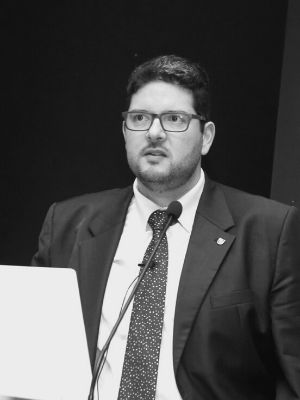
Professor Christos Petrou
Head of Department
Professor
School of Life and Health Sciences
Department of Health Sciences
Member of the Senate

Dr Ioannis Vizirianakis
Visiting Associate Professor


Dr Charita Christou
Adjunct Faculty
Dr Stavroula Christou
Adjunct Faculty

Kyriakos Georgiou
Senior Administrative Officer
Office of the Vice Rector for Academic Affairs
Dr Panos Kakouris
Adjunct Faculty
Dr Maria Loizou
Adjunct Faculty
Ms Apostolia Michael
Adjunct Faculty
Dr Androulla Miliotou
Adjunct Faculty

Dr Tolis Panayi
Adjunct Faculty
Dr Louiza Papazachariou
Adjunct Faculty
Dr Panayiotis Petrou
Adjunct Faculty
Ms Olga Pitsillidou
Adjunct Faculty
Ms Maria Prapopoulou
Adjunct Faculty
Dr Magda Psichoudaki
Adjunct Faculty
Dr Kyriaki Savva
Adjunct Faculty
Maria Savva
Adjunct Faculty
Dr Antria Savvidou
Adjunct Faculty
Mr Andreas Sergides
Adjunct Faculty
Dr Marios Stylianou
Adjunct Faculty
Ms Ioanna Thoma
Adjunct Faculty