Business Administration: Human Resource Management
(BBA, 4 Years)
Duration
4 years
Qualification Awarded
Bachelor of Business Administration
Level of Qualification
Bachelor Degree (1st Cycle)
Language of Instruction
English
Mode of Study
Full-time or Part-time
Minimum ECTs Credits
240
Business Administration: Human Resource Management (BBA, 4 Years)
| Duration | 4 years |
| Qualification Awarded | Bachelor of Business Administration |
| Level of Qualification | Bachelor Degree (1st Cycle) |
| Language of Instruction | English |
| Mode of Study | Full-time or Part-time |
| Minimum ECTS Credits | 240 |
Apply Today
Profile of the Programme
The bachelor program in Business Administration with concentration in Human Resource Management aims to provide a solid background in all areas of Business Administration and more specialized knowledge in Human Resource Management. In line with the University of Nicosia’s philosophy of providing comprehensive general education and specialized knowledge and skills, the program offers students the opportunity to combine learning in a wide range of academic disciplines with business-related areas and to develop their critical thinking, communication and creativity skills. It aims to develop students individually and academically and to prepare them to work ethically in a changing multicultural environment. The variety and range of courses offered, as well as the culture of open discussion that characterizes the university contribute to the comprehensive education of the students.
More specifically, the general objectives of the program are to:
- Develop expertise in key areas of Business Administration including Management, Entrepreneurship, Strategy, Accounting, Finance, Marketing and Information Systems.
- Highlight the changing nature of business and the importance of understanding the global business environment.
- Provide understanding of the ethical issues arising from business decisions and the importance of making reasoned decisions, recognizing the complexity and diversity of the environment.
- Develop leadership negotiation, communication and English language skills.
- Provide basic knowledge of Mathematics, Statistics, Research Methods and Information Technology.
- Offer the option of choosing diverse courses from other fields that interest students.
- Develop critical thinking and problem solving skills.
- Improve research, writing and presentation skills.
The concentration in Human Resource Management aims to provide specialization in the area of Human Resource Management. The concentration’s main objectives are the following:
- Develop an appreciation of the role of Human Resources in effective organizational functioning
- Demonstrate how to apply tools to attract and select employees
- Stress the importance of training and analyze and apply various training techniques
- Explain the importance of coaching and mentoring and career planning
- Provide tools to design appropriate performance appraisal systems
- Compare and contrast different reward allocation strategies and select more appropriate ones for different classes of employees and organizations
- Provide an in-depth understanding of the role of employment and labor laws and collective bargaining agreements
Career Prospects
Graduates can work in any area related to Business Administration such as General Management, Banking, Sales, Business Consulting, Financial Analysis Meeting, Convention and Event Planning or choose a career more related to Human Resource Management. Of course graduates can choose to set up their own business.
Access to Further Studies
Graduates of the program may continue their studies for a graduate degree, such as an MBA, an MA, an MSc or an MPhil or enter a PhD program (depending on the graduate school’s requirements).
The minimum admission requirement to an undergraduate programme of study is a recognized High School Leaving Certificate (HSLC) or equivalent internationally recognized qualification(s). Students with a lower HSLC grade than 7.5/10 or 15/20 or equivalent depending on the grading system of the country issuing the HSLC are provided with extra academic guidance and monitoring during the first year of their studies.
English Language Proficiency
The list below provides the minimum English Language Requirements (ELR) for enrollment to the programme of study. Students who do not possess any of the qualifications or stipulated grades listed below and hold IELTS with 4.5 and above, are required to take UNIC’s NEPTON English Placement Test (with no charge) and will receive English Language support classes, if and as needed, from UNIC’s International Gateway Centre (IGC).
- TOEFL – 525 and above
- Computer-based TOEFL – 193 and above
- Internet-based TOEFL – 80 and above
- IELTS – 6 and above
- Cambridge Exams [First Certificate] – B and above
- Cambridge Exams [Proficiency Certificate – C and above
- GCSE English Language “O” Level – C and above
- Michigan Examination of Proficiency in English (CaMLA) – Pass
- Pearson PTE General – Level 3 and above
- KPG (The Greek Foreign Language Examinations for the State Certificate of Language Proficiency) – Level B2 and above
- Anglia – Level B2 and above
- IEB Advances Programme English – Pass
- Examination for the Certificate of Proficiency in English (ECPE) Michigan Language Assessment by: Cambridge Assessment English & University of Michigan – 650 average score for ALL skills and above
Course assessment usually comprises of a comprehensive final exam and continuous assessment. Continuous assessment can include amongst others, mid-terms, projects, and class participation.
Letter grades are calculated based on the weight of the final exam and the continuous assessment and the actual numerical marks obtained in these two assessment components. Based on the course grades the student’s semester grade point average (GPA) and cumulative point average (CPA) are calculated.
The student must complete 240 ECTS and all programme requirements.
A minimum cumulative grade point average (CPA) of 2.0 is required. Thus, although a ‘D-‘ is a PASS grade, in order to achieve a CPA of 2.0 an average grade of ‘C’ is required.
Key Learning Outcomes
On successful completion of the Bachelor in Business Administration program graduates are expected to be able to:
- Apply conceptual principles, methods and tools to solve business related problems.
- Debate different business ideas with creativity and rigor.
- Appreciate the increasing complex nature of global business and economy and their impact on the management and growth of organizations.
- Streamline business processes and procedures to meet challenges and excel under intense competition.
- Adopt an ethical approach in the management of corporate practices to address and resolve heighten pressure from stakeholders.
- Utilize skills that are required in negotiation and conflict resolution for re-enforcing value added collaborations.
- Critically assess collected data, analyze and interpret findings to make informed decisions.
- Identify and use suitable research and business simulation tools.
- Use research skills to plan and implement research projects in business.
- Present effectively, both orally and in writing.
The Human Resource Management specialization is expected to equip graduates with skills to:
- Use appropriate techniques to attract and select employees.
- Plan and implement training programs.
- Structure and put in practice a coaching program and a career management program.
- Design effective and appropriate performance appraisal systems.
- Make reward allocation decisions based on theory and features of the organization.
- Implement employment laws and participate effectively in collective bargaining negotiations.
Min. ECTS Credits: 84 Max. ECTS Credits: 90
Notes: (1) Students may select to complete BADM-439 or BADM-493. (2) COMP-454 is for students following the concentration on Information Systems and Social Media.
(2) COMP-454 is for students following the concentration on Information Systems and
Social Media.
| Course ID | Course Title | ECTS Credits |
|---|---|---|
| ACCT-110 | Accounting I | 6 |
| ACCT-111 | Accounting II | 6 |
| ACCT-211 | Managerial Accounting | 6 |
| BADM-230 | Business Law | 6 |
| BADM-232 | Business Law II | 6 |
| BADM-234 | Organizational Behavior | 6 |
| BADM-431 | Research Methods in Business | 6 |
| BADM-439 | Senior Simulation in Business | 6 |
| BADM-475 | Strategy and Business Policy | 6 |
| BADM-493 | Final Year Project | 6 |
| COMP-454 | Information Systems Project | 6 |
| ECON-261 | Principles of Microeconomics | 6 |
| ECON-262 | Principles of Macroeconomics | 6 |
| FIN-266 | Managerial Finance | 6 |
| IMGT-488 | Operations Management | 6 |
| MGT-281 | Introduction to Management | 6 |
| MKTG-291 | Marketing | 6 |
Section: B – Concentration: Human Resource Management
Min. ECTS Credits: 48 Max. ECTS Credits: 60
| Course ID | Course Title | ECTS Credits |
|---|---|---|
| HRM-210 | Planning, Recruitment and Selection | 6 |
| HRM-215 | Training and Development | 6 |
| HRM-225 | Health and Safety | 6 |
| HRM-235 | Career Management | 6 |
| HRM-310 | Improving Performance | 6 |
| HRM-315 | Labor-Management Relations | 6 |
| HRM-325 | Compensation and Rewards Systems | 6 |
| HRM-345 | Employment Law | 6 |
| HRM-420 | Human Resource Information Systems | 6 |
| HRM-430 | Coaching and Mentoring | 6 |
| PSY-411 | Industrial/Organizational Psychology | 6 |
Section: C – Business Electives
Min. ECTS Credits: 12 Max. ECTS Credits: 30
Notes: Or any ACCT-, BADM-, COMM-, ECON-, FIN-, HOSP-, MIS-, MGT-, MKTG-, SPRT-, TOUR- course not taken as a major core or concentration requirement. BADM-491 may have a credit range of 2-6 ECTS.
| Course ID | Course Title | ECTS Credits |
|---|---|---|
| BADM-482 | Task-Based Internship | 2 |
| BADM-483 | Task-Based Internship | 3 |
| BADM-486 | Task-Based Internship | 6 |
| BADM-489 | Task-Based Internship | 12 |
| BADM-491 | Special Topics in Business | 2 |
Section: D – Language Expression
Min. ECTS Credits: 18 Max. ECTS Credits: 30
Notes: (1) Placement in the English courses is done on the basis of a Placement Test or tests such as TOEFL or GCE. (2) Students must complete BADM-231 or BADM-332.
(2) Students must complete BADM-231 or BADM-332
| Course ID | Course Title | ECTS Credits |
|---|---|---|
| BADM-231 | Business Communications | 6 |
| BADM-332 | Technical Writing and Research | 6 |
| BENG-100 | College English | 6 |
| COMM-200 | Business and Professional Communication | 6 |
| ENGL-100 | Basic Writing | 6 |
| ENGL-101 | English Composition | 6 |
Section: E – Computer Electives
Min. ECTS Credits: 12 Max. ECTS Credits: 30
Notes: Or any other COMP-, MIS-, or MULT- course.
| Course ID | Course Title | ECTS Credits |
|---|---|---|
| COMP-150 | Microcomputer Applications | 6 |
| COMP-151 | Computer Fundamentals | 6 |
| MIS-151 | Business Software Applications | 6 |
| MIS-351 | Information Systems Concepts | 6 |
Section: F – Mathematics Electives
Min. ECTS Credits: 24 Max. ECTS Credits: 30
| Course ID | Course Title | ECTS Credits |
|---|---|---|
| IMGT-486 | Quantitative Methods | 6 |
| MATH-105 | Intermediate Algebra | 6 |
| MATH-108 | Finite Maths with Applied Calculus | 6 |
| MATH-221 | Statistics I | 6 |
| MATH-321 | Statistics II | 6 |
Section: G – Humanities and Social Sciences Electives
Min. ECTS Credits: 18 Max. ECTS Credits: 24
Notes: Or any language course with FREN-, GERM-, ITAL-, RUS-, SPAN-, GREK-, TURK- prefix.
| Course ID | Course Title | ECTS Credits |
|---|---|---|
| ANTH-105 | Cultural Anthropology | 6 |
| ART-110 | Introduction to Visual Arts | 6 |
| ART-111 | Greek Art | 6 |
| BADM-121 | Business Ethics | 6 |
| ENGL-102 | Western World Literature and Composition | 6 |
| ESCI-200 | Society and Environment | 6 |
| EUS-103 | Modern European History and Politics | 6 |
| HIST-201 | World History to 1500 | 6 |
| HIST-257 | Modern Cypriot History and Politics | 6 |
| HIST-265 | The US and World History Since 1945 | 6 |
| MUCT-107 | Music Appreciation | 6 |
| MUCT-110 | Fundamentals of Music | 6 |
| PHIL-101 | Introduction to Philosophy | 6 |
| PSCI-101 | American National Government | 6 |
| PSY-110 | General Psychology I | 6 |
| PSY-111 | General Psychology II | 6 |
| PSY-210 | Social Psychology | 6 |
| SOC-101 | Principles of Sociology | 6 |
| UNIC-100 | University Experience | 6 |
Semester 1
| Course ID | Course Title | ECTS Credits |
|---|---|---|
| ACCT-110 | Accounting I | 6 |
| ECON-261 | Principles of Microeconomics | 6 |
| ENGL-100 | Basic Writing | 6 |
| MATH-108 | Finite Maths with Applied Calculus | 6 |
| MIS-151 | Business Software Applications | 6 |
Semester 2
| Course ID | Course Title | ECTS Credits |
|---|---|---|
| ACCT-111 | Accounting II | 6 |
| COMP-151 | Computer Fundamentals | 6 |
| ECON-262 | Principles of Macroeconomics | 6 |
| MATH-221 | Statistics I | 6 |
| MGT-281 | Introduction to Management | 6 |
Semester 3
| Course ID | Course Title | ECTS Credits |
|---|---|---|
| ACCT-211 | Managerial Accounting | 6 |
| BADM-234 | Organizational Behavior | 6 |
| ENGL-101 | English Composition | 6 |
| MKTG-291 | Marketing | 6 |
| PSY-110 | General Psychology I | 6 |
Semester 4
| Course ID | Course Title | ECTS Credits |
|---|---|---|
| BADM-121 | Business Ethics | 6 |
| BADM-230 | Business Law | 6 |
| COMM-200 | Business and Professional Communication | 6 |
| FIN-266 | Managerial Finance | 6 |
| SOC-101 | Principles of Sociology | 6 |
Semester 5
| Course ID | Course Title | ECTS Credits |
|---|---|---|
| BADM-475 | Strategy and Business Policy | 6 |
| HRM-210 | Planning, Recruitment and Selection | 6 |
| HRM-215 | Training and Development | 6 |
| HRM-225 | Health and Safety | 6 |
| MGT-355 | Leadership in Organizations | 6 |
Semester 6
| Course ID | Course Title | ECTS Credits |
|---|---|---|
| BADM-431 | Research Methods in Business | 6 |
| HRM-310 | Improving Performance | 6 |
| HRM-315 | Labor-Management Relations | 6 |
| HRM-325 | Compensation and Rewards Systems | 6 |
| MGT-482 | Human Resource Management | 6 |
Semester 7
| Course ID | Course Title | ECTS Credits |
|---|---|---|
| HRM-235 | Career Management | 6 |
| HRM-345 | Employment Law | 6 |
| IMGT-486 | Quantitative Methods | 6 |
| IMGT-488 | Operations Management | 6 |
| MGT-472 | Change Management | 6 |
Semester 8
| Course ID | Course Title | ECTS Credits |
|---|---|---|
| ACCT-450 | Performance Management | 6 |
| BADM-439 | Senior Simulation in Business | 6 |
| HRM-420 | Human Resource Information Systems | 6 |
| MIS-215 | Project Management | 6 |
| MIS-460 | Supply Chain Management | 6 |

Professor Haritini Tsangari
Professor
School of Business
Department of Accounting, Economics and Finance
Member of Senate

Dr Christina Theodoulidou
Practicum Coordinator, Counseling Psychology program,
KESY

Dr Vasso Stylianou
Associate Professor
School of Sciences and Engineering
Department of Computer Science



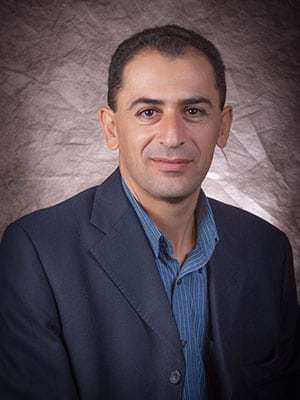
Professor Petros Lois
Head of Department
Professor
School of Business
Department of Accounting, Economics and Finance

Professor Despo Ktoridou
Head of Department
Professor
School of Business
Department of Management

Mr Harry Kogetsidis
Associate Lecturer
School of Business
Department of Management

Dr Melpo Iacovidou
Assistant Professor
School of Business
Department of Accounting, Economics and Finance
Director, Erasmus+ and NEOLAiA Alliance Unit (ENAU)



Dr Epaminondas Epaminonda
Associate Head of Department
Programme Coordinator
Associate Professor
School of Business
Department of Management
Member of the Senate

Dr Melita Charitou
Associate Professor
School of Business
Department of Accounting, Economics and Finance

Professor Rossitsa Artemis
Head of Department
Professor
School of Humanities and Social Sciences
Department of Languages and Literature
Programme Coordinator
Director of Centre of Languages

Dr Alexandros Antonaras
Associate Professor
School of Business
Department of Management
Vice President of Student Services
Dr Paris Pittakaras
Adjunct Faculty
Dr Chryso Pieridi
Adjunct Faculty
Dr Elena Parpa
Adjunct Faculty

Ms Marianna Michael
Head of Erasmus Office
Erasmus Office

Ms Apostolia Michael
Adjunct Faculty
Dr Michalis Koutsoullis
Adjunct Faculty
Dr Styliani Kleanthous
Adjunct Faculty
Dr Maria Georgiou
Adjunct Faculty
Mr Antonis Constantinou
Adjunct Faculty