International Relations and European Studies
(BA, 4 Years)
Duration
4 years
Qualification Awarded
International Relations and European Studies (BA, 4 years)
Level of Qualification
Πτυχίο (1ος Κύκλος Σπουδών)
Language of Instruction
Αγγλική
Mode of Study
Πλήρης ή Μερική Φοίτηση
Minimum ECTs Credits
240
Δεν θα γίνονται καινούριες εγγραφές για το παρόν Εξάμηνο
Apply Today
International Relations and European Studies (BA, 4 Years)
| Duration | 4 years |
| Qualification Awarded | International Relations and European Studies (BA, 4 years) |
| Level of Qualification | Bachelor Degree (1st Cycle) |
| Language of Instruction | English |
| Mode of Study | Full-time and Part-time |
| Minimum ECTS Credits | 240 |
Apply Today
Profile of the Programme
This programme is intended to be an academic programme, oriented at developing the intellectual skills of students to enable them to enter into a broad range of careers and enable them to continue with their education at the next level.
Aims
The BA programme in International Relations and European Studies aims to provide broad and comprehensive knowledge of the political, social, economic and legal environment which conditions and affects the practice of international and European relations.
Objectives
The programme objectives are:
- Introduction to the main theoretical debates in International Relations and European integration.
- Examination of the key features of the modern European and international systems, including analysis of state power, systems of governance, laws and norms, foreign policy, diplomacy, conflict, security, nationalism, as well as the role of international governmental and non-governmental organisations and European institutions.
- Examination and analysis of the current issues and challenges of European and international politics.
- Provision of knowledge and skills necessary for employment in areas such as government, multi-national corporations, and international organisations.
Career Prospects
Graduates of this programme go on to work in many different positions, both in the public sector, as well as the private sector.
The majority of our graduates have gone on to continue their studies at the University of Nicosia and other universities. Students generally choose to further their studies in International Relations, whereas others opt to pursue an MBA.
Access to Further Studies
Graduates of the programme can be accepted into Second Cycle degrees (Master’s Degree).
Academic Admission
Applications for admission to the Program will be considered only from candidates that fulfill the minimum entrance criteria:
- Recognized High School Leaving Certificate (HSLC). Students with 7,5 out of 10 or 15 out of 20 or equivalent depending on the grading system of the country issuing the HSLC are accepted
- Good knowledge of English language (if first degree taught in English, otherwise by presenting a language title, particularly TOEFL, IGCSE, IELTS or Cambridge Exams)
In addition to the above, applicants must also submit the following documents:
- Τwo recommendation letters.
- A personal statement by the prospective student expressing his/her interest in following the program.
- A CV of the prospective student.
English Language Proficiency
The list below provides the minimum English Language Requirements (ELR) for enrollment to the programme of study. Students who do not possess any of the qualifications or stipulated grades listed below and hold IELTS with 4.5 and above, are required to take UNIC’s NEPTON English Placement Test (with no charge) and will receive English Language support classes.
- IELTS – 6 and above
- Anglia Examinations – Advanced and above
- Cambridge GCE AS Level English Language – C and above
- Cambridge GCE English A Levels – C and above
- Cambridge IGCSE or GCSE English as a First language – C and above
- Cambridge IGCSE or GCSE English as a Second language – B and above
- IB English A: Literature SL & HL – 4 and above
- IB English Standard Level (SL) – 5 and above
- IB English High Level (HL) – 4 and above
- Michigan Language Assessment (also known as Proficiency of Michigan) – 650 and above
- Password Test – 6 and above
- TOEFL (IBT) – 72 and above
- Cambridge Exams (First Certificate) – 160 and above or Pass
- Cambridge Exams (Proficiency Certificate) – 180 and above or Pass
Course assessment usually comprises of a comprehensive final exam and continuous assessment. Continuous assessment can include amongst others, mid terms, projects, and class participation.
Letter grades are calculated based on the weight of the final exam and the continuous assessment and the actual numerical marks obtained in these two assessment components. Based on the course grades the student’s semester grade point average (GPA) and cumulative point average (CPA) are calculated.
The student must complete 240 ECTS and all programme requirements.
A minimum cumulative grade point average (CPA) of 2.0 is required. Thus, although a ‘D-‘ is a PASS grade, in order to achieve a CPA of 2.0 an average grade of ‘C’ is required.
On completion of this programme, the student will be able to:
- Critically evaluate the main issues and theoretical debates in International Relations.
- Engage in debates about the major actors and institutions in global politics.
- Discuss developments, rules and prevalent values of the modern international system.
- Analyse power structures, biases and inequalities of the modern international system.
- Utilise multidisciplinary theories in explaining, analyzing and critically approaching Europe as a field of study.
- Design research concerned with the processes and problems of integration as well as Europe’s historical, political, social, economic and cultural development.
- Readily deal with the European Union’s institutional structure and its major policy initiatives.
- Analyse current European affairs and challenges.
- Illustrate the ability to communicate in writing and orally on issues in European affairs and international relations and be able to organise the available time and cope with deadlines.
- Report in the English language both orally and in written form at a high level of competence.
- Illustrate the ability to continue learning in a self-directed manner and work on an academic level within the intended professional field.
- Use libraries, bibliographical material and academic research in an efficient manner.
Section: A Core Requirements – International Relations and European Studies
ECTS: Min. 132 Max. 132
| Course ID | Course Title | ECTS Credits |
|---|---|---|
| EUS-103 | Modern European History and Politics | 6 |
| EUS-210 | European Cultures | 6 |
| EUS-215 | Democracy and Representation in Europe | 6 |
| EUS-250 | European Institutions and Governance | 6 |
| EUS-255 | European Political Thought | 6 |
| EUS-340 | European Integration | 6 |
| EUS-355 | European Social and Economic Policy | 6 |
| EUS-475 | European Foreign and Security Policy | 6 |
| EUS-495 | Comparative European Politics | 6 |
| IREL-101 | Introduction to International Relations | 6 |
| IREL-102 | World History Since 1500 | 6 |
| IREL-205 | International Organizations | 6 |
| IREL-235 | Comparative Politics | 6 |
| IREL-256 | Political Theory | 6 |
| IREL-258 | Research Methodology in Social Sciences | 6 |
| IREL-320 | Foreign Policy Analysis | 6 |
| IREL-325 | Nationalism and Ethnic Politics | 6 |
| IREL-381 | International Political Economy | 6 |
| IREL-400 | Diplomacy | 6 |
| IREL-407 | Theory of International Relations | 6 |
| LAW-383 | Public International Law I | 6 |
| LAW-384 | Public International Law II | 6 |
Section: B Core Requirements – Eastern Meditteranean Studies
ECTS: Min. 36 Max. 36
| Course ID | Course Title | ECTS Credits |
|---|---|---|
| EUS-325 | Cyprus and the EU | 6 |
| EUS-378 | Contemporary South-Eastern Europe | 6 |
| IREL-369 | Middle-East History and Politics | 6 |
| IREL-405 | Case Studies in Conflict Analysis | 6 |
| IREL-408 | Turkey between Europe and the Middle East | 6 |
| IREL-478 | Great Power Politics in the Eastern Mediterranean | 6 |
Section: C Major Electives
ECTS: Min. 18 Max. 24
Notes: Students eligible to take Practicum or Senior Year Project must have an average minimum GPA of 3.0. In the case of Senior Year Project the Thesis must be 8000-10000 words.
| Course ID | Course Title | ECTS Credits |
|---|---|---|
| EUS-461 | Current European Issues | 6 |
| EUS-490 | Special Topics in European Studies | 6 |
| HIST-257 | Modern Cypriot History and Politics | 6 |
| HIST-265 | The US and World History Since 1945 | 6 |
| IREL-220 | Issues in Political Sociology | 6 |
| IREL-345 | Human Rights and International Relations | 6 |
| IREL-490 | Special Topics in International Relations | 6 |
| IREL-493 | Senior Year Project | 6 |
| IREL-494 | Practicum | 6 |
| LAW-201 | European Union Law I | 6 |
| LAW-202 | European Union Law II | 6 |
Section: D Foreign Languages and Language Expression
ECTS: Min. 12 Max. 24
| Course ID | Course Title | ECTS Credits |
|---|---|---|
| BENG-100 | College English | 6 |
| ENGL-100 | Basic Writing | 6 |
| ENGL-101 | English Composition | 6 |
| FREN-101 | French Language and Culture I | 6 |
| FREN-102 | French Language and Culture II | 6 |
| FREN-201 | French Language and Culture III | 6 |
| FREN-202 | French Language and Culture IV | 6 |
| GERM-101 | German Language and Culture I | 6 |
| GERM-102 | German Language and Culture II | 6 |
| GERM-201 | German Language and Culture III | 6 |
| GERM-202 | German Language and Culture IV | 6 |
| ITAL-101 | Italian Language and Culture I | 6 |
| ITAL-102 | Italian Language and Culture II | 6 |
| RUS-101 | Russian Language and Culture I | 6 |
| RUS-102 | Russian Language and Culture II | 6 |
Section: E Social Sciences Electives
ECTS: Min. 12 Max. 18
Notes: The courses of BADM-250, ECON-261 and ECON-262 can be included in this section.
| Course ID | Course Title | ECTS Credits |
|---|---|---|
| ANTH-105 | Cultural Anthropology | 6 |
| COMM-135A | Introduction to Communication Studies | 6 |
| COMM-384 | Digital Media and Youth Culture | 6 |
| COMM-400 | Media Literacy | 6 |
| IREL-481 | International Economic Integration | 6 |
| PSY-210 | Social Psychology | 6 |
| SOC-101 | Principles of Sociology | 6 |
| SOC-230 | Sociology and Religion | 6 |
Section: F Business Electives
ECTS: Min. 6 Max. 12
| Course ID | Course Title | ECTS Credits |
|---|---|---|
| BADM-250 | International Business | 6 |
| ECON-261 | Principles of Microeconomics | 6 |
| ECON-262 | Principles of Macroeconomics | 6 |
| ECON-480 | International Economic Integration | 6 |
Section: G Computer and Mathematics Electives
ECTS: Min. 6 Max. 12
| Course ID | Course Title | ECTS Credits |
|---|---|---|
| COMP-151 | Computer Fundamentals | 6 |
| MATH-221 | Statistics I | 6 |
| MATH-321 | Statistics II | 6 |
| MULT-160 | Introduction to Multimedia | 6 |
Section: H Unallocated Courses
ECTS: Min. 0 Max. 0
Semester 1
| Course ID | Course Title | ECTS Credits |
|---|---|---|
| IREL-101 | Introduction to International Relations | 6 |
| IREL-102 | World History Since 1500 | 6 |
| SOC-101 | Principles of Sociology | 6 |
| ENGL-100 | Basic Writing | 6 |
| FREN-101 | French Language and Culture I | 6 |
Semester 2
| Course ID | Course Title | ECTS Credits |
|---|---|---|
| EUS-103 | Modern European History and Politics | 6 |
| EUS-210 | European Cultures | 6 |
| COMP-151 | Computer Fundamentals | 6 |
| FREN-102 | French Language and Culture II | 6 |
| ENGL-101 | English Composition | 6 |
Semester 3
| Course ID | Course Title | ECTS Credits |
|---|---|---|
| IREL-205 | International Organizations | 6 |
| IREL-235 | Comparative Politics | 6 |
| IREL-256 | Political Theory | 6 |
| EUS-250 | European Institutions and Governance | 6 |
| BADM-250 | International Business | 6 |
Semester 4
| Course ID | Course Title | ECTS Credits |
|---|---|---|
| EUS-255 | European Political Thought | 6 |
| IREL-258 | Research Methodology in Social Sciences | 6 |
| HIST-257 | Modern Cypriot History and Politics | 6 |
| LAW-201 | European Union Law I | 6 |
| ANTH-105 | Cultural Anthropology | 6 |
Semester 5
| Course ID | Course Title | ECTS Credits |
|---|---|---|
| IREL-320 | Foreign Policy Analysis | 6 |
| IREL-325 | Nationalism and Ethnic Politics | 6 |
| EUS-325 | Cyprus and the EU | 6 |
| EUS-495 | Comparative European Politics | 6 |
| LAW-383 | Public International Law I | 6 |
Semester 6
| Course ID | Course Title | ECTS Credits |
|---|---|---|
| IREL-381 | International Political Economy | 6 |
| EUS-340 | European Integration | 6 |
| IREL-369 | Middle-East History and Politics | 6 |
| EUS-378 | Contemporary South-Eastern Europe | 6 |
| LAW-384 | Public International Law II | 6 |
Semester 7
| Course ID | Course Title | ECTS Credits |
|---|---|---|
| IREL-400 | Diplomacy | 6 |
| IREL-405 | Case Studies in Conflict Analysis | 6 |
| IREL-407 | Theory of International Relations | 6 |
| IREL-408 | Turkey between Europe and the Middle East | 6 |
| IREL-220 | Issues in Political Sociology | 6 |
Semester 8
| Course ID | Course Title | ECTS Credits |
|---|---|---|
| EUS-355 | European Social and Economic Policy | 6 |
| EUS-475 | European Foreign and Security Policy | 6 |
| IREL-478 | Great Power Politics in the Eastern Mediterranean | 6 |
| EUS-215 | Democracy and Representation in Europe | 6 |
| IREL-490 | Special Topics in International Relations | 6 |

Dr Constantinos Adamides
Head of Department
Associate Professor
School of Law
Department of Politics and Governance

Dr Giorgos Charalambous
Associate Professor
School of Law
Department of Politics and Governance

Dr Odysseas Christou
Associate Head of Department
Associate Professor
School of Law
Department of Law

Dr Evi Eftychiou
Lecturer
Department of Law , School of Law


Dr Christina Ioannou
Associate Dean
Programme Coordinator
Associate Professor
School of Law
Department of Politics and Governance
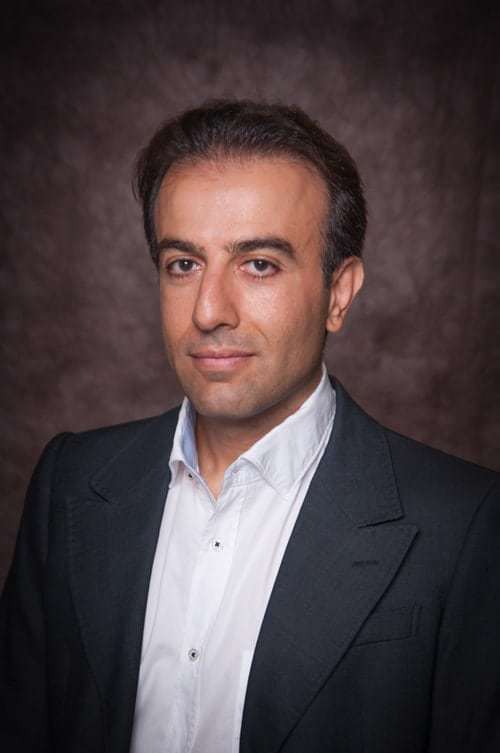
Dr Giorgos Kentas
Programme Coordinator
Associate Professor
School of Law
Department of Politics and Governance

Dr Michalis Kontos
Associate Head
Programme Coordinator
Associate Professor
School of Law
Department of Politics and Governance
Member of the Senate

Dr Emilios A. Solomou
Emeritus Scholar
School of Law
Department of Politics and Governance
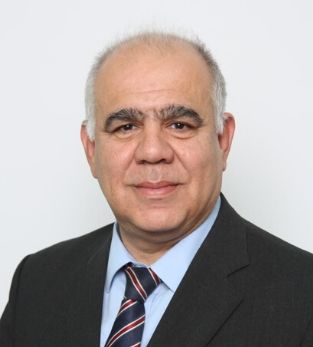
Professor Andreas Theophanous
Emeritus Professor
School of Law
Department of Politics and Governance

Mr Petros Petrikkos
Adjunct Faculty