Business Administration: Finance and Economics
(BBA, 4 Years)
Duration
4 years
Qualification Awarded
Bachelor of Business Administration
Level of Qualification
Bachelor Degree (1st Cycle)
Language of Instruction
English
Mode of Study
Full-time or Part-time
Minimum ECTs Credits
240
Apply Today
Business Administration: Finance and Economics (BBA, 4 Years)
| Duration | 4 years |
| Qualification Awarded | Bachelor of Business Administration |
| Level of Qualification | Bachelor Degree (1st Cycle) |
| Language of Instruction | English |
| Mode of Study | Full-time or Part-time |
| Minimum ECTS Credits | 240 |
Apply Today
Profile of the Programme
The Bachelor of Business Administration with a Concentration in Finance and Economics prepares future business professionals to make informed financial and strategic decisions in an economy increasingly shaped by artificial intelligence, digitalisation and global interconnectedness. Combining a strong foundation in business with analytical thinking, financial expertise and technological awareness, the programme equips graduates with the knowledge and skills required to succeed in a rapidly evolving business environment.
The financial world is undergoing significant transformation. Artificial intelligence, data analytics, fintech innovations and digital platforms are changing how organisations manage resources, assess opportunities, evaluate risk and make strategic decisions. Future finance professionals will need more than technical financial knowledge; they will need the ability to interpret complex information, use emerging technologies effectively and combine data-driven insights with sound judgement.
The programme provides students with a comprehensive understanding of the major areas of business, including management, strategy, marketing, accounting, finance, economics, operations management, entrepreneurship and organisational behaviour. This broad foundation enables students to understand how financial and economic decisions influence organisational performance, competitiveness and long-term sustainability.
Artificial intelligence is integrated throughout the curriculum, enabling students to explore how AI, automation, analytics and digital technologies are transforming financial and economic decision-making. Students develop the ability to analyse data, evaluate AI-supported insights and understand the opportunities and challenges created by intelligent technologies in areas such as financial analysis, investment decisions, risk management and business planning.
The Finance and Economics concentration develops students’ understanding of financial management, investment analysis, banking, financial markets, corporate finance, economics and strategic decision-making. Students acquire the analytical tools required to evaluate financial performance, understand economic trends and support effective decision-making in increasingly complex global markets.
Particular emphasis is placed on emerging developments in finance, including fintech, digital banking, predictive analytics, financial modelling and data-informed decision-making. Students learn how organisations use technology to improve forecasting, manage uncertainty and create competitive advantage, while recognising that effective financial leadership requires human judgement, ethical responsibility and strategic thinking.
Through applied learning, case studies, projects and engagement with real business challenges, students develop practical experience in analysing financial information, evaluating business opportunities and developing evidence-based recommendations. Graduates are prepared to contribute to organisations seeking professionals who can combine financial expertise, analytical capability and technological awareness.
Career Prospects
The demand for professionals with expertise in finance, economics and data-driven decision-making continues to grow as organisations increasingly adopt artificial intelligence, advanced analytics and digital technologies. Employers seek graduates who can combine financial knowledge with critical thinking, technological competence and strategic judgement.
Graduates may pursue careers across financial institutions, commercial and investment banks, multinational corporations, consulting firms, accounting organisations, fintech companies, insurance organisations, investment firms, technology companies, government agencies and entrepreneurial ventures.
Indicative career paths include financial analyst, investment analyst, banking officer, corporate finance specialist, business intelligence analyst, economic analyst, financial consultant, risk analyst, treasury associate, fintech specialist and management consultant.
Graduates are also prepared for emerging roles involving AI-enabled financial analysis, digital finance, business analytics and intelligent decision-support systems. Their ability to interpret data, evaluate technological opportunities and apply financial reasoning enables them to support organisations navigating uncertainty and transformation.
The concentration develops essential future-oriented capabilities, including analytical reasoning, strategic thinking, ethical judgement, communication, adaptability and informed decision-making. These skills enable graduates to create value and contribute effectively in a financial environment increasingly influenced by technology and innovation.
Access to Further Studies
Graduates of the Bachelor of Business Administration with a Concentration in Finance and Economics are prepared to pursue postgraduate studies, including MBA, MA, MSc and MPhil programmes, subject to the admission requirements of the relevant graduate school.
Graduates may continue their studies in areas such as finance, economics, accounting, banking, investment management, financial technology, business analytics, risk management and related disciplines. The programme also provides an appropriate foundation for progression to doctoral studies in business, finance, economics or related fields, depending on the requirements of the relevant PhD programme.
Academic Admission
The minimum admission requirement to an undergraduate programme of study is a recognized High School Leaving Certificate (HSLC) or equivalent internationally recognized qualification(s). Students with a lower HSLC grade than 7.5/10 or 15/20 or equivalent depending on the grading system of the country issuing the HSLC are provided with extra academic guidance and monitoring during the first year of their studies.
English Language Proficiency
The list below provides the minimum English Language Requirements (ELR) for enrollment to the programme of study. Students who do not possess any of the qualifications or stipulated grades listed below and hold IELTS with 4.5 and above, are required to take UNIC’s NEPTON English Placement Test (with no charge) and will receive English Language support classes.
- IELTS – 6 and above
- Anglia Examinations – Advanced and above
- Cambridge GCE AS Level English Language – C and above
- Cambridge GCE English A Levels – C and above
- Cambridge IGCSE or GCSE English as a First language – C and above
- Cambridge IGCSE or GCSE English as a Second language – B and above
- IB English A: Literature SL & HL – 4 and above
- IB English Standard Level (SL) – 5 and above
- IB English High Level (HL) – 4 and above
- Michigan Language Assessment (also known as Proficiency of Michigan) – 650 and above
- Password Test – 6 and above
- TOEFL (IBT) – 72 and above
- Cambridge Exams (First Certificate) – 160 and above or Pass
- Cambridge Exams (Proficiency Certificate) – 180 and above or Pass
Course assessment usually comprises of a comprehensive final exam and continuous assessment. Continuous assessment can include amongst others, mid-terms, projects and class participation.
Letter grades are calculated based on the weight of the final exam and the continuous assessment and the actual numerical marks obtained in these two assessment components. Based on the course grades the student’s semester grade point average (GPA) and cumulative point average (CPA) are calculated.
The student must complete 240 ECTS and all programme requirements.
A minimum cumulative grade point average (CPA) of 2.0 is required. Thus, although a ‘D-‘ is a PASS grade, in order to achieve a CPA of 2.0 an average grade of ‘C’ is required.
Upon successful completion of this program, the students should be able to:
- Apply conceptual principles, methods and tools to solve business related problems.
- Debate different business ideas with creativity and rigor.
- Appreciate the increasing complex nature of global business and economy and their impact on the management and growth of organizations.
- Streamline business processes and procedures to meet challenges and excel under intense competition.
- Adopt an ethical approach in the management of corporate practices to address and resolve heighten pressure from stakeholders.
- Utilize skills that are required in negotiation and conflict resolution for re-enforcing value added collaborations.
- Critically assess collected data, analyze and interpret findings to make informed decisions.
- Identify and use suitable research and business simulation tools.
- Use research skills to plan and implement research projects in business.
- Present effectively, both orally and in writing.
The Economics and Finance specialization is expected to equip graduates with skills to:
- Apply the standard analytic tools of applied economic and financial analysis.
- Analyze, evaluate, interpret and present materials in the areas of Economics and Finance.
- Identify the underlying ideas of the business environment and associate them with specific knowledge in the areas of Economics and Finance.
Section: A – Business Requirements
Min. ECTS Credits: 84 Max. ECTS Credits: 84
| Course ID | Course Title | ECTS Credits |
|---|---|---|
| ACCT-110 | Accounting I | 6 |
| ACCT-111 | Accounting II | 6 |
| ACCT-211 | Managerial Accounting | 6 |
| BADM-221 | Business Ethics and Corporate Social Responsibility | 6 |
| BADM-230 | Business Law | 6 |
| BADM-234 | Organizational Behavior | 6 |
| BADM-431 | Research Methods in Business | 6 |
| BADM-475 | Strategy and Business Policy | 6 |
| ECON-261 | Principles of Microeconomics | 6 |
| ECON-262 | Principles of Macroeconomics | 6 |
| FIN-266 | Managerial Finance | 6 |
| MGT-281 | Introduction to Management | 6 |
| MIS-155 | Introduction to Transformative Technologies | 6 |
| MKTG-292 | Marketing Management | 6 |
Section: B – Concentration: Finance and Economics
Min. ECTS Credits: 72 Max. ECTS Credits: 72
| Course ID | Course Title | ECTS Credits |
|---|---|---|
| ECON-360 | Intermediate Microeconomics | 6 |
| ECON-362 | Intermediate Macroeconomics | 6 |
| ECON-363 | Money and Banking | 6 |
| ECON-390 | Mathematics for Economics and Business | 6 |
| ECON-466 | Managerial Economics | 6 |
| ECON-481 | European Economics | 6 |
| ECON-496 | Applied Econometrics | 6 |
| FIN-215 | Personal Finance | 6 |
| FIN-366 | Corporate Finance | 6 |
| FIN-410 | Financial Management | 6 |
| FIN-430 | International Financial Management | 6 |
| FIN-440 | Financial Analysis | 6 |
Section: C – Business Electives
Min. ECTS Credits: 12 Max. ECTS Credits: 12
Notes: Any of the courses below may be taken or any ACCT-, BADM-, COMM-, ECON-,FIN-, HOSP-, MIS-, MKTG- course not taken as a business requirement or concentration course. BADM-491 may have a credit range of 1-6 ECTS. Special Topics in Business has a credit range of 2-6 ECTS – students may select BADM491 (2 ECTS) or BADM-491A (4 ECTS) or BADM-491B (6 ECTS).
| Course ID | Course Title | ECTS Credits |
|---|---|---|
| BADM-486 | Task-Based Internship | 6 |
| BADM-491B | Special Topics in Business | 6 |
| BADM-493 | Final Year Project | 6 |
| BADM-494 | Thesis | 12 |
| IMGT-486 | Quantitative Methods | 6 |
| MIS-215 | Project Management | 6 |
| MIS-455 | Intellectual Property Management | 6 |
| MIS-460 | Supply Chain Management | 6 |
Section: D – Language Expression
Min. ECTS Credits: 18 Max. ECTS Credits: 24
Notes: (1) Placement in the English courses is done on the basis of a Placement Test or tests such as TOEFL or GCE.
(2) Students must complete either BADM-231 or BADM-332.
| Course ID | Course Title | ECTS Credits |
|---|---|---|
| BADM-231 | Business Communications | 6 |
| BADM-332 | Technical Writing and Research | 6 |
| COMM-200 | Business and Professional Communication | 6 |
| ENGL-100 | Basic Writing | 6 |
| ENGL-101 | English Composition | 6 |
Section: E – Computer Electives
Min. ECTS Credits: 12 Max. ECTS Credits: 18
| Course ID | Course Title | ECTS Credits |
|---|---|---|
| COMP-101 | Digital Literacy | 6 |
| MIS-220 | Technologies for the Social Web | 6 |
| MIS-256 | Website Development Process | 6 |
| MIS-280 | AI Applications | 6 |
| MIS-300 | Blockchain and Crypto Assets | 6 |
| MIS-321 | Personal Development in the Age of Transformative Technologies | 6 |
| MIS-330 | Longevity Science and Healthy Living | 6 |
| MIS-410 | Capstone Project: Building Solutions with Transformative Technologies | 6 |
Section: F – Mathematics Electives
Min. ECTS Credits: 12 Max. ECTS Credits: 18
| Course ID | Course Title | ECTS Credits |
|---|---|---|
| MATH-105 | Intermediate Algebra | 6 |
| MATH-108 | Finite Maths with Applied Calculus | 6 |
| MATH-221 | Statistics I | 6 |
| MATH-321 | Statistics II | 6 |
Section: G – Humanities and Social Sciences Electives
Min. ECTS Credits: 12 Max. ECTS Credits: 18
Notes: In addition to the courses below, students may choose any ART, DES, EUS, HIST, IREL,SOC, PSY, PHIL course or any language course with FREN-, GERM-, ITAL-, RUS-,SPAN-, GREK-, TURK- prefix
| Course ID | Course Title | ECTS Credits |
|---|---|---|
| ANTH-105 | Cultural Anthropology | 6 |
| ART-281 | History of Art | 6 |
| EUS-103 | Modern European History and Politics | 6 |
| IREL-101 | Introduction to International Relations | 6 |
| PHIL-101 | Introduction to Philosophy | 6 |
| PSY-110 | General Psychology I | 6 |
| PSY-111 | General Psychology II | 6 |
| PSY-210 | Social Psychology | 6 |
| SOC-101 | Principles of Sociology | 6 |
Section: H Unallocated Courses
ECTS: Min. 0 Max. 0
Semester 1
| Course ID | Course Title | ECTS Credits | Lecturer |
|---|---|---|---|
| ACCT-110 | Accounting I | 6 | Prof. Petros Lois |
| MIS-155 | Introduction to Transformative Technologies | 6 | Daniel Housard |
| ECON-261 | Principles of Microeconomics | 6 | Prof. Spyros Hadjidakis |
| MATH-105 | Intermediate Algebra | 6 | Prof. George Chailos |
| ENGL-101 | English Composition | 6 | Prof. Aretousa Giannakou |
Semester 2
| Course ID | Course Title | ECTS Credits | Lecturer |
|---|---|---|---|
| ACCT-111 | Accounting II | 6 | Prof. Petros Lois |
| MATH-221 | Statistics I | 6 | Prof. Haritini Tsangari |
| ECON-262 | Principles of Macroeconomics | 6 | Prof. Spyros Hadjidakis |
| MIS-280 | AI Applications | 6 | Demetris Kyriacou |
| COMM-200 | Business and Professional Communication | 6 | Prof. Antroulla Papakyriakou |
Semester 3
| Course ID | Course Title | ECTS Credits | Lecturer |
|---|---|---|---|
| MGT-281 | Introduction to Management | 6 | Harry Kogetsidis |
| ACCT-211 | Managerial Accounting | 6 | Prof. Melita Charitou |
| BADM-230 | Business Law | 6 | Koulla Michailidou |
| MATH-321 | Statistics II | 6 | Prof. Haritini Tsangari |
| BADM-332 | Technical Writing and Research | 6 | Katarzyna Alexander |
Semester 4
| Course ID | Course Title | ECTS Credits | Lecturer |
|---|---|---|---|
| MKTG-291 | Marketing | 6 | Prof. Ioanna Papasolomou |
| BADM-234 | Organizational Behavior | 6 | Prof. Epaminondas Epaminonda |
| BADM-221 | Business Ethics and Corporate Social Responsibility | 6 | Prof. Marlen Demetriou |
| PSY-110 | General Psychology I | 6 | Prof. Maria Koushiou |
| FIN-215 | Personal Finance | 6 | Prof. Ifigenia Georgiou |
Semester 5
| Course ID | Course Title | ECTS Credits | Lecturer |
|---|---|---|---|
| FIN-266 | Managerial Finance | 6 | Prof. Melita Charitou |
| IMGT-486 | Quantitative Methods | 6 | Harry Kogetsidis |
| ECON-360 | Intermediate Microeconomics | 6 | Prof. Spyros Hadjidakis |
| ECON-362 | Intermediate Macroeconomics | 6 | Prof. Spyros Hadjidakis |
| EUS-103 | Modern European History and Politics | 6 | Prof. Hubert Faustmann |
Semester 6
| Course ID | Course Title | ECTS Credits | Lecturer |
|---|---|---|---|
| BADM-431 | Research Methods in Business | 6 | Michalis Koutsoullis |
| BADM-486 | Task-Based Internship | 6 | Prof. Despo Ktoridou |
| ENTR-282 | Small Business and Entrepreneurship | 6 | Prof. Svetlana Sapuric |
| ENTR-215 | Project Management | 6 | Marios Christou |
| ECON-390 | Mathematics for Economics and Business | 6 | Marios Christou |
Semester 7
| Course ID | Course Title | ECTS Credits | Lecturer |
|---|---|---|---|
| BADM-475 | Strategy and Business Policy | 6 | Prof. Leonidas Efthymiou |
| MIS-256 | Website Development Process | 6 | Despo Ktoridou |
| FIN-410 | Financial Management | 6 | Prof. Svetlana Sapuric |
| ECON-466 | Managerial Economics | 6 | Afroditi Kero |
| ECON-481 | European Economics | 6 | Afroditi Kero |
Semester 8
| Course ID | Course Title | ECTS Credits | Lecturer |
|---|---|---|---|
| ECON-496 | Applied Econometrics | 6 | Marios Christou |
| FIN-410 | Financial Management | 6 | Prof. Ifigenia Georgiou |
| FIN-440 | Financial Analysis | 6 | Prof. Petros Lois |
| BADM-494 | Thesis | 12 |

Professor Haritini Tsangari
Professor
School of Business
Department of Accounting, Economics and Finance
Member of Senate


Dr Svetlana Sapuric
Acting Associate Head of Department
Associate Professor
School of Business
Department of Accounting, Economics and Finance

Professor Ioanna Papasolomou
Associate Dean
Professor
School of Business
Department of Management


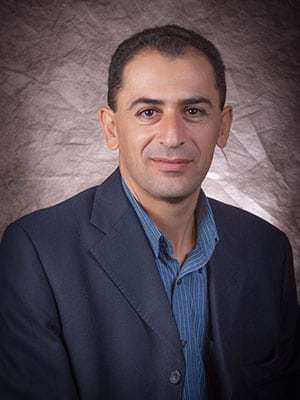
Professor Petros Lois
Head of Department
Professor
School of Business
Department of Accounting, Economics and Finance


Professor Angelika Kokkinaki
Dean of the School of Business
Professor
School of Business
Department of Management
MBA Director
Member of the Senate

Mr Harry Kogetsidis
Associate Lecturer
School of Business
Department of Management


Dr Melpo Iacovidou
Assistant Professor
School of Business
Department of Accounting, Economics and Finance
Director, Erasmus+ and NEOLAiA Alliance Unit (ENAU)


Dr Epaminondas Epaminonda
Associate Professor
School of Business
Department of Management
Member of the Senate

Dr Marlen Demetriou
Associate Professor
School of Business
Department of Management


Dr Melita Charitou
Associate Professor
School of Business
Department of Accounting, Economics and Finance

Dr Dmitry Apraksin
Director of IT (University Level)
IT Department
Assistant Professor
School of Sciences and Engineering
Department of Computer Science

Dr Alexandros Antonaras
Associate Professor
School of Business
Department of Management
Vice President of Student Services

Mr George Zervides
Adjunct Faculty
Dr Valiantis Marios
Adjunct Faculty

Ms Koulla Michaelidou
Adjunct Faculty
Dr Styliani Kleanthous
Adjunct Faculty
Mr Antonis Constantinou
Adjunct Faculty