Physiotherapy and Rehabilitation - Concentrations: 1. Musculoskeletal Physiotherapy, 2. Neurological Physiotherapy
(MSc, 1.5 Years or 3 Semesters)
Duration
1.5 years (3 semesters)
Qualification Awarded
Master of Science in Physiotherapy and Rehabilitation
Level of Qualification
Master Degree (2nd Cycle)
Language of Instruction
English and Greek
Mode of Study
Full-time or Part-time
Minimum ECTs Credits
90
No enrolments for current semester
Apply Today
Physiotherapy and Rehabilitation – Concentrations: 1. Musculoskeletal Physiotherapy, 2. Neurological Physiotherapy (MSc, 1.5 Years or 3 Semesters)
| Duration | 1.5 years (3 semesters) |
| Qualification Awarded | Master of Science in Physiotherapy and Rehabilitation |
| Level of Qualification | Master Degree (2nd Cycle) |
| Language of Instruction | Greek / English |
| Mode of Study | Full-time |
| Minimum ECTS Credits | 90 |
Apply Today
Profile of the Programme
The Master Program in Physiotherapy and Rehabilitation aims to:
- combine advanced theoretical, clinical and practical training all of which enhances students’ assessment and treatment skills in a variety of musculoskeletal, and neurological related injuries and pathologies.
- Provide to the graduates the appropriate capabilities to collaborate with other health professionals in consulting patients with musculoskeletal and neurological disorders.
- prepare students to interpret and participate in research in the fields of musculoskeletal and neurological physiotherapy.
- reflect in a modern way the most contemporary research trends in the fields of musculoskeletal and neurological physiotherapy.
- place special emphasis on the development of clinical reasoning skills that guide clinical decision making regarding prevention as well as rehabilitation following musculoskeletal or neurological pathologies.
- Provide to graduates scientific and professional qualifications as advanced and specialized practitioners in the domains of Musculoskeletal and Neurological Physiotherapy. They will advance their employability opportunities in the private and public sector as specialized physiotherapists, in physiotherapy clinics, rehabilitation centres, hospitals and sport clubs.
Career Prospects
The programme mainly aims to attract professional Physiotherapists who want to specialize in the treatment of Musculoskeletal and Neurological Injuries and Pathologies.
Graduates may be employed in the private and public sector as specialized physiotherapists, in physiotherapy clinics, in rehabilitation centres, in hospitals and in sports clubs. In addition, they will have the opportunity to work as Self Employed Specialists of musculoskeletal and neurological physiotherapy.
Access to Further Studies
Graduates of the programme can be accepted into Third Cycle degrees (Doctorate Degree)
Programme Coordinator:
- Physiotherapy Bachelor Degree
- Bachelor Degree of relevant professions i.e. Osteopathy, Chiropractors, Occupational therapists
- Good knowledge of English language
- -First Degree taught in English or- minimum TOEFL score 550 paper-based, or 213 computer-based, or 79-80 internet- based or- GCSE “0” Level with a minimum score “C” or- IELTS score of 6.5, or- ENG-100 level of the University of Nicosia English Placement Test
English Language Proficiency
Applicants satisfy the English requirements if their first degree was taught in English. Otherwise, the minimum English-language qualifications for admission are:
- IELTS – 6.5 and above
- Anglia Examinations – Proficiency or Mastery
- Cambridge GCE AS Level English Language – C and above
- Cambridge GCE English A Levels – C and above
- Cambridge IGCSE or GCSE English as a First language – C and above
- Cambridge IGCSE or GCSE English as a Second language – B and above
- IB English A: Literature SL & HL – 4 and above
- IB English Standard Level (SL) – 5 and above
- IB English High Level (HL) – 4 and above
- Michigan Language Assessment (also known as Proficiency of Michigan) – 750 and above
- Password Test – 6.5 and above
- TOEFL (IBT) – 79 and above
- Cambridge Exams (First Certificate) – 176 and above or Pass
- Cambridge Exams (Proficiency Certificate) – 180 and above or Pass
Applicants who do not hold one of the listed qualifications, are required to take UNIC’s NEPTON English Placement Test and achieve a score at the ENGL-100 level, which can substitute for the standardized tests typically required for admission to postgraduate programs. The test is offered free of charge.
The University offers English courses at different levels to assist students in meeting the required standard for admission to a graduate programme.
Course assessment usually comprises of a comprehensive final exam and continuous assessment. Continuous assessment can include amongst others, mid-terms, projects, and class participation.
Letter grades are calculated based on the weight of the final exam and the continuous assessment and the actual numerical marks obtained in these two assessment components. Based on the course grades the student’s semester grade point average (GPA) and cumulative point average (CPA) are calculated.
The student must complete 90 ECTS and all programme requirements.
A minimum cumulative grade point average (CPA) of 2.0 is required. Thus, although a ‘D-‘ is a PASS grade, in order to achieve a CPA of 2.0 an average grade of ‘C’ is required.
Upon successful completion of this program, the students should be able to:
- Critically assess various musculoskeletal, and neurological pathological conditions in a structured way and to design advanced interventions and rehabilitation protocols depending on their profession and in line with the evidence-based practice.
- To complete an in detailed assessment procedure, extract specific aims and plan rehabilitation specific to every patient and according to the assessment findings.
- Efficiently cooperate with other specialists in the rehabilitation, multidisciplinary team for the improvement of patient’s condition.
- Thoroughly Inform patients about the nature and prognosis of their condition and help them choose the appropriate intervention and the suitable specialist for their problem.
- To interpret the indications and contraindications of every technique planned to be used and decide when appropriate for application.
- Follow the ethical guidelines, by protecting patients’ personal rights, personal decisions and personal information.
- Analyze and critically evaluate the available literature in their special field of interest.
- Interpret the recent scientific achievements and literature data in the field of the basic sciences (biology, biomechanics, neurosciences etc).
- Κατεύθυνση Μυοσκελετικής Φυσικοθεραπείας: MPTY-513G, MPTY-514G
- Κατεύθυνση Νευρολογικής Φυσικοθεραπείας: MPTY-523G, MPTY-524G
| Course ID | Course Title | ECTS Credits |
|---|---|---|
| MPTY-501G | Προηγμένη Βιοστατιστική (με Εργαστήριο) | 10 |
| MPTY-502G | Μεθοδολογία Έρευνας στις Επιστήμες Υγείας | 5 |
| MPTY-513G | Βιολογία Συνδετικού Ιστού | 5 |
| MPTY-514G | Μυοσκελετική Αποκατάσταση Ι (με Εργαστήριο) | 10 |
Στο Γ’ Εξάμηνο οι φοιτητές δηλώνουν είτε την Ερευνητική Εργασία κι ένα (από τα
τέσσερα) μαθήματα επιλογής των 10 ECTS, ή τρία (από τα τέσσερα) μαθήματα επιλογής
των 10 ECTS το καθένα. Συνολικά πρέπει να καλύψουν μέγιστο αριθμό 30 ECTS. Η
ερευνητική εργασία μπορεί να αντικατασταθεί με δύο μαθήματα ελεύθερης επιλογής των
10 ECTS το καθένα.
Semester 1
| Course ID | Course Title | ECTS Credits |
|---|---|---|
| MPTY-501G | Προηγμένη Βιοστατιστική (με Εργαστήριο) | 10 |
| MPTY-502G | Μεθοδολογία Έρευνας στις Επιστήμες Υγείας | 5 |
| MPTY-513G | Βιολογία Συνδετικού Ιστού | 5 |
| MPTY-514G | Μυοσκελετική Αποκατάσταση Ι (με Εργαστήριο) | 10 |
Semester 2
| Course ID | Course Title | ECTS Credits |
|---|---|---|
| MPTY-515G | Μυοσκελετική Αποκατάσταση ΙΙ (με Εργαστήριο) | 10 |
| MPTY-516G | Φυσιολογία της Άσκησης | 5 |
| MPTY-517G | Αποκατάσταση Αθλητικών Κακώσεων (με Εργαστήριο) | 10 |
| MPTY-518G | Λειτουργική Αποκατάσταση | 5 |
Semester 3
| Course ID | Course Title | ECTS Credits |
|---|---|---|
| MPTY-590G | Ερευνητική Εργασία | 20 |
| MPTY-551G | Φυσιολογία του Χρόνιου Πόνου | 10 |
The above semester breakdown is an indicative one. A few of the courses are electives and can be substituted by others. Students may contact their academic advisor and consult their academic pathway found on this website under “Schools & Programmes”.
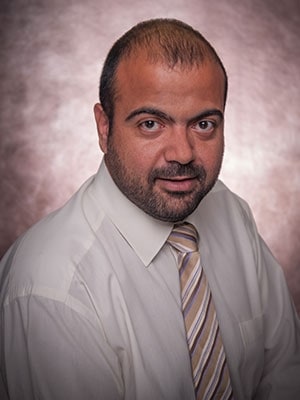
Professor Kyriakos Felekkis
Dean
Professor
School of Life and Health Sciences
Department of Life Sciences
Member of the Council
Member of the Senate
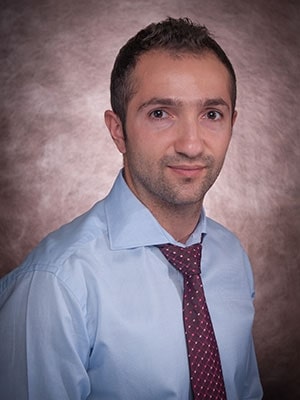
Professor Christoforos Giannaki
Associate Head of Department
Professor
School of Life and Health Sciences
Department of Life Sciences
Director of the Research Centre for Exercise and Nutrition (RECEN)
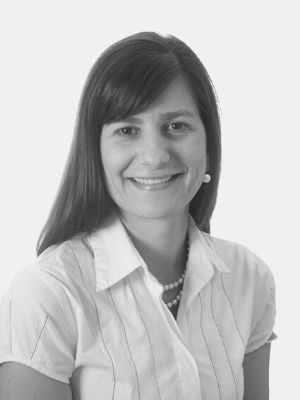
Dr Christina Michailidou
Assistant Professor
Programme Coordinator
School of Life and Health Sciences
Department of Health Sciences

Dr Manos Stefanakis
Associate Head
Associate Professor
School of Life and Health Sciences
Department of Health Sciences
Dr Giannis Giakas
Adjunct Faculty

Mr Markianos Kokkinos
Adjunct Faculty
Dr Vasileios Korakakis
Adjunct Faculty