Counseling Psychology
(MSc, 2.5 Years or 5 Semesters)
Duration
2.5 years
Qualification Awarded
Master of Science in Counseling Psychology
Level of Qualification
Master Degree (2nd Cycle)
Language of Instruction
English
Mode of Study
Full-time or Part-time
Minimum ECTs Credits
150
Apply Today
Counseling Psychology (MSc, 2.5 Years or 5 Semesters)
| Duration | 2.5 years |
| Qualification Awarded | Master of Science in Counseling Psychology |
| Level of Qualification | Master Degree (2nd Cycle) |
| Language of Instruction | English |
| Mode of Study | Full-time or Part-time |
| Minimum ECTS Credits | 150 |
Apply Today
Profile of the Programme
Aims
The programme aims to help students integrate the Counseling Psychology identity and professional standards. Following a holistic, wellness and growth-oriented approach to the field, the program trains students in a variety of theoretical viewpoints from different fields in psychology and teaches them the skills to practice effectively with different populations. Another main goal of this programme is to train students to design and conduct research and apply the knowledge from this research effectively into practice. Of outmost importance is that the students develop an ethical professional identity as Counseling Psychologists that will guide their work as researchers and practitioners.
Objectives
The Master of Science degree programme in Counseling Psychology is built upon the scientist-practitioner model of education and training where science and practice are viewed as complementary and interdependent. The programme aims to integrate the academic, research, and professional components of counseling psychology into a programme that promotes knowledge, experience, and sensitivity to the tradition of counseling psychology. It focuses not only on remediation and intervention, but it also emphasizes prevention, psycho-education, and advocacy from a growth and wellness-oriented perspective. Promoting the philosophy and the values of the field of Counseling Psychology, the programme emphasizes the role of our graduates in offering to the larger community as well, as professionals who can use their knowledge to the improvement of society not only by offering prevention strategies to different populations, a basic part of our identity, but also to serve as advocates and social justice agents for individuals and groups who need help to have their voice heard in the society. Upon the completion of this programme, students are prepared and possess all the necessary qualifications for careers as professional psychologists in Cyprus and other European countries and/or admissions to programmes of doctoral study in Cyprus or abroad.
Career Prospects
On successful completion of the programme graduates will be able to work in different professional settings in the private or public sector since their degree can give them license to work in Cyprus as Counseling Psychologists.
Potential employment opportunities include positions at: different Counseling centres, clinics, schools, business sector, private office and in the public sectors Counseling Psychologists can now be employed in clinics, hospitals or other organisations.
Access to Further Studies
Upon graduation, students may have direct access to further postgraduate (PhD, or PsyD) studies mainly in Counseling Psychology or Clinical Psychology (depending on the University).
The minimum general requirement for admission to the post-graduate degree programme is a Bachelor Degree from a recognised university with a GPA of at least 3.0 or a Second Class Upper Division Honors (British Degrees) or 7.5 (Greek Degrees).
In addition to the above, applicants must also satisfy the following requirements:
Prospective candidates are also evaluated for admission on the basis of previous clinical and research experience, any other postgraduate qualifications in the area of Psychology, academic references and a personal statement.
Finally, admission to the program is also evaluated on the basis of the candidates’ performance during an admissions interview.
Once admitted, students whose native language is not Greek will be required to demonstrate proficiency in the Greek language at the B1 level (as per the Common European Framework of Reference for Languages) before advancing to the Clinical Practicum Seminar (in the Spring semester of their second year).
English Language Proficiency
Applicants satisfy the English requirements if their first degree was taught in English. Otherwise, the minimum English-language qualifications for admission are:
- IELTS – 6.5 and above
- Anglia Examinations – Proficiency or Mastery
- Cambridge GCE AS Level English Language – C and above
- Cambridge GCE English A Levels – C and above
- Cambridge IGCSE or GCSE English as a First language – C and above
- Cambridge IGCSE or GCSE English as a Second language – B and above
- IB English A: Literature SL & HL – 4 and above
- IB English Standard Level (SL) – 5 and above
- IB English High Level (HL) – 4 and above
- Michigan Language Assessment (also known as Proficiency of Michigan) – 750 and above
- Password Test – 6.5 and above
- TOEFL (IBT) – 79 and above
- Cambridge Exams (First Certificate) – 176 and above or Pass
- Cambridge Exams (Proficiency Certificate) – 180 and above or Pass
Applicants who do not hold one of the listed qualifications, are required to take UNIC’s NEPTON English Placement Test and achieve a score at the ENGL-100 level, which can substitute for the standardized tests typically required for admission to postgraduate programs. The test is offered free of charge.
The University offers English courses at different levels to assist students in meeting the required standard for admission to a graduate programme.
Course assessment usually comprises of a comprehensive final exam and continuous assessment. Continuous assessment can include amongst others, mid-terms, projects, and class participation.
Letter grades are calculated based on the weight of the final exam and the continuous assessment and the actual numerical marks obtained in these two assessment components. Based on the course grades the student’s semester grade point average (GPA) and cumulative point average (CPA) are calculated.
The student must complete 150 ECTS and all programme requirements.
A minimum cumulative grade point average (CPA) of 2.0 is required. Thus, although a ‘D-‘ is a PASS grade, in order to achieve a CPA of 2.0 an average grade of ‘C’ is required.
Upon successful completion of the programme, students should be able to:
- Critically evaluate the major theories and philosophies within the selected fields in Counselling Psychology.
- Critically assess their own personal philosophy of human beings as well as their strengths and weaknesses as they impact the counselling process.
- Demonstrate skills in assessing and evaluating the counselling process in the context of everyday challenges, and to develop competencies in different communication skills.
- Have an enhanced insight of the wide diversity represented by individuals of different cultures, gender, ethnicity, races, religions, ages, physical/mental status, and other groups.
- Become exposed to a wide range of populations having a variety of problems through participation in supervised clinical training experiences, both in the State and in the Private Sector.
- Demonstrate flexibility in their role as counselling psychologists according to the needs of the population they work with (e.g. individuals, groups, couples) and the task they have to accomplish.
- Assess the dynamics of the group processes to the person’s interpersonal and intrapersonal dynamics and interactions.
- Demonstrate knowledge in the design and use of different preventive and therapeutic methods in their work with people with various problems.
- Acquire training in the selection, application, and interpretation of clinical and Psychometric assessment techniques and methods as well as in the understanding and application of the results following professional standards.
- Critically evaluate research in the different areas of counselling, demonstrate ability to ask scientific questions relevant to Counseling Psychology, design and conduct research in order to answer these questions.
- Evidence knowledge in the use of different research methodologies in Counseling and exhibit skills in the use of data analysis methods.
- Conduct themselves with professionalism, demonstrating deep knowledge and understanding of professional standards and work ethics and their application to real life situations.
ECTS: Min. Max. ECTS: Min. 97.5 97.5
| Course ID | Course Title | ECTS Credits |
|---|---|---|
| PSYC-505 | Adult Psychopathology | 7.5 |
| PSYC-511 | Advanced Statistics and Research Methods I | 7.5 |
| PSYC-512 | Advanced Statistics and Research Methods II | 7.5 |
| PSYC-523 | Theories of Counseling and Psychotherapy | 7.5 |
| PSYC-532 | Psychometric Assessment for Counseling Psychologist | 7.5 |
| PSYC-604 | Positive Psychology: Health Promotion and Prevention | 7.5 |
| PSYC-607 | Assessment and Counseling Skills | 7.5 |
| PSYC-608 | Advanced Counseling Skills and Interventions | 7.5 |
| PSYC-631 | Issues and Challenges in Adult Life Span Development | 7.5 |
| PSYC-637 | Diversity Issues: Promoting Advocacy and Social Justice as Counseling Psychologists | 7.5 |
| PSYC-640 | Professional Issues and Ethics in Counseling and Clinical Psychology | 7.5 |
| PSYC-675 | Group Therapy | 7.5 |
Section: B Major Special Requirements
ECTS: Min. Max. ECTS: Min. 52.5 52.5
Notes: PSYC-602 Clinical Practicum (450 hours) is optional.
| Course ID | Course Title | ECTS Credits |
|---|---|---|
| PSYC-600 | Clinical Practicum I (450 hours) | 15 |
| PSYC-601 | Clinical Practicum II (600 hours) | 20 |
| PSYC-602 | Clinical Practicum III (450 hours) | 15 |
| PSYC-603 | Portfolio | 2.5 |
| PSYC-696 | Thesis I | 7.5 |
| PSYC-697 | Thesis II | 7.5 |
Section: C Unallocated Courses
ECTS: Min. Max. ECTS: Min. 0 0 Max.
Semester 1
| Course ID | Course Title | ECTS Credits |
|---|---|---|
| PSYC-505 | Adult Psychopathology | 7.5 |
| PSYC-511 | Advanced Statistics and Research Methods I | 7.5 |
| PSYC-522 | Theories and Models of Psychotherapy | 7.5 |
| PSYC-540 | Theories of Career Counseling | 7.5 |
Semester 2
| Course ID | Course Title | ECTS Credits |
|---|---|---|
| PSYC-512 | Advanced Statistics and Research Methods II | 7.5 |
| PSYC-592 | Theories of Couple and Family Counseling | 7.5 |
| PSYC-640 | Professional Issues and Ethics in Counseling and Clinical Psychology | 7.5 |
| PSYC-605 | Assessment and Clinical Skills I: Adults | 7.5 |
Semester 3
| Course ID | Course Title | ECTS Credits |
|---|---|---|
| PSYC-606 | Psychological Interventions | 7.5 |
| PSYC-675 | Group Therapy | 7.5 |
| PSYC-531 | Psychometric Assessment | 7.5 |
| PSYC-604 | Positive Psychology: Health Promotion and Prevention | 7.5 |
Semester 4
| Course ID | Course Title | ECTS Credits |
|---|---|---|
| PSYC-600 | Clinical Practicum I (450 hours) | 15 |
| PSYC-535 | Multicultural Issues and Diversity | 7.5 |
| PSYC-696 | Thesis I | 7.5 |
Semester 5
| Course ID | Course Title | ECTS Credits |
|---|---|---|
| PSYC-601 | Clinical Practicum II (600 hours) | 20 |
| PSYC-603 | Portfolio | 2.5 |
| PSYC-697 | Thesis II | 7.5 |

Dr Marios Adonis
Head of Department
Associate Professor
School of Humanities and Social Sciences
Department of Social Sciences



Professor Nuno Ferreira
Professor
School of Humanities and Social Sciences
Department of Social Sciences
Member of the Senate
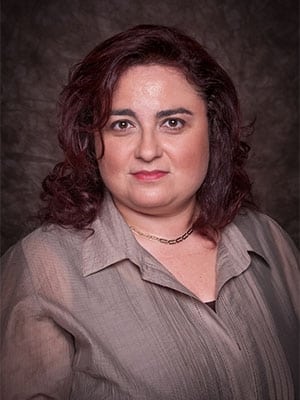
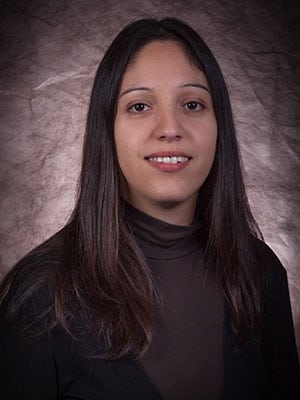
Dr Yianna Ioannou
Associate Professor
School of Humanities and Social Sciences
Department of Social Sciences
Clinical Supervisor
KESY

Dr Christina Theodoulidou
Practicum Coordinator, Counseling Psychology program,
KESY
Dr George Agathokleous
Adjunct Faculty

Maria Kouloumbri
Adjunct Faculty

Dr George Moleskis
Adjunct Faculty