Κλινική Ψυχολογία
(MSc, 3 έτη ή 6 Εξάμηνα)
Διάρκεια Σπουδών
3 έτη
Τίτλος Σπουδών
Μεταπτυχιακό Δίπλωμα στην Κλινική Ψυχολογία
Επίπεδο Τίτλου Σπουδών
Μεταπτυχιακό (2ος Κύκλος Σπουδών)
Γλώσσα Διδασκαλίας
Αγγλική
Μέθοδος Φοίτησης
Πλήρης Φοίτηση
Ελάχιστες Ευρωπαϊκές Πιστωτικές Μονάδες (ECTS)
180
Υποβάλετε Αίτηση
Κλινική Ψυχολογία (MSc, 3 έτη ή 6 Εξάμηνα)
| Διάρκεια Σπουδών | 3 έτη |
| Τίτλος Σπουδών | Μεταπτυχιακό Δίπλωμα στην Κλινική Ψυχολογία |
| Επίπεδο Τίτλου Σπουδών | Μεταπτυχιακό (2ος Κύκλος Σπουδών) |
| Γλώσσα Διδασκαλίας | Αγγλική |
| Μέθοδος Φοίτησης | Πλήρης φοίτηση |
| Ελάχιστες Ευρωπαϊκές Πιστωτικές Μονάδες (ECTS) | 180 |
Υποβάλετε Αίτηση
Profile of the Programme
The MSc in Clinical Psychology at the University of Nicosia is a comprehensive three-year professional training programme (180 ECTS) designed to develop highly skilled, ethical, and reflective clinical psychologists. Integrating advanced academic coursework, supervised clinical training, and original research, the programme prepares graduates for professional clinical practice in Cyprus and provides a strong foundation for doctoral studies in Cyprus, Europe, and beyond.
Students benefit from small class sizes, close supervision, expert faculty actively engaged in clinical practice and research, and extensive placement opportunities across public and private settings. While the programme is designed to be completed in three years of full-time study, alternative progression pathways and completion timelines are available and are frequently utilized by students.
Student Handbook
Download the Clinical Psychology Student Handbook (2026–2027) for detailed information on programme requirements, assessment procedures, and programme policies: Clinical Psychology Handbook-2026-2027.pdf
Aims
The MSc in Clinical Psychology aims to integrate clinical, academic, and research training within a scientist-practitioner framework. The programme prepares students to provide psychological services to diverse populations while developing the knowledge, skills, and professional values required for ethical and effective clinical practice. Students also gain the competencies needed to design, conduct, and evaluate empirical research.
A central aim of the programme is to foster a strong ethical and professional identity that guides graduates in their roles as practitioners, researchers, and lifelong learners.
Objectives
The programme follows the scientist-practitioner model of training, integrating evidence-based clinical practice with research and academic scholarship. Through coursework, supervised clinical placements, and research training, students develop the competencies required for professional practice as clinical psychologists while acquiring the skills necessary to critically evaluate and contribute to the scientific literature.
Career Prospects
Upon successful completion of the programme, graduates may pursue careers as clinical psychologists in a range of public and private sector settings.
Potential employment opportunities include:
- Public and private hospitals
- Mental health centres and community services
- Clinics and rehabilitation centres
- Psychiatric services
- Non-governmental and non-profit organisations
- Private and group practice
Clinical psychologists may also choose to become providers within the National Healthcare System (GESY), subject to applicable professional registration requirements.
Access to Further Studies
Graduates may pursue further postgraduate studies, including PhD or PsyD programmes in Clinical Psychology and related fields, in Cyprus and internationally.
Academic Performance
The minimum general requirement for admission to the post-graduate degree programme is a bachelor’s degree (or expected, to be completed before the commencement of studies) from a recognized university with a GPA of at least 3.0 or a Second-Class Upper Division Honors (British Degrees) or 7.5 (Greek Degrees).
Reference Letters
Applicants are required to submit three (3) references that can attest to their academic and/or clinical skills, in support of their application. The reference form is available here.
Personal Statement
Applicants are required to submit a personal statement demonstrating the reasons motivating them to pursue this degree and why they believe they are suitable for admission to the programme. The personal statement should not be a summary of the CV and academic experiences but should convey a sense of who the candidate is as a person and how his/her life experiences led to this decision.
Interview
Having reviewed each application and applicants’ suitability against the entry criteria, the Programme Admissions Committee will select applicants who may proceed to the interview phase. Interviews take place with programme faculty and with advanced students.
Additional criteria
Prospective candidates are also evaluated on the basis of previous clinical and research experience, and any other postgraduate qualifications in the area of Psychology.
Greek Language Requirement
Once admitted, students whose native language is not Greek will be required to demonstrate proficiency in the Greek language at the B1 level (as per the Common European Framework of Reference for Languages) before advancing to the Clinical Practicum Seminar (in the Spring semester of their second year).
Dates for the Fall 2026 Admission Cycle
Application Deadline: March 20st
Interviews: May 18th – June 5th
English Language Proficiency
Applicants satisfy the English requirements if their first degree was taught in English. Otherwise, the minimum English-language qualifications for admission are:
- IELTS – 6.5 and above
- Anglia Examinations – Proficiency or Mastery
- Cambridge GCE AS Level English Language – C and above
- Cambridge GCE English A Levels – C and above
- Cambridge IGCSE or GCSE English as a First language – C and above
- Cambridge IGCSE or GCSE English as a Second language – B and above
- IB English A: Literature SL & HL – 4 and above
- IB English Standard Level (SL) – 5 and above
- IB English High Level (HL) – 4 and above
- Michigan Language Assessment (also known as Proficiency of Michigan) – 750 and above
- Password Test – 6.5 and above
- TOEFL (IBT) – 79 and above
- Cambridge Exams (First Certificate) – 176 and above or Pass
- Cambridge Exams (Proficiency Certificate) – 180 and above or Pass
Applicants who do not hold one of the listed qualifications, are required to take UNIC’s NEPTON English Placement Test and achieve a score at the ENGL-100 level, which can substitute for the standardized tests typically required for admission to postgraduate programs. The test is offered free of charge.
The University offers English courses at different levels to assist students in meeting the required standard for admission to a graduate programme.
Course assessment usually comprises of a comprehensive final exam and continuous assessment. Continuous assessment can include amongst others, mid-terms, projects, and class participation.
Letter grades are calculated based on the weight of the final exam and the continuous assessment and the actual numerical marks obtained in these two assessment components. Based on the course grades the student’s semester grade point average (GPA) and cumulative point average (CPA) are calculated.
Practicum Readiness evaluation.
Prior to beginning their second semester of the second year, students undergo a Practicum Readiness Evaluation to assess whether they are ready to advance to the Clinical Practicum phase.
The student must complete 180 ECTS and all programme requirements.
A minimum cumulative grade point average (CPA) of 2.0 is required for graduation. Students must have a grade of C or above in all courses before proceeding with their Practicum. If in one or more courses, the grade obtained is below C, the particular course or courses will have to be repeated before proceeding with the Practicum.
Professional Readiness evaluation
In order to complete the Clinical Practicum component of the Programme trainees must successfully complete the Examination of Professional Readiness (EPR). The EPR will be held individually for each trainee following completion of the Clinical Practicum requirements. The EPR aims to comprehensively assess each trainee’s competence and readiness for entry into practice as an independent professional clinical psychologist.
Key Learning Outcoumes
Upon successful completion of this programme, students should be in a position to:
- Critically analyze and synthesize clinical perspectives from the main schools of thought in Clinical Psychology.
- Utilize knowledge and skills in clinical interviewing, assessment and psychotherapy, as derived from a variety of psychotherapeutic approaches, which can be effectively applied in varying treatment contexts.
- Practice the profession of Clinical Psychology guided by high ethical and professional standards, as outlined in the Code of Ethics of the Cyprus Board for the Registration of Psychologists, as well as the international Codes of Conduct pertaining to the profession.
- Value, appreciate and respect the diversity represented by individuals of differing cultures, gender, sexual orientation, ethnicity, race, religion, age, physical/mental status, and disability.
- Adopt a scientific approach to addressing questions relevant to Clinical Psychology by examining available evidence, and demonstrate proficiency in research methods.
- Develop proficiency in presenting clinical data in written and oral form.
- Demonstrate competence in working as clinical psychologists with a range of clinical populations through supervised clinical training experiences in private and/or public settings.
- Utilize psychometric assessment methods for the purpose of clinical diagnosis.
- Engage in self-reflection, identify weaknesses in their work as practitioners, and utilize clinical supervision to overcome them.
- Approach the profession of clinical psychology as a lifelong learning process and pursue opportunities for continuing education and personal and professional development.
In addition to providing high-quality clinical training, the MSc Programme in Clinical Psychology has also been designed to:
- Comply with the current legislation for professional psychologists in Cyprus.
- Meet the requirements for acquiring the EuroPsy as set by the European Federation of Psychologists Associations (EFPA) (for students who opt to complete 1500 hours of supervised clinical practicum).
Section: A – Major Requirements
Notes: R = Required Course
Students must have a grade of C or above in all courses before proceeding with their Practicum. If in one or more courses, the grade obtained is below C, the particular course or courses will have to be repeated before proceeding with the Practicum. Οι φοιτητές πρέπει να έχουν βαθμό C ή ψηλότερο σε όλα τα μαθήματα τους πριν μπορέσουν να προχωρήσουν στη Πρακτική Άσκηση. Εάν σε ένα ή περισσότερα μαθήματα, ο βαθμός που προκύπτει είναι κάτω από C, το συγκεκριμένο μάθημα ή μαθήματα θα πρέπει να επαναληφθούν πριν να προχωρήσει ο/η φοιτητής/τρια στην πρακτική άσκηση.
| Course ID | Course Title | ECTS Credits |
|---|---|---|
| PSYC-505 | Adult Psychopathology | 7.5 |
| PSYC-510 | Child Psychopathology | 7.5 |
| PSYC-511 | Advanced Statistics and Research Methods I | 7.5 |
| PSYC-512 | Advanced Statistics and Research Methods II | 7.5 |
| PSYC-520 | Advanced Theories and Models of Psychotherapy I | 7.5 |
| PSYC-521 | Advanced Theories and Models of Psychotherapy II | 7.5 |
| PSYC-530 | Psychopharmacology | 7.5 |
| PSYC-535 | Multicultural Issues and Diversity | 7.5 |
| PSYC-605 | Assessment and Clinical Skills I: Adults | 7.5 |
| PSYC-610 | Assessment and Clinical Skills II: Children | 7.5 |
| PSYC-611 | Clinical Psychometric Assessment I | 7.5 |
| PSYC-612 | Clinical Psychometric Assessment II | 7.5 |
| PSYC-620 | Psychological Interventions I: Dynamic Approaches | 7.5 |
| PSYC-621 | Psychological Interventions II: CBT Approaches | 7.5 |
| PSYC-640 | Professional Issues and Ethics in Counseling and Clinical Psychology | 7.5 |
| PSYC-675 | Group Therapy | 7.5 |
| PSYC-676 | Child Therapy | 7.5 |
Section: B – Major Special Requirements
Notes: Students must complete 1000 hours by completing PSYC-714 Clinical Practicum I and PSYC-715 Clinical Practicum II. PSYC -716 is an elective for an additional 500 hours.
Semester 1
| Course ID | Course Title | ECTS Credits |
|---|---|---|
| PSYC-505 | Adult Psychopathology | 7.5 |
| PSYC-511 | Advanced Statistics and Research Methods I | 7.5 |
| PSYC-520 | Advanced Theories and Models of Psychotherapy I | 7.5 |
| PSYC-530 | Psychopharmacology | 7.5 |
Semester 2
| Course ID | Course Title | ECTS Credits |
|---|---|---|
| PSYC-510 | Child Psychopathology | 7.5 |
| PSYC-512 | Advanced Statistics and Research Methods II | 7.5 |
| PSYC-521 | Advanced Theories and Models of Psychotherapy II | 7.5 |
| PSYC-640 | Professional Issues and Ethics in Counseling and Clinical Psychology | 7.5 |
Semester 3
| Course ID | Course Title | ECTS Credits |
|---|---|---|
| PSYC-605 | Assessment and Clinical Skills I: Adults | 7.5 |
| PSYC-610 | Assessment and Clinical Skills II: Children | 7.5 |
| PSYC-611 | Clinical Psychometric Assessment I | 7.5 |
| PSYC-620 | Psychological Interventions I: Dynamic Approaches | 7.5 |
Semester 4
| Course ID | Course Title | ECTS Credits |
|---|---|---|
| PSYC-612 | Clinical Psychometric Assessment II | 7.5 |
| PSYC-621 | Psychological Interventions II: CBT Approaches | 7.5 |
| PSYC-676 | Child Therapy | 7.5 |
| PSYC-711 | Practicum Seminar I | 7.5 |
Semester 5
| Course ID | Course Title | ECTS Credits |
|---|---|---|
| PSYC-675 | Group Therapy | 7.5 |
| PSYC-696 | Thesis I | 7.5 |
| PSYC-712 | Practicum Seminar II | 7.5 |
| PSYC-714 | Clinical Practicum I | 7.5 |
Semester 6
| Course ID | Course Title | ECTS Credits |
|---|---|---|
| PSYC-535 | Multicultural Issues and Diversity | 7.5 |
| PSYC-697 | Thesis II | 7.5 |
| PSYC-713 | Practicum Seminar III | 7.5 |
| PSYC-715 | Clinical Practicum II | 7.5 |
Semester 7 (Optional)
| Course ID | Course Title | ECTS Credits |
|---|---|---|
| PSYC-716 | Clinical Practicum III | 15 |
Το πιο πάνω πρόγραμμα ανά εξάμηνο είναι ενδεικτικό. Μερικά από τα μαθήματα είναι επιλογής και μπορούν να αντικατασταθούν με άλλα.

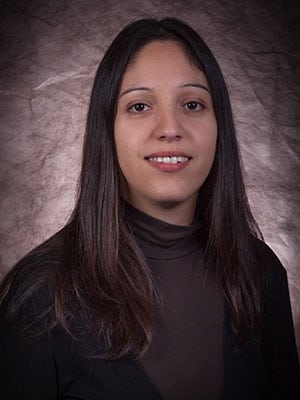
Dr Stella Petronda
Director,
KESY
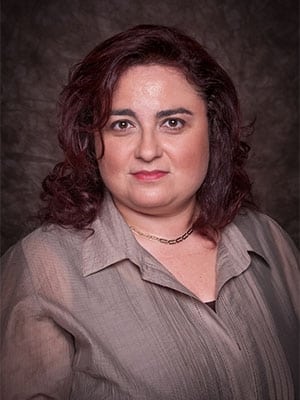
Dr Yianna Ioannou
Associate Professor
School of Humanities and Social Sciences
Department of Social Sciences
Clinical Supervisor
KESY


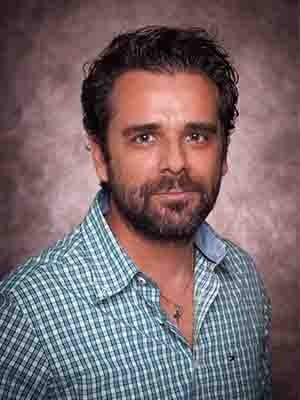
Professor Marios Constantinou
Associate Dean of the School of Humanities and Social Sciences
Professor
School of Humanities and Social Sciences
Department of Social Sciences
Member of the Senate



Dr Marios Adonis
Head of Department
Associate Professor
School of Humanities and Social Sciences
Department of Social Sciences

Maria Ioannou
Adjunct Faculty