Oil and Gas Engineering
(BSc, 4 Years)
Duration
4 years
Qualification Awarded
Oil and Gas Engineering (BSc, 4 years)
Level of Qualification
Bachelor Degree (1st Cycle)
Language of Instruction
English
Mode of Study
Full-time or Part-time
Minimum ECTs Credits
240
Apply Today
Oil and Gas Engineering (BSc, 4 Years)
| Duration | 4 years |
| Qualification Awarded | Oil and Gas Engineering (BSc, 4 years) |
| Level of Qualification | Bachelor Degree (1st Cycle) |
| Language of Instruction | English |
| Mode of Study | Full-time and part-time |
| Minimum ECTS Credits | 240 |
Apply Today
Profile of the Programme
The general objectives of the programme are to:
- Prepare students to become successful professional engineers in the demanding field of oil and gas engineering;
- Provide students the necessary knowledge and technical skills to excel in the oil and gas industry either as operational leaders in the field, technical experts, or researchers;
- Provide students with the fundamental principles of science and engineering in order to cope successfully with the technological challenges of the oil and gas industry;
- Cultivate analytical skills, problem solving tactics, and critical thinking;
- Promote engineering ethics, job responsibility, and moral practices;
- Develop skills for effective communication with co-workers, managers, and the public on topics related to technical concepts, risks, and recommendations.
The specific objectives of the programme are to:
- Provide fundamental knowledge, analytical skills, and engineering tools to students in order to cope successfully in a technologically challenging environment in the oil and gas industry;
- Facilitate learning in areas of oil and gas engineering that are directly linked to industry and current state-of-the-art technology;
- Provide the theoretical and computational skills necessary for the solution of both theoretical and practical engineering problems in the field of oil and gas energy;
- Provide practical and experimental hands-on experience that allows the students to link directly to fundamental knowledge and theory;
- Prepare students to work alone or in groups in order to provide engineering solutions;
- Prepare students to design/implement systems and processes towards the solution of engineering problems in the field of oil and gas energy;
- Develop communications skills including the abilities to write technical reports and present their work before an audience;
- Provide students with the opportunity to develop a greater technical competence in their area and become successful professionals throughout their lifetime;
- Prepare students for post-graduate studies and research in the field of oil and gas engineering.
Career Prospects
It is expected that the discovery of oil and gas in the Cyprus Exclusive Economic Zone will prompt the establishment of new companies and operations with an increasing number of job opportunities. This will result to more science-oriented technical staff who would like to attend an undergraduate program that will turn them into high-level technical/engineering staff for the various operational technologies and processes in the oil and gas fields.
The oil and gas industry offers a variety of careers for graduates of this program to work at its refineries, terminals, chemical plants, or on exploration and production on-shore/off-shore facilities. The following are examples of some of the career options available either off-shore or on-shore:
- Petroleum Engineer
- Production Engineer
- Drilling Engineer
- Reservoir Engineer
- Process Engineer
- Petroleum Geologist
- Project Engineer
- Research & Development
Access to Further Studies
After completion of the BSc programme in Oil & Gas Engineering, graduates may opt to broaden and deepen their academic skills by pursuing post-graduate (masters and doctoral) studies in this or a related field either in Cyprus or abroad.
Academic Admission
The minimum admission requirement to an undergraduate programme of study is a recognized High School Leaving Certificate (HSLC) or equivalent internationally recognized qualification(s). Students with a lower HSLC grade than 7.5/10 or 15/20 or equivalent depending on the grading system of the country issuing the HSLC are provided with extra academic guidance and monitoring during the first year of their studies.
English Language Proficiency
The list below provides the minimum English Language Requirements (ELR) for enrollment to the programme of study. Students who do not possess any of the qualifications or stipulated grades listed below and hold IELTS with 4.5 and above, are required to take UNIC’s NEPTON English Placement Test (with no charge) and will receive English Language support classes.
- IELTS – 6 and above
- Anglia Examinations – Advanced and above
- Cambridge GCE AS Level English Language – C and above
- Cambridge GCE English A Levels – C and above
- Cambridge IGCSE or GCSE English as a First language – C and above
- Cambridge IGCSE or GCSE English as a Second language – B and above
- IB English A: Literature SL & HL – 4 and above
- IB English Standard Level (SL) – 5 and above
- IB English High Level (HL) – 4 and above
- Michigan Language Assessment (also known as Proficiency of Michigan) – 650 and above
- Password Test – 6 and above
- TOEFL (IBT) – 60 and above
- Cambridge Exams (First Certificate) – 160 and above or Pass
- Cambridge Exams (Proficiency Certificate) – 180 and above or Pass
Course assessment usually comprises of a comprehensive final exam and continuous assessment. Continuous assessment can include amongst others, midterms, projects, and class participation.
Letter grades below are calculated based on the weight of the final exam and the continuous assessment and the actual numerical marks obtained in these two assessment components. Based on the course grades the student’s semester grade point average (GPA) and cumulative point average (CPA) are calculated.
The student must complete 240 ECTS and all program requirements. A minimum cumulative grade point average (CPA) of 2.0 is required. Thus, although a ‘D-‘ is a PASS grade, in order to achieve a CPA of 2.0 an average grade of ‘C’ is required.
Upon successful completion of this programme the graduates are expected to:
- Have an in-depth knowledge and understanding of the processes and technologies involved in the production, separation, and secure transport of oil and gas;
- Use analysis tools and skills acquired to plan for drilling and safe recovery of oil and gas for different types of reservoirs;
- Use mathematics, basic science, and engineering techniques to solve problems related to oil and natural gas production;
- Be familiar with the elements of oil and gas systems and their important role in the recovery and production of hydrocarbons;
- Use available measurement data and simulation software to reconstruct a three-dimensional model of hydrocarbon reservoir;
- Have in-depth understanding of system design and operation of oil and gas transport in different environments including testing and monitoring of the system using computer simulations and laboratory equipment;
- Be aware of the impact and role of hydrocarbons on social, economics, and environmental factors;
- Have a good understanding of the economics associated with the recovery and production of hydrocarbons;
- Have deep knowledge of engineering concepts and technical requirements associated with surface production facilities;
- Have a good understanding of the impact of geological properties and heterogeneities on the overall performance of the hydrocarbon reservoir;
- Be aware of possible faults related to reservoir connectivity and ways of dealing with faults and accidents.
| Course ID | Course Title | ECTS Credits |
|---|---|---|
| MENG-260 | Thermodynamics I | 6 |
| MENG-280 | Fluid Mechanics | 6 |
| MENG-290 | Heat and Mass Transfer | 6 |
| OGEE-101 | Introduction to Oil and Gas Engineering | 8 |
| OGEE-225 | Petrophysics | 8 |
| OGEE-310 | Economics of the Oil and Gas Industry | 6 |
| OGEE-320 | Drilling Engineering | 8 |
| OGEE-325 | Reservoir Engineering I | 8 |
| OGEE-340 | Formation Evaluation | 6 |
| OGEE-350 | Well Construction and Completion Design | 8 |
| OGEE-360 | Production Engineering | 8 |
| OGEE-370 | Offshore Engineering | 6 |
| OGEE-401 | Health, Safety and Environment | 6 |
| OGEE-420 | Natural Gas Production Engineering | 6 |
| OGEE-425 | Reservoir Engineering II | 6 |
| OGEE-430 | Hydrocarbon Recovery Techniques | 6 |
| OGEE-460 | Geophysical Methods | 6 |
| OGEE-492A | Capstone Design Project I | 6 |
| OGEE-492B | Capstone Design Project II | 6 |
| Course ID | Course Title | ECTS Credits |
|---|---|---|
| OGEE-435 | Petroleum Systems Modelling and Simulation | 6 |
| OGEE-445 | Materials Science and Corrosion Engineering | 6 |
| OGEE-450 | Hydrocarbon Flow Assurance | 6 |
| OGEE-465 | Geomechanics | 6 |
| OGEE-470 | Natural Gas Compression Systems | 6 |
| OGEE-480 | Oil and Gas Transmission Systems | 6 |
| OGEE-490 | Special Topics in Oil and Gas Engineering | 6 |
| OGEE-491 | Internship | 6 |
| Course ID | Course Title | ECTS Credits |
|---|---|---|
| BADM-332 | Technical Writing and Research | 6 |
Semester 1
| Course ID | Course Title | ECTS Credits |
|---|---|---|
| CHEM-106 | General Chemistry | 8 |
| GEOL-110 | Physical Geology | 6 |
| MATH-190 | Calculus I | 8 |
| OGEE-101 | Introduction to Oil and Gas Engineering | 8 |
Semester 2
| Course ID | Course Title | ECTS Credits |
|---|---|---|
| CHEM-126 | Chemistry for the Petrochemical Industry | 8 |
| GEOL-210 | Petroleum Geology | 6 |
| MATH-191 | Calculus II | 8 |
| PHYS-150 | General Physics I | 8 |
Semester 3
| Course ID | Course Title | ECTS Credits |
|---|---|---|
| BADM-332 | Technical Writing and Research | 6 |
| MATH-330 | Ordinary Differential Equations | 6 |
| ENGR-280 | Probability and Statistics for Engineers | 6 |
| MENG-260 | Thermodynamics I | 6 |
| ACCT-110 | Accounting I | 6 |
Semester 4
| Course ID | Course Title | ECTS Credits |
|---|---|---|
| MENG-280 | Fluid Mechanics | 6 |
| ENGR-290 | Numerical Methods using MATLAB | 6 |
| OGEE-310 | Economics of the Oil and Gas Industry | 6 |
| MENG-290 | Heat and Mass Transfer | 6 |
| OGEE-490 | Special Topics in Oil and Gas Engineering | 6 |
Semester 5
| Course ID | Course Title | ECTS Credits |
|---|---|---|
| OGEE-225 | Petrophysics | 8 |
| OGEE-320 | Drilling Engineering | 8 |
| OGEE-325 | Reservoir Engineering I | 8 |
| OGEE-435 | Petroleum Systems Modelling and Simulation | 6 |
Semester 6
| Course ID | Course Title | ECTS Credits |
|---|---|---|
| ENGR-111 | Programming for Engineers | 8 |
| OGEE-340 | Formation Evaluation | 6 |
| OGEE-350 | Well Construction and Completion Design | 8 |
| OGEE-360 | Production Engineering | 8 |
Semester 7
| Course ID | Course Title | ECTS Credits |
|---|---|---|
| OGEE-370 | Offshore Engineering | 6 |
| OGEE-401 | Health, Safety and Environment | 6 |
| OGEE-425 | Reservoir Engineering II | 6 |
| OGEE-492A | Capstone Design Project I | 6 |
| OGEE-450 | Hydrocarbon Flow Assurance | 6 |
Semester 8
| Course ID | Course Title | ECTS Credits |
|---|---|---|
| OGEE-420 | Natural Gas Production Engineering | 6 |
| OGEE-430 | Hydrocarbon Recovery Techniques | 6 |
| OGEE-460 | Geophysical Methods | 6 |
| OGEE-492B | Capstone Design Project II | 6 |
| OGEE-470 | Natural Gas Compression Systems | 6 |

Dr George Chailos
Associate Professor
School of Sciences and Engineering
Department of Computer Science

Professor Dimitris Drikakis
Vice President for Global Partnerships
Executive Director of Research & Innovation Office
Dean
Professor
Member of the Council
Member of the Senate
Department of Engineering , School of Sciences and Engineering
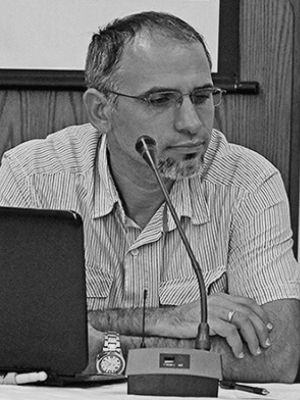

Dr Marios Kyriakides
Associate Head of Department
Assistant Professor
School of Sciences and Engineering
Department of Engineering

Dr Stelios Neophytou
Head of Department
Associate Professor
School of Sciences and Engineering
Department of Engineering

Professor Marios Nestoros
Associate Dean
Professor
School of Sciences and Engineering
Department of Engineering

Dr Loizos Papaloizou
Assistant Professor
School of Sciences and Engineering
Department of Engineering
Member of the Senate

Professor Nectarios Papanicolaou
Professor
School of Sciences and Engineering
Department of Computer Science
Member of the Council

Dr Panayiotis Polycarpou
Associate Professor
School of Sciences and Engineering
Department of Engineering


Dr Elias Yfantis
Associate Professor
School of Sciences and Engineering
Department of Engineering

Dr Stavroula Christou
Adjunct Faculty

Vassilis Gaganis
Adjunct Faculty

Dr Stefano Patruno
Adjunct Faculty
Mr Paraskevas Petroyiannis
Adjunct Faculty
Mr Demetris Photiou
Adjunct Faculty

Dr Ernestos Sarris
Adjunct Faculty