
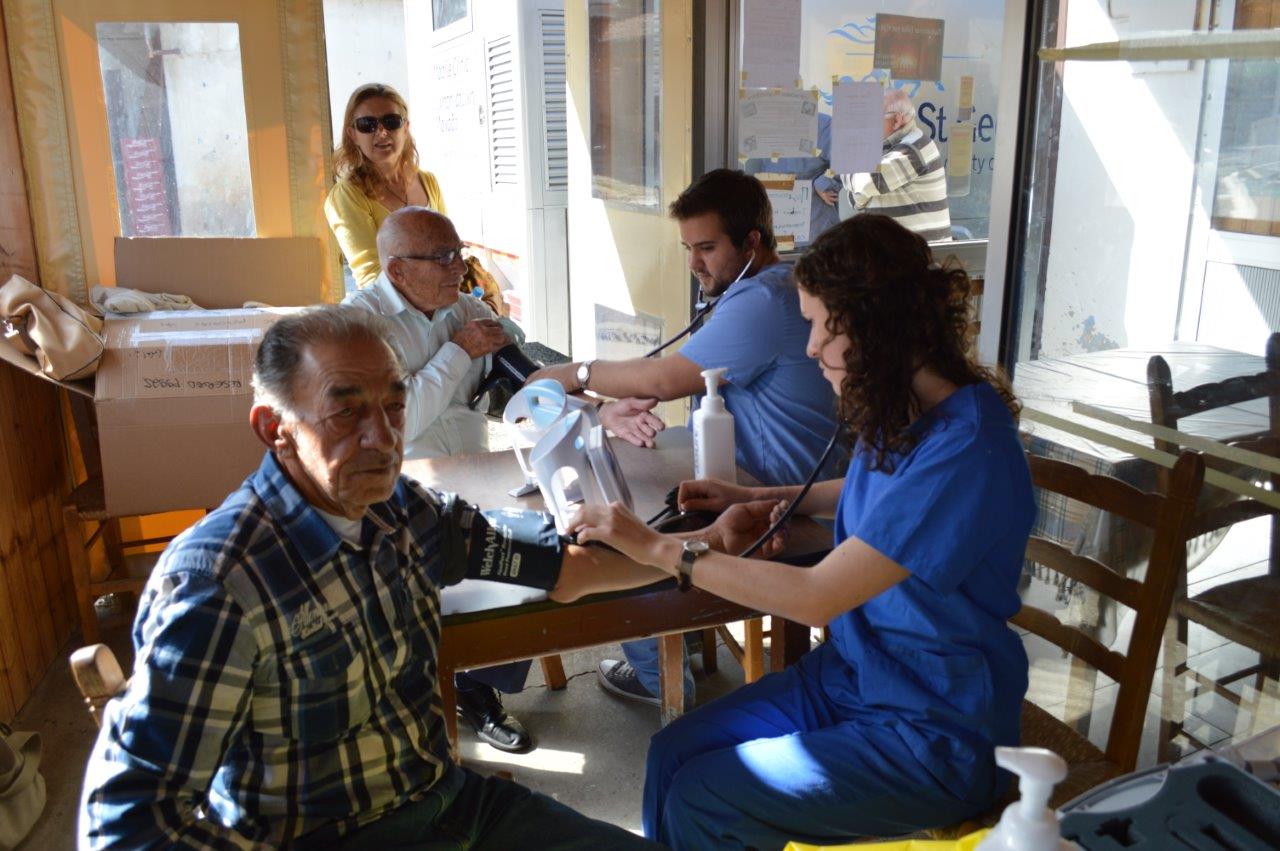
In November 2012, an initiative began at the University of Nicosia Medical School: the launch of a Mobile Clinic project. A group of seven medical student volunteers set off under the guidance of faculty and staff, with destination the remote mountain communities of Kampos and Tsakistra in the Troodos region.
During this inaugural expedition, the students conducted essential health screenings that included blood pressure and glucose measurements, as well as spirometry tests. The majority of the clinic’s patients were elderly residents, who welcomed the students warmly. This initial outreach provided vital health services to the local community and allowed a first connection between the medical students and the local population.
The volunteers of the first Mobile Clinic Expedition

L-R standing: Dr Evie Vassiliou, Dr Ourania Kolokotroni, Mr George Sycallides, Dr Alex Kroushovski, then students – now Drs Kevin Morrison, Kyle Klosowski, Sharon Weinberg, Amy Leshner, Steohen Perry. L-R sitting: Prof Alexia Papageorgiou, Ms Maria Perdikogiannis, then students – now Drs Oliver Siaw, Hanna Mason. Picture taken by Angelos Stambolis
In the first years that followed, the Mobile Clinic expanded its activities and included interactive presentations on health issues such as the effects of smoking, eating disorders, and sexual health, delivered to high schools and lyceums. The programme also began offering educational presentations tailored for adult citizens, covering crucial topics such as fall prevention and polypharmacy awareness. It also added dermatological evaluations and musculoskeletal examinations, and ran a 3-year campaign focusing on breast cancer via performing Pap-tests. The annual participation in the Anti-Cancer Society’s Christmas fundraising fiesta, where blood pressure measurements are provided to attendees, became a cherished tradition. The project’s development continued with increasing the variety of tests offered. Screening of ophthalmic diseases and ECGs were added to the list, offered on a yearly basis. In 2023, the collaboration with Cy Checkpoint started, which is the AIDS Solidarity Movement’s Community Testing Centre, through which the clinic included HIV and other STI rapid testing, serving various populations in community venues, including Nicosia’s central squares and the annual Cyprus Pride festival. By March 2025, the clinic introduced paediatric services. This initiative marked the first time where the project expanded to child health services, offered on the side of health screening testing for adults.
Over the years, the Mobile Clinic broadened its geographical reach, covering rural areas from Paphos to Famagusta, from Limassol to Troodos, from traditional to contemporary festivals and events. The success of that very first expedition in 2012 laid the groundwork for an ongoing commitment to healthcare, eventually evolving into a bi-monthly activity that currently engages over 200 students, and offers about 1500 tests to around 700 patients each academic year.
The evolution of the Mobile Clinic projects in the past 13 years highlights the role that medical students can play in bridging healthcare accessibility and medical education. The project allows an open line of communication with local communities; it allows students to feel useful, alongside developing their clinical and communication skills; it makes people living in hard-to-reach areas feel they are not forgotten.
This student-lead, student-run endeavour also encourages students to demonstrate their leadership skills and give back to the community, while gaining back valuable hands-on experience. Social responsibility is integral to the Medical School’s ethos, demonstrated through a comprehensive and diverse commitment to serving society. As the programme continues to grow, it ensures that both healthcare and learning reach those in need.