

The Procedural Law Unit of the University of Nicosia participates in the 7th European Forum on Private International Law
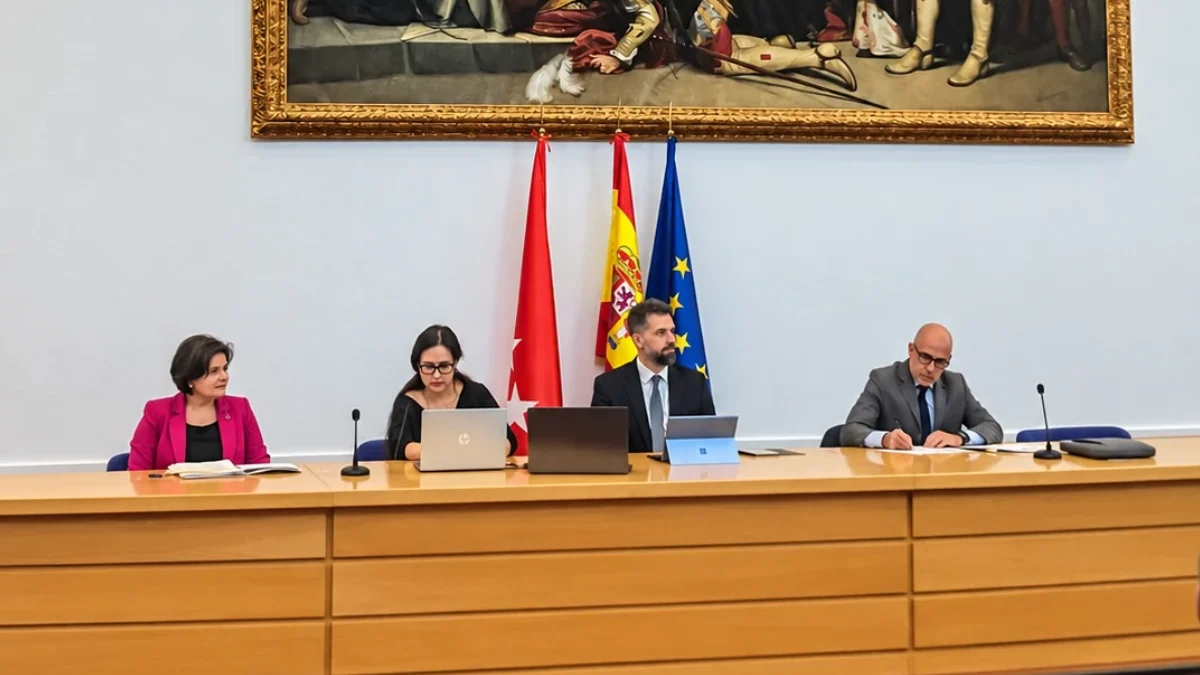
The Procedural Law Unit (PLU) of the School of Law at the University of Nicosia contributed to the VII Foro europeo de Derecho internacional privado, held at the Faculty of Law of the Universidad de Alcalá, Spain, on 29–30 October 2026. Under the theme “Relectura del Derecho internacional privado desde la teoría y la práctica”, the event examined private international law through both theoretical and practical perspectives.
The programme connected questions of party autonomy and cross-border judicial protection with developments in arbitration, fundamental rights and the digital economy. It also addressed family and succession matters, the circulation of decisions and the recognition of legal situations across borders.
Among the scholars featured in the programme were Antonia Durán Ayago of the Universidad de Salamanca, Esperanza Castellanos Ruiz of the Universidad Carlos III de Madrid and Afonso Patrão of the Universidade de Coimbra. Their contributions addressed, respectively, party autonomy in the protection of vulnerable adults, the law applicable to the merits in international arbitration, and the recognition of private divorces in Europe. The programme also included contributions from judges and practising lawyers, connecting academic analysis with procedural practice.
PLU’s contribution focused on the relationship between technological change and procedural safeguards. Dr Nicolas Kyriakides, Director of the Procedural Law Unit, presented the paper “AI-assisted ADR in cross-border civil disputes: access to justice, party autonomy, and procedural fairness”, co-authored with Dr Christoforos Tsavatopoulos and Eva Manolova. The presentation formed part of the panel on cross-border judicial protection, arbitration and technological innovation on 29 October.
The paper examines how AI may assist with translation, document review and negotiation, potentially making dispute resolution more accessible to individuals and smaller businesses. It asks what safeguards are needed to preserve party autonomy and fairness, including transparency, proportionate explanations and effective human oversight. It further connects these safeguards with the recognition and enforcement of arbitral awards and mediated settlements, distinguishing existing legal requirements from proposed regulatory measures.
The Procedural Law Unit warmly thanks the Universidad de Alcalá and the organising team for hosting the conference and creating the opportunity for this exchange. The discussions provide a valuable basis for continued dialogue and future collaboration on cross-border civil justice, with procedural fairness and meaningful access to justice at the centre of that work.