
May 2021
 by Constandinos Tsindas
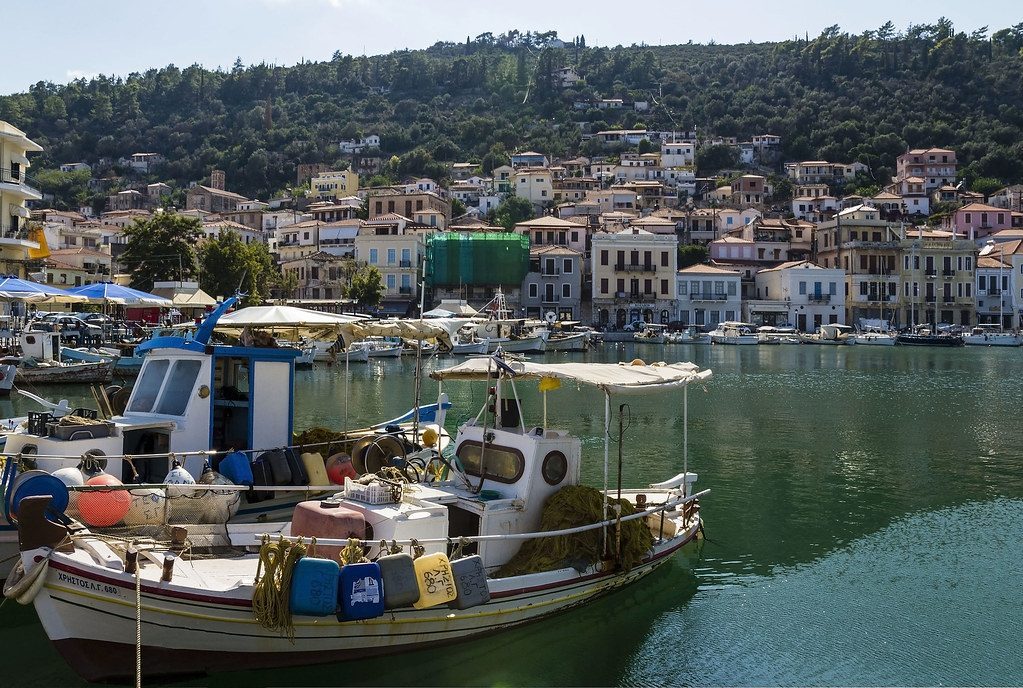
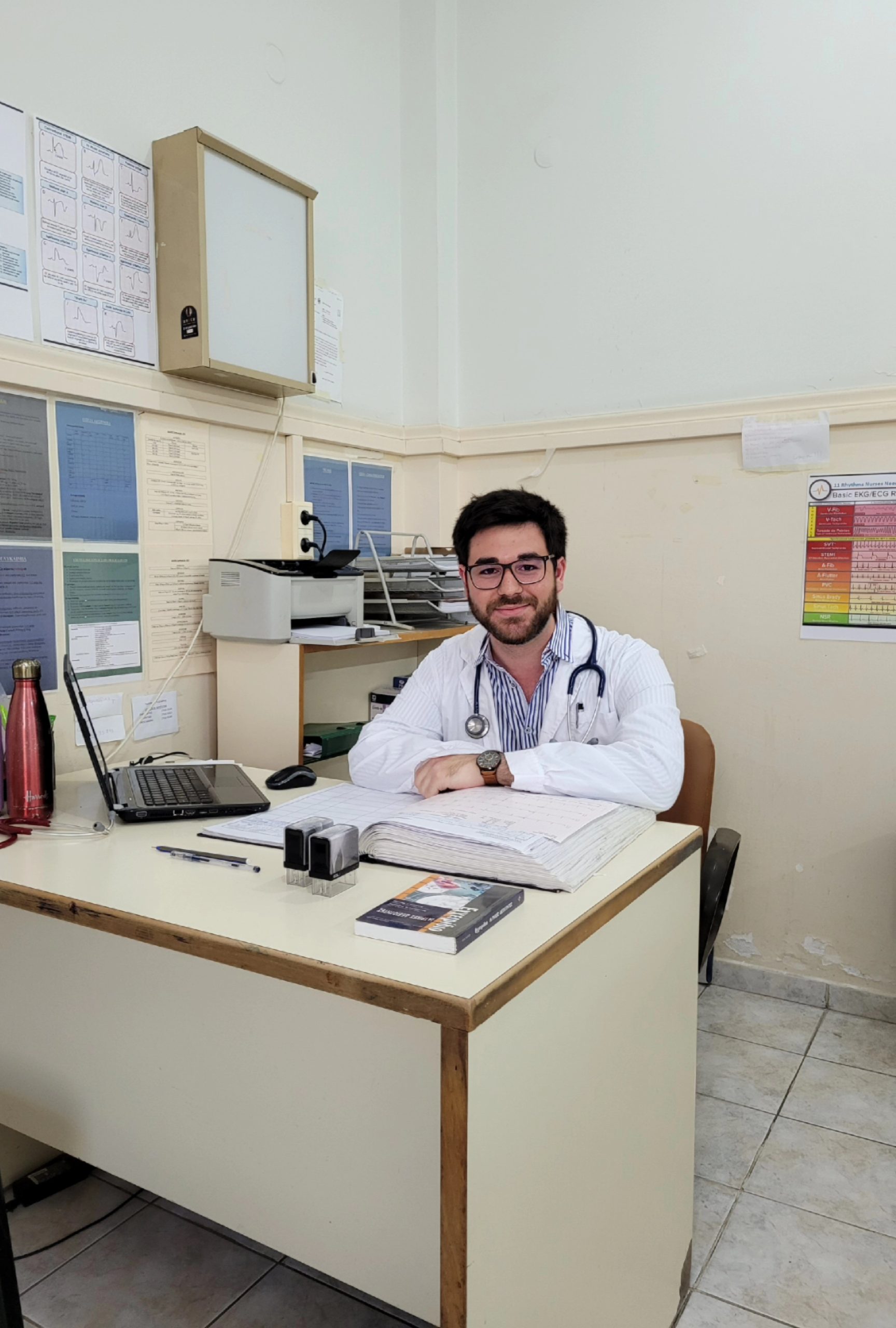
Foivos Koulaidis, a recent graduate of the Doctor of Medicine (MD) programme at the University of Nicosia Medical School, is now serving his one year rural medical internship in Gytheion, Greece.
How is your rural service at Gytheion thus far?
I am happy being a rural doctor at the Health Centre in Gytheion, a small town in the South Peloponnese. Following their graduation, all Greek doctors are subject to one year rural medical service before they start their residency training. A rural doctor is expected to provide primary healthcare to patients living in areas with no immediate access to hospitals. I find this to be an excellent transition between the medical school and the specialty years, although I do face challenges of not having all medical resources available at hospitals.
With every young doctor, launching your medical practice is always challenging, but, in time, you acquire experience, and get familiarized with the practice of medicine, while continuously improving on your clinical and communication skills, your clinical knowledge, and your ability to work with other colleagues. I consider that combining the clinical knowledge I acquired from the medical school, with the ongoing clinical experience at my workplace, as the key to a good medical practice.
Did the University of Nicosia Medical School assist in securing this post?
As I mentioned before, in Greece, being a rural doctor is compulsory before you start your residency. Choosing to work in Gytheion, I believe was one of the best options in terms of quality of clinical experience to further enhance the strong foundation and clinical experience of my medical education.
The six-year MD programme helped me substantially, with all the necessary knowledge and skills needed not only to acquire my medical license, in order to practise medicine in Greece and to enlist in a hospital for residency, but also to meet the difficulties a medical doctor has to face and overcome when working in a challenging rural environment. The guidance and knowledge of the faculty, staff and clinicians have been a great support throughout my studies into my first career steps.
How have you connected your current practice to your training in the MD programme?
The teaching, research and clinical knowledge and experience I acquired from the Medical School was a great boost for my everyday practice and made my life much easier during patient consultations. It’s something you do not immediately realize while dealing with a patient. But evaluating your performance and how you managed the patient, trust me, you do realize that everything you learnt during your studies has come into practice. It’s very satisfying to actually apply the clinical and communication skills and knowledge I gained from the MD programme, in order to save lives. Whenever I want to look further on a particular patient case I dealt with during my practice, I always find myself studying my notes from my Medical School years.
Would you recommend the MD programme to others?
Absolutely, I believe that the quality and level of education at the University of Nicosia Medical School are excellent. Looking back, I can now safely say that the MD programme prepared me extremely well throughout my six years of study. It provided the necessary knowledge and skills that gave me confidence while dealing with patients and proceeding methodically from a patient history and physical examination to the appropriate differential diagnosis and treatment plan.
Where do you see yourself in the coming years?
I will start my residency as of next year, at “Evangelismos” Hospital in Athens, one of the largest and best hospitals in Greece. Thus, I hope I will be finishing my residency in 5 years’ time. Judging from my experience and interaction with my fellow doctors at Gytheion Health Centre, I trust that the MD training has fully prepared us by providing the necessary medical knowledge to proceed to a demanding medical specialty. I should add that, while working as a rural doctor, I also attend the MSc in Family Medicine programme, delivered by the University of Nicosia Medical School. This programme constantly improves my clinical knowledge and skills and is quite relevant to my current Medical practice at the Health Centre in Gytheio.
What is your perspective on the pandemic?
Doctors face the pandemic and its consequences every day during our clinical practice. The SARS COVID-19 has changed our lives. The way medicine is practised in hospitals and other health institutions has changed. Many physicians of different specialties have to work together in COVID wards and in the ICU to treat patients with COVID. We also constantly try to apply measures to prevent the spread of the disease. In the meantime, the evidence is constantly growing and, as physicians, our duty is to always update our knowledge and provide the best care to our patients. Throughout the MD programme, I explored factors which influence the health of the population and promote health, which has come into global focus battling this pandemic. I hope these difficult times have made us more sensitive and responsible towards our health and to others around us. Medicine cannot overcome this global issue alone – it is peoples’ awareness and responsibility towards our fellow citizens that can actually make the difference.