

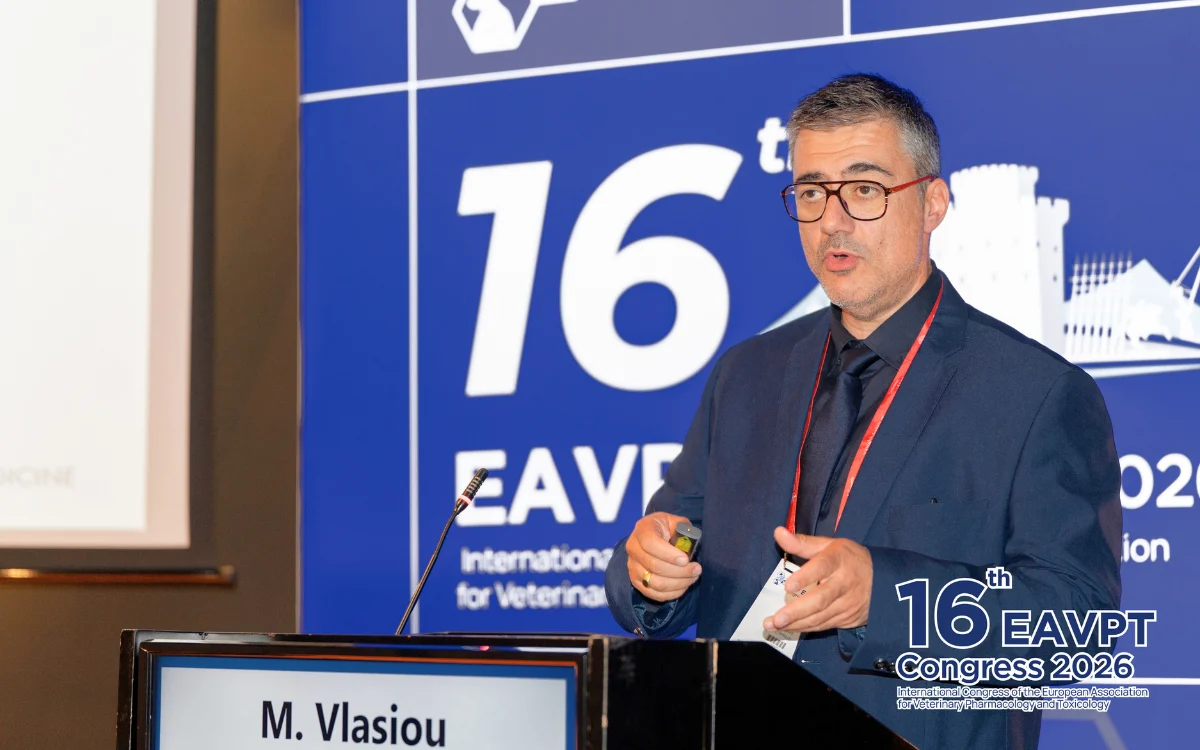
Veterinary School faculty member presents zinc–polyphenol antimicrobial research at conference in Thessaloniki
Dr Manos C. Vlasiou, Assistant Professor at the University of Nicosia School of Veterinary Medicine, presented research on novel zinc–polyphenol complexes as potential antimicrobial candidates at the 16th International Congress of the European Association for Veterinary Pharmacology and Toxicology (EAVPT) in Thessaloniki.
The presentation, entitled “Novel zinc–polyphenol complexes as next-generation therapeutics: Antimicrobial, antioxidant and toxicological profiles,” was delivered during Session B: Antimicrobials and Alternatives. The work was conducted by M. Vlasiou, T. Panayi, K. Voskarides, A. Achilleos, L. Zacharia, R. Badash and A. Kotsoni.
The research represents a multidisciplinary collaboration across the University of Nicosia, bringing together researchers from the School of Veterinary Medicine, the Medical School and the School of Life and Health Sciences.
The study investigated zinc–polyphenol complexes as potential antimicrobial candidates through an integrated experimental and computational approach. It combined molecular modelling, antimicrobial assays, protein-binding studies, cellular toxicity assessment and in vivo zebrafish toxicity evaluation, providing complementary evidence on the pharmacological and toxicological profiles of these compounds.
The research was subsequently published in The Veterinary Journal: Pharmacology & Toxicology under the title “Early pharmacological evaluation of zinc-polyphenol complexes against foodborne veterinary pathogens: Computational, antimicrobial and toxicological insights.”
The study contributes to the search for alternative antimicrobial strategies within a One Health framework, addressing the growing challenge of antimicrobial resistance and supporting further investigation of zinc–polyphenol complexes as potential antimicrobial candidates.
Dr Vlasiou has also become a member of the European Association for Veterinary Pharmacology and Toxicology, further strengthening the University of Nicosia’s engagement with the international veterinary pharmacology and toxicology research community.