

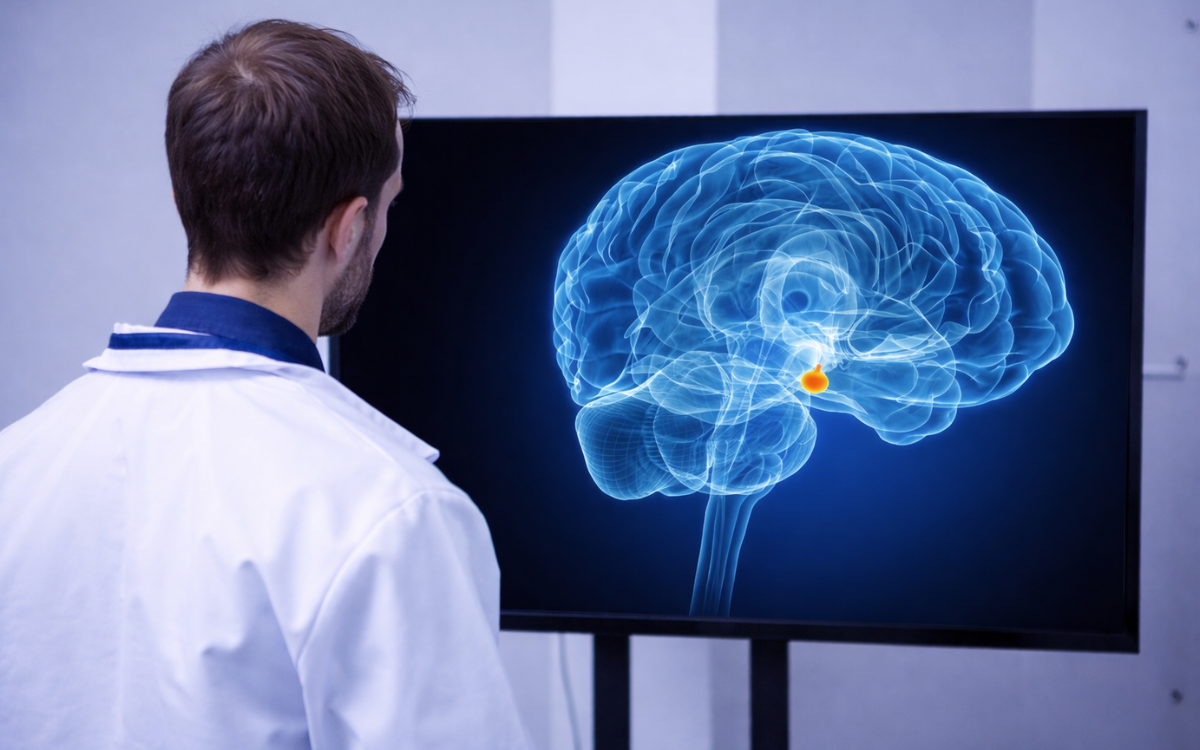
Medical students and faculty publish review on classification of tumors of the pituitary gland
Medical students of the graduate-entry programme, Nirmal Pandit, Yahya Wehbeh, and Omar Itani, under the supervision of Professor Dimitrios N. Kanakis, have recently published a paper in the peer-reviewed journal International Journal of Molecular Sciences.
The article reviews WHO’s latest classification of pituitary neuroendocrine tumours (PitNETs), highlighting how the use of transcription factor (TF) markers can improve tumour diagnosis, identify more aggressive subtypes, and pave the way for personalised patient care.
In the past, PitNETs were mainly classified based on clinical hormone excess and staining characteristics. The new classification, however, focuses on identifying the type of pituitary cell the tumour came from, using specific transcription factors – proteins that control cell identity.
By examining TF expression rather than hormone staining, pathologists can identify tumour types more accurately, especially tumours that do not produce hormones.
The present review explains how the new classification will help doctors recognise more aggressive tumour types, which may grow faster or come back after treatment. It also proposes a step-by-step laboratory testing strategy using additional markers to enhance diagnostic accuracy.
Finally, the paper discusses how genetic mutations, advanced molecular tests, and even artificial intelligence could further improve diagnosis and allow more personalised treatment strategies in the future.