
HELIUM Project Kick-Off Meeting Held in Leuven, Belgium
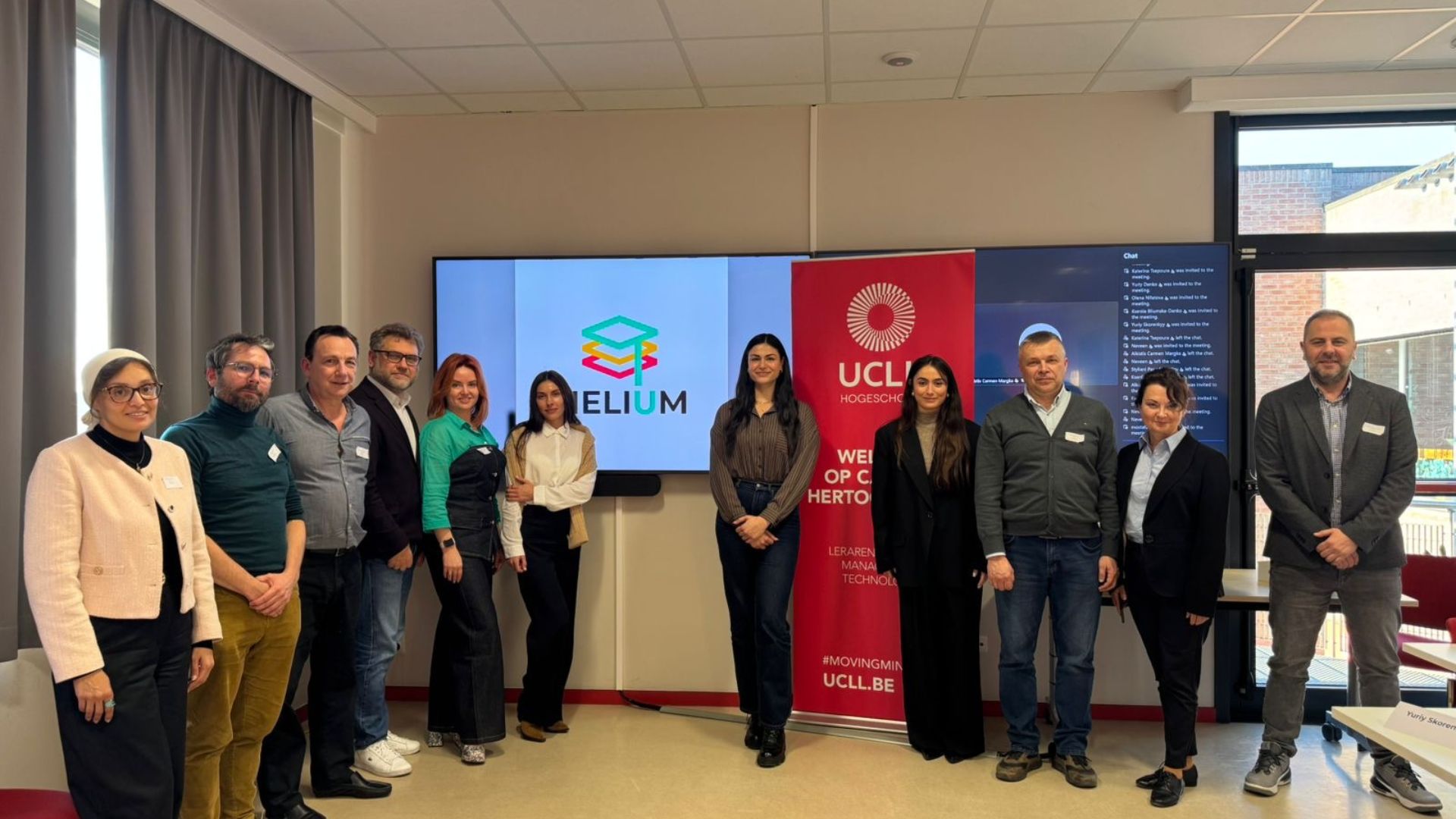
The HELIUM project (Helix for Education Leadership and Universal Modernisation, Project ID 101237913) officially launched with its Kick-Off Meeting on 26–27 February 2026 in Leuven, Belgium, hosted by UC Limburg (UCLL). The meeting brought together project partners from across Europe, Egypt and Ukraine to initiate collaboration and coordinate the implementation of the project’s activities over the next two years.
HELIUM is an Erasmus+ Capacity Building in Higher Education initiative designed to support the modernisation of higher education institutions by strengthening governance structures, promoting internationalisation and advancing digital transformation. The project also focuses on enhancing cooperation between universities, industry and public institutions through a structured Triple Helix collaboration model.
During the two-day kick-off meeting, partners discussed the project’s objectives, management structure and work plan. The consortium explored the initial steps needed to support participating higher education institutions in Egypt and Ukraine, particularly in areas such as governance reform, the development of international cooperation mechanisms, and the integration of digital learning tools and innovative teaching methods. Discussions also highlighted the importance of inclusive education policies and improving access to higher education for underrepresented and disadvantaged groups.
The Gnosis Mediterranean Institute for Management Science of the University of Nicosia participates in the HELIUM consortium, contributing its expertise in research, capacity building and higher education innovation. The meeting provided an important opportunity for partners to align their roles across work packages and establish effective coordination mechanisms for project implementation, monitoring, and dissemination.
Next Steps
Following the Kick-Off Meeting in Leuven, the HELIUM consortium will move forward with the first phase of the project, which includes:
- conducting diagnostic assessments of partner higher education institutions,
- developing governance and internationalisation frameworks aligned with European standards,
- establishing International Relations Offices to support mobility and cooperation,
- organising training activities on digital pedagogy, governance, and university–industry collaboration and
- developing a digital ecosystem to facilitate collaboration between universities, industry, and policymakers.
Through these activities, HELIUM aims to strengthen institutional capacities and promote sustainable reforms that will help higher education institutions become more inclusive, digitally advanced, and internationally connected.