Orthopedic Science and Rehabilitation
(MSc, 1.5 Years or 3 Semesters)
Duration
1.5 years
Qualification Awarded
Master of Science in Orthopedic Science and Rehabilitation
Level of Qualification
Master Degree (2nd Cycle)
Language of Instruction
Greek
Mode of Study
Full-time or Part-time
Minimum ECTs Credits
90
No enrolments for current semester
Orthopedic Science and Rehabilitation (MSc, 1.5 Years or 3 Semesters)
| Duration | 1.5 years |
| Qualification Awarded | Master of Science in Orthopedic Science and Rehabilitation |
| Level of Qualification | Master Degree (2nd Cycle) |
| Language of Instruction | Greek |
| Mode of Study | Full-time or Part-time |
| Minimum ECTS Credits | 90 |
No enrolments for current semester
Υποβάλετε Αίτηση
Profile of the Programme
The aim of the programme is to provide students with the essential academic and professional expertise within the fields of Musculoskeletal and Sports Physiotherapy and Orthopaedic Science.
The programme is designed in a way that challenges students’ knowledge and clinical skills in the assessment and treatment of complex musculoskeletal disorders though critically analysing their decision making based on the best current evidence.
Occupational Profiles of Graduates with Examples
Graduates will advance their employability opportunities in the private and public sector as specialized physiotherapists, medical doctors or other related professionals in physiotherapy clinics, rehabilitation centres, hospitals and sport clubs.
Access to Further Studies
Graduates can continue their post-graduate studies at a doctoral level in Musculoskeletal Physiotherapy, Sports Physiotherapy, Orthopedic Science and Clinical Biomechanics research fields. The University of Nicosia will offer from 2016 a doctoral degree (PhD) in Physiotherapy and Clinical Biomechanics.
Course assessment usually comprises of a comprehensive final exam and continuous assessment. Continuous assessment can include amongst others, mid-terms, projects, and class participation.
Letter grades are calculated based on the weight of the final exam and the continuous assessment and the actual numerical marks obtained in these two assessment components. Based on the course grades the student’s semester grade point average (GPA) and cumulative point average (CPA) are calculated.
The student must complete 90 ECTS and all programme requirements.
A minimum cumulative grade point average (CPA) of 2.0 is required. Thus, although a ‘D-‘ is a PASS grade, in order to achieve a CPA of 2.0 an average grade of ‘C’ is required.
By the end of the programme students will be able to:
- Adjust and effectively collaborate with different health care providers (doctors, physiotherapist, sport scientists, sports physiologists) in a multi-professional team working environment.
- Develop advanced manual skills in the assessment and treatment of patients with musculoskeletal disorders, sport injuries and orthopaedic pathologies.
- Efficiently inform patients about the nature and prognosis of their disorder.
- Sufficiently identify patients with serious pathologies and refer them for appropriate management.
- Effectively assess a variety of musculoskeletal disorders and pathologies and plan conservative or surgical interventions based on current best evidence.
- Conduct and act in an ethical and professional manner by appreciating and protecting patients’ anonymity, individual dignity, and personal beliefs.
- Critically evaluate and analyse the best evidence for clinical practice and apply it for the treatment of patients.
- Interpret the latest advancements in basic science research fields (Biology, Neuroscience, Biomechanics etc.).
- Extend their knowledge in clinical research methodology and participate in clinical trials for the production of promising new evidence.
| Course Code | Course Title | ECTS Credits |
|---|---|---|
| PTHE-501 | Biostatistics | 10 |
| PTHE-502 | Neuro-musculoskeletal Pathology and Diagnosis | 10 |
| PTHE-503 | Biology of Connective Tissue | 5 |
| PTHE-504 | Research Methodology in Health | 5 |
| Course Code | Course Title | ECTS Credits |
|---|---|---|
| PTHE-511 | Rehabilitation of Musculoskeletal System I / Lab | 10 |
| PTHE-512 | Rehabilitation of Musculoskeletal System II / Lab | 10 |
| PTHE-513 | Functional Rehabilitation | 10 |
| Course Code | Course Title | ECTS Credits |
|---|---|---|
| PTHE-521 | Rehabilitation of Sports Injuries I with Lab | 10 |
| PTHE-522 | Rehabilitation of Sports Injuries II with Lab | 10 |
| PTHE-523 | Physiology of Exercise | 10 |
| Course Code | Course Title | ECTS Credits |
|---|---|---|
| PTHE-531 | Clinical Orthopedic Science I | 10 |
| PTHE-532 | Clinical Orthopedic Science II | 10 |
| PTHE-533 | Science of Orthopedic Surgery | 10 |
| Course Code | Course Title | ECTS Credits |
|---|---|---|
| PTHE-551 | Physiology of Chronic Pain | 10 |
| PTHE-552 | Pain and Reflexive Therapies | 10 |
| PTHE-553 | Movement Analysis in Orthopedic Rehabilitation | 10 |
| PTHE-554 | Biomechanics in Orthopedics | 10 |
| PTHE-590 | Research Thesis | 20 |
Semester 1
| Course ID | Course Title | ECTS Credits |
|---|---|---|
| PTHE-501 | Biostatistics | 10 |
| PTHE-502 | Neuro-musculoskeletal Pathology and Diagnosis | 10 |
| PTHE-503 | Biology of Connective Tissue | 5 |
| PTHE-504 | Research Methodology in Health | 5 |
Semester 2
| Course ID | Course Title | ECTS Credits |
|---|---|---|
| PTHE-511 | Rehabilitation of Musculoskeletal System I / Lab | 10 |
| PTHE-512 | Rehabilitation of Musculoskeletal System II / Lab | 10 |
| PTHE-513 | Functional Rehabilitation | 10 |
Semester 3
| Course ID | Course Title | ECTS Credits |
|---|---|---|
| PTHE-552 | Pain and Reflexive Therapies | 10 |
| PTHE-590 | Research Thesis | 20 |

Dr Manos Stefanakis
Associate Head
Associate Professor
School of Life and Health Sciences
Department of Health Sciences
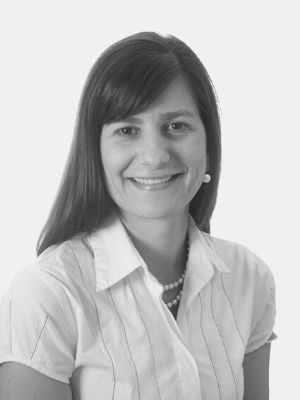
Dr Christina Michailidou
Assistant Professor
Programme Coordinator
School of Life and Health Sciences
Department of Health Sciences

Mr Markianos Kokkinos
Adjunct Faculty