
Business Administration : Finance
(MBA, 3 Semesters) - E-Learning/Distance Learning (Online)
Duration
3 Semesters
Qualification Awarded
Master of Business Administration – Finance
Level of Qualification
Master Degree (2nd Cycle)
Language of Instruction
English and Greek
Mode of Study
E-Learning/Distance Learning (Online)
Minimum ECTs Credits
90
Apply Today
Business Administration : Finance (MBA, 3 Semesters) – E-Learning/Distance Learning (Online)
| Duration | 3 Semesters |
| Qualification Awarded | Master of Business Administration – Finance |
| Level of Qualification | Master Degree (2nd Cycle) |
| Language of Instruction | English and Greek |
| Mode of Study | E-Learning/Distance Learning (Online) |
| Minimum ECTS Credits | 90 |
Apply Today
Profile of the Programme
The University of Nicosia MBA is designed for ambitious professionals who want to lead with confidence in a fast-changing, technology-driven business environment. Aligned with the mission of the School, the programme develops capable and responsible leaders who can guide organisations through complexity, drive meaningful transformation, and contribute to sustainable economic and social progress.
The programme offers a rigorous and contemporary curriculum that combines academic depth with practical relevance. Students develop a strong foundation in sustainable leadership, strategic decision-making, business transformation, and effective communication. Throughout their studies, they are encouraged to connect theory with practice, evaluate complex business challenges, and respond to technological change with insight and adaptability.
A strong focus is placed on critical thinking, ethical judgement, and strategic perspective. Students learn how to assess business environments, make informed decisions, and create long-term value for organisations and society. The programme also supports the development of essential professional skills through group projects, advanced analytical tools, and digital collaboration platforms such as Engageli®, helping students strengthen their communication, teamwork, and leadership abilities in diverse and dynamic settings.
Key Objectives and Learning Goals
- Sustainable Leadership: Students develop knowledge of sustainable leadership frameworks and their application in contemporary organisations.
- Strategic Decision-Making: Students learn to apply and integrate the core functional areas of business to support effective strategic decision-making.
- Business Transformation: Students build an understanding of how technological change shapes business transformation in a global context.
- Effective Communication: Students strengthen their ability to communicate clearly and synthesise complex business ideas effectively.
Occupational Profiles of Graduates with Examples
Graduates of the MBA programme at UNIC are exceptionally well-equipped for the global job market. The combination of advanced theoretical knowledge and practical skills provides them with a competitive advantage across industries. Key career outcomes include:
- The development of strategic thinking and leadership capabilitiesthat enable graduates to take on executive roles, manage teams, and drive organizational success.
- Strong competencies in decision-making, problem-solving, and communication, which are highly valued by employers across sectors.
- The ability to pursue diverse career paths in industries such as finance, marketing, consulting, technology, healthcare, and operations management.
- Enhanced employability due to the programme’s emphasis on industry trends, collaborative work, and exposure to real-world business scenarios.
Graduates also benefit from the university’s extensive career services and its strong relationships with employers, ensuring they are well-prepared to seize opportunities and tackle challenges in a competitive global economy.
Access to Further Studies
Graduates of the programme can be accepted into Third Cycle degrees (Doctoral Degree)
To be considered for admission to the University of Nicosia’s MBA programme, applicants must meet the following requirements:
ACADEMIC QUALIFICATIONS
Possess a Bachelor’s Degree from a recognized university (American, European, or equivalent).
Standardized Test Scores: Submit a Graduate Management Admission Test (GMAT) score with a minimum of 400.
*Applicants with a cumulative overall average (COA) of 2.5 or higher on a 4-point scale, 2.2 according to UK standards, or those with three years of professional experience, are exempt from the GMAT requirement.
**Candidates lacking the GMAT may receive provisional admission to begin foundation courses but must submit their GMAT scores as stipulated above for full acceptance into the MBA programme.
Curriculum Vitae: Provide a detailed CV outlining educational background, academic and professional experiences, publications, awards, and other relevant achievements.
Letters of Recommendation: Submit two letters of recommendation from individuals familiar with the applicant’s academic and professional environment.
Personal Statement: Present a comprehensive personal statement that highlights personal competencies and strengths, and reflects on how the programme aligns with their career goals and personal development.
LANGUAGE PROFICIENCY
For the programme offered in Greek, demonstrate proficiency in the Greek language.
For programmes in English, proficiency must be shown unless the applicant’s first degree was taught in English. Acceptable evidence includes a TOEFL score of 550 or higher (213 for Computer-based; 79-80 for Internet-based), a GCSE/GCE English Language “O” Level with a grade of “C” or above, an IELTS score of 6.5 or higher, or a Cambridge First Certificate with a Grade B or above.
Course assessment usually comprises of a comprehensive final exam and continuous assessment. Continuous assessment can include amongst others, weekly interactive activities, projects, exercises and quizes, positive online forum participation etc.
Letter grades are calculated based on the weight of the final exam and the continuous assessment and the actual numerical marks obtained in these two assessment components. Based on the course grades the student’s semester grade point average (GPA) and cumulative point average (CPA) are calculated.
The student must complete 90 ECTS and all programme requirements.
A minimum cumulative grade point average (CPA) of 2.0 is required. Thus, although a ‘D-‘ is a PASS grade, in order to achieve a CPA of 2.0 an average grade of ‘C’ is required.
Through the MBA programme, students develop the knowledge, skills, and strategic perspective needed to lead effectively in today’s complex business environment.
- Sustainable Leadership
Students develop a strong understanding of sustainable leadership and its role in responsible and effective management.
By the end of the programme, students will be able to:
- apply sustainability principles, operational guidelines, and responsible leadership practices in business contexts
- analyse organisational environments and recommend actions that support long-term effectiveness and sustainable success
- Strategic Decision-Making
Students strengthen their ability to make informed strategic decisions by integrating knowledge from across the main areas of business.
By the end of the programme, students will be able to:
- combine knowledge of the business environment, management theory, and professional practice to develop strategic recommendations for organisations
- make value-creating decisions in business environments shaped by rapid technological change
- Business Transformation
Students gain the knowledge and tools needed to understand and respond to business transformation in a global and technology-driven economy.
By the end of the programme, students will be able to:
- use analytical frameworks and technological tools to evaluate factors affecting organisations and the global economy
- apply knowledge of the global economy and international business to support well-informed business decisions
- Effective Communication
Students build the communication and collaboration skills needed to present ideas clearly, solve problems effectively, and work successfully with others.
By the end of the programme, students will be able to:
- communicate complex business issues clearly using quantitative and qualitative methods, statistical analysis, and information technology
- work and communicate effectively with team members from different backgrounds and with varied perspectives
Section: A Foundation Courses
ECTS: Min. 0 Max. 0
| Course ID | Course Title | ECTS Credits |
|---|---|---|
| MBAN-540DE | Foundations in Economics | 0 |
| MBAN-550DE | Foundations in Accounting | 0 |
| MBAN-560DE | Foundations in Statistics and Research | 0 |
| MBAN-570DE | Foundations in AI and Business | 0 |
Section: B Compulsory Courses
ECTS: Min. 36 Max. 36
| Course ID | Course Title | ECTS Credits |
|---|---|---|
| MBAN-620DE | Business Economics | 6 |
| MBAN-630DE | Financial and Managerial Accounting | 6 |
| MBAN-640DE | Financial Management | 6 |
| MBAN-650DE | Strategic Marketing | 6 |
| MBAN-660DE | Corporate Strategy | 6 |
| MBAN-680DE | HR Mgt and Organizational Effectiveness | 6 |
Section: C Concentration: Finance
ECTS: Min. 54 Max. 54
Notes: NON-THESIS Option: MBAN-671DE, MBAN-672DE, MBAN-710DE, MBAN-720DE,MBAN-754DE, MBAN-755DE and 3 free elective courses.
THESIS Option: MBAN-710DE, MBAN-720DE, MBAN-750DE, MBAN-754DE, MBAN-755DE.
| Course ID | Course Title | ECTS Credits |
|---|---|---|
| MBAN-658DE | Fin Tech and Digital Finance | 6 |
| MBAN-659DE | Corporate Finance and Sustainable Investing | 6 |
| MBAN-671DE | Business Process Management | 6 |
| MBAN-672DE | Globalization and International Business Challenges | 6 |
| MBAN-710DE | Decision Making Methods and Tools | 6 |
| MBAN-720DE | Scholarship and Research | 6 |
| MBAN-750DE | Thesis in Finance | 30 |
| MBAN-754DE | Portfolio Analysis | 6 |
| MBAN-755DE | Financial Markets and Institutions | 6 |
| MBAN-756DE | Financial Risk Management | 6 |
| MBAN-757DE | Global Financial Strategies | 6 |
Section: D Unallocated Courses
ECTS: Min. 0 Max. 0
Section: A Προπαρασκευαστικά Μαθήματα
ECTS: Min. 0 Max. 0
| Course ID | Course Title | ECTS Credits |
|---|---|---|
| MBAN-540DG | Οικονομικά | 0 |
| MBAN-550DG | Λογιστική | 0 |
| MBAN-560DG | Στατιστική και Έρευνα | 0 |
| MBAN-570DG | Τεχνητή Νοημοσύνη στις Επιχειρήσεις | 0 |
Section: B Υποχρεωτικά Μαθήματα Κορμού
ECTS: Min. 36 Max. 36
| Course ID | Course Title | ECTS Credits |
|---|---|---|
| MBAN-620DG | Οικονομική των Επιχειρήσεων | 6 |
| MBAN-630DG | Χρηματοοικονομική και Διοικητική Λογιστική | 6 |
| MBAN-640DG | Χρηματοοικονομική Διοίκηση | 6 |
| MBAN-650DG | Στρατηγικό Μάρκετινγκ | 6 |
| MBAN-660DG | Εταιρική Στρατηγική | 6 |
| MBAN-680DG | Διαχείριση Ανθρώπινου Δυναμικού και Οργανωσιακή Αποτελεσματικότητα | 6 |
Section: C Μαθήματα Κατεύθυνσης – Χρηματοοικονομικά
ECTS: Min. 54 Max. 54
Notes: Επιλογή ΧΩΡΙΣ ΔΙΠΛΩΜΑΤΙΚΗ: MBAN-671DG, MBAN-672DG, MBAN-710DG, MBAN-720DG, MBAN-754DG, MBAN-755DG, και (3) τρία μαθήματα ελεύθερης επιλογής.
Επιλογή ΜΕ ΔΙΠΛΩΜΑΤΙΚΗ: MBAN-710DG, MBAN-720DG, MBAN-750DG, MBAN-754DG, MBAN-755DG.
| Course ID | Course Title | ECTS Credits |
|---|---|---|
| MBAN-658DG | Fin Tech και Ψηφιακή Χρηματοοικονομική | 6 |
| MBAN-659DG | Εταιρική Χρηματοδότηση και Βιώσιμες Επενδύσεις | 6 |
| MBAN-671DG | Επιχειρησιακές Διαδικασίες και Συστήματα | 6 |
| MBAN-672DG | Παγκοσμιοποίηση και Διεθνείς Επιχειρηματικές Προκλήσεις | 6 |
| MBAN-710DG | Μέθοδοι και Εργαλεία Λήψης Αποφάσεων | 6 |
| MBAN-720DG | Αρχές Ακαδημαϊκής Έρευνας | 6 |
| MBAN-750DG | Πτυχιακή στα Χρηματοοικονομικά | 30 |
| MBAN-754DG | Ανάλυση Χαρτοφυλακίου | 6 |
| MBAN-755DG | Χρηματοπιστωτικές Αγορές και Ιδρύματα | 6 |
| MBAN-756DG | Διαχείριση Οικονομικών Κινδύνων | 6 |
| MBAN-757DG | Παγκόσμιες Οικονομικές Στρατηγικές | 6 |
Section: D Unallocated Courses
ECTS: Min. 0 Max. 0
Semester 1
| Course ID | Course Title | ECTS Credits | Lecturer |
|---|---|---|---|
| MBAN-680DE | HR Mgt and Organizational Effectiveness | 6 | Prof. Maria Michailidis |
| MBAN-630DE | Financial and Managerial Accounting | 6 | Prof. Melpo Iacovidou |
| MBAN-720DE | Scholarship and Research | 6 | Prof. Leonidas Efthymiou |
| MBAN-754DE | Portfolio Analysis | 6 | Tsangari H. |
| MBAN-658DE | Fin Tech and Digital Finance | 6 |
Semester 2
| Course ID | Course Title | ECTS Credits | Lecturer |
|---|---|---|---|
| MBAN-650DE | Strategic Marketing | 6 | Prof. Demetris Vrontis |
| MBAN-660DE | Corporate Strategy | 6 | Neophytos Karamanos |
| MBAN-710DE | Decision Making Methods and Tools | 6 | Janell Komodromou |
| MBAN-755DE | Financial Markets and Institutions | 6 | |
| MBAN-756DE | Financial Risk Management | 6 | Repousis S. |
Semester 3
| Course ID | Course Title | ECTS Credits | Lecturer |
|---|---|---|---|
| MBAN-620DE | Business Economics | 6 | Prof. Spyros Hadjidakis |
| MBAN-640DE | Financial Management | 6 | Prof. Svetlana Sapuric |
| MBAN-671DE | Business Process Management | 6 | Prof. Angeliki Kokkinaki |
| MBAN-672DE | Globalization and International Business Challenges | 6 | Prof. Epaminondas Epaminonda |
| MBAN-659DE | Corporate Finance and Sustainable Investing | 6 |
Note: The above semester breakdown is an indicative one. A few of the courses are electives and can be substituted by others. Students may contact their academic advisor and consult their academic pathway found on this website under “Schools & Programmes”.
Εξάμηνο 1
| Course ID | Course Title | ECTS Credits | Lecturer |
|---|---|---|---|
| MBAN-680DG | Διαχείριση Ανθρώπινου Δυναμικού και Οργανωσιακή Αποτελεσματικότητα | 6 | Prof. Μαρία Μιχαηλίδης |
| MBAN-630DG | Χρηματοοικονομική και Διοικητική Λογιστική | 6 | Prof. Μέλπω Ιακωβίδου |
| MBAN-720DG | Αρχές Ακαδημαϊκής Έρευνας | 6 | Prof. Λεωνίδας Ευθυμίου |
| MBAN-754DG | Ανάλυση Χαρτοφυλακίου | 6 | Repousis S. |
| MBAN-756DG | Διαχείριση Οικονομικών Κινδύνων | 6 | Repousis S. |
Εξάμηνο 2
| Course ID | Course Title | ECTS Credits | Lecturer |
|---|---|---|---|
| MBAN-660DG | Εταιρική Στρατηγική | 6 | Prof. Νεόφυτος Καράμανος |
| MBAN-650DG | Στρατηγικό Μάρκετινγκ | 6 | Prof. Άλκης Θράσσου |
| MBAN-710DG | Μέθοδοι και Εργαλεία Λήψης Αποφάσεων | 6 | Prof. Χαριτίνη Τσαγκάρη |
| MBAN-755DG | Χρηματοπιστωτικές Αγορές και Ιδρύματα | 6 | |
| MBAN-756DG | Διαχείριση Οικονομικών Κινδύνων | 6 | Repousis S. |
Εξάμηνο 3
| Course ID | Course Title | ECTS Credits | Lecturer |
|---|---|---|---|
| MBAN-620DG | Οικονομική των Επιχειρήσεων | 6 | Prof. Σπύρος Χατζηδάκης |
| MBAN-640DG | Χρηματοοικονομική Διοίκηση | 6 | Prof. Πέτρος Λοής |
| MBAN-671DG | Επιχειρησιακές Διαδικασίες και Συστήματα | 6 | Prof. Αγγελική Κοκκινάκη |
| MBAN-672DG | Παγκοσμιοποίηση και Διεθνείς Επιχειρηματικές Προκλήσεις | 6 | Prof. Αθανάσιος Τσιρίκας |
| MBAN-757DG | Παγκόσμιες Οικονομικές Στρατηγικές | 6 | Repousis S. |
Σημείωση: Το πιο πάνω πρόγραμμα ανά εξάμηνο είναι ενδεικτικό. Μερικά από τα μαθήματα είναι επιλογής και μπορούν να αντικατασταθούν με άλλα.
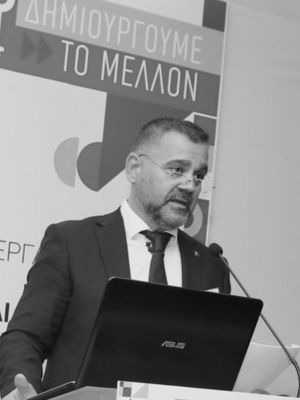
Professor Demetris Vrontis
Vice Rector for Faculty and Research
Professor
School of Business
Department of Management
Member of the Senate
Member of the Council



Dr Svetlana Sapuric
Acting Associate Head of Department
Associate Professor
School of Business
Department of Accounting, Economics and Finance

Professor Ioanna Papasolomou
Associate Dean
Professor
School of Business
Department of Management


Professor Petros Lois
Head of Department
Professor
School of Business
Department of Accounting, Economics and Finance


Professor Angelika Kokkinaki
Dean of the School of Business
Professor
School of Business
Department of Management
MBA Director
Member of the Senate


Professor Nicos Kartakoullis
President of the Council
Professor
School of Business
Department of Management

Dr Melpo Iacovidou
Assistant Professor
School of Business
Department of Accounting, Economics and Finance
Director, Erasmus+ and NEOLAiA Alliance Unit (ENAU)


Dr Epaminondas Epaminonda
Associate Professor
School of Business
Department of Management
Member of the Senate

Dr Marlen Demetriou
Associate Professor
School of Business
Department of Management

Dr Alexandros Antonaras
Associate Professor
School of Business
Department of Management
Vice President of Student Services

Dr Paraskevi Tsoutsa
Adjunct Faculty

Dr Neophytos Karamanos
Adjunct Faculty