



David Sinclair at the University of Nicosia: “Find Your Purpose and You Will Live Longer”
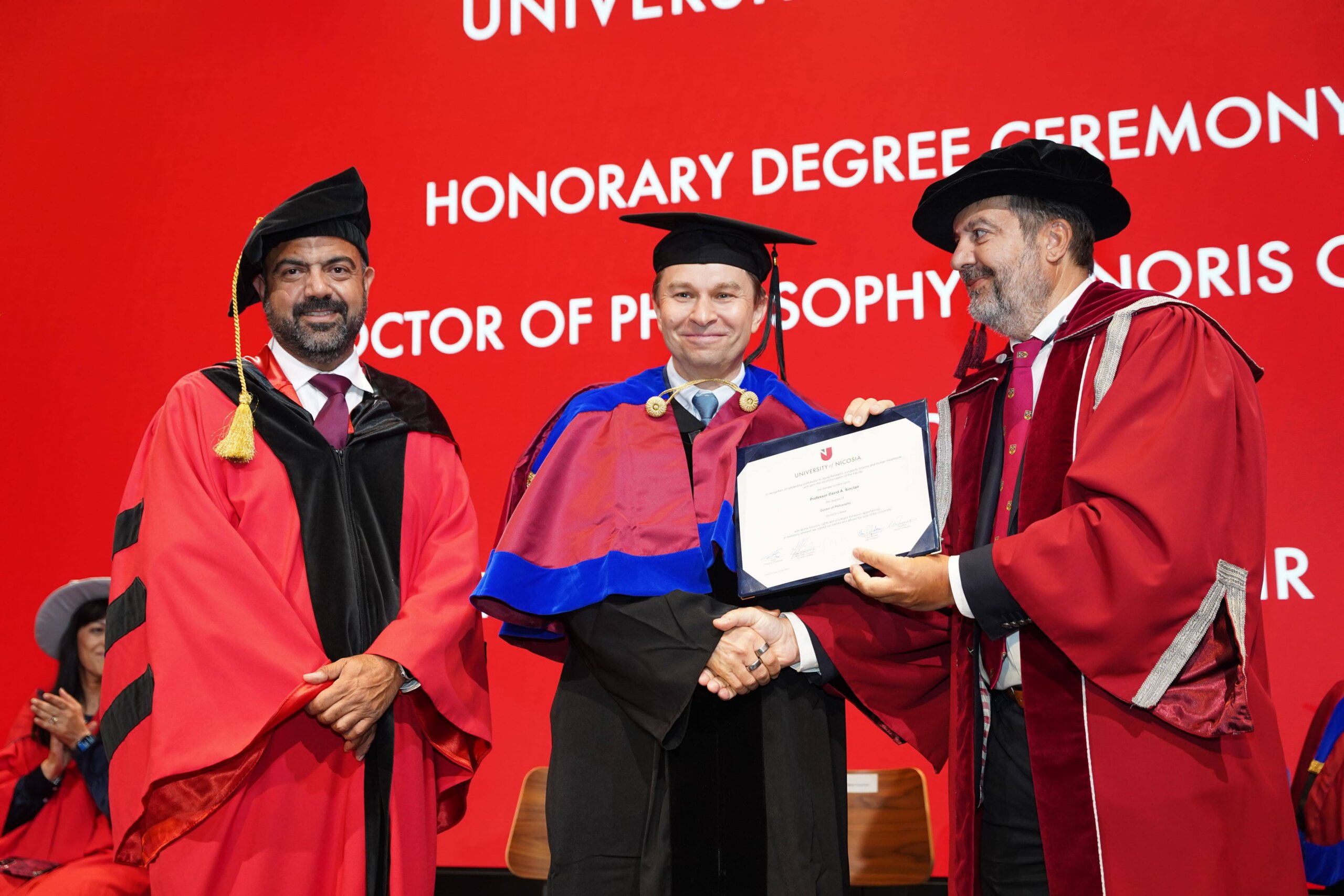
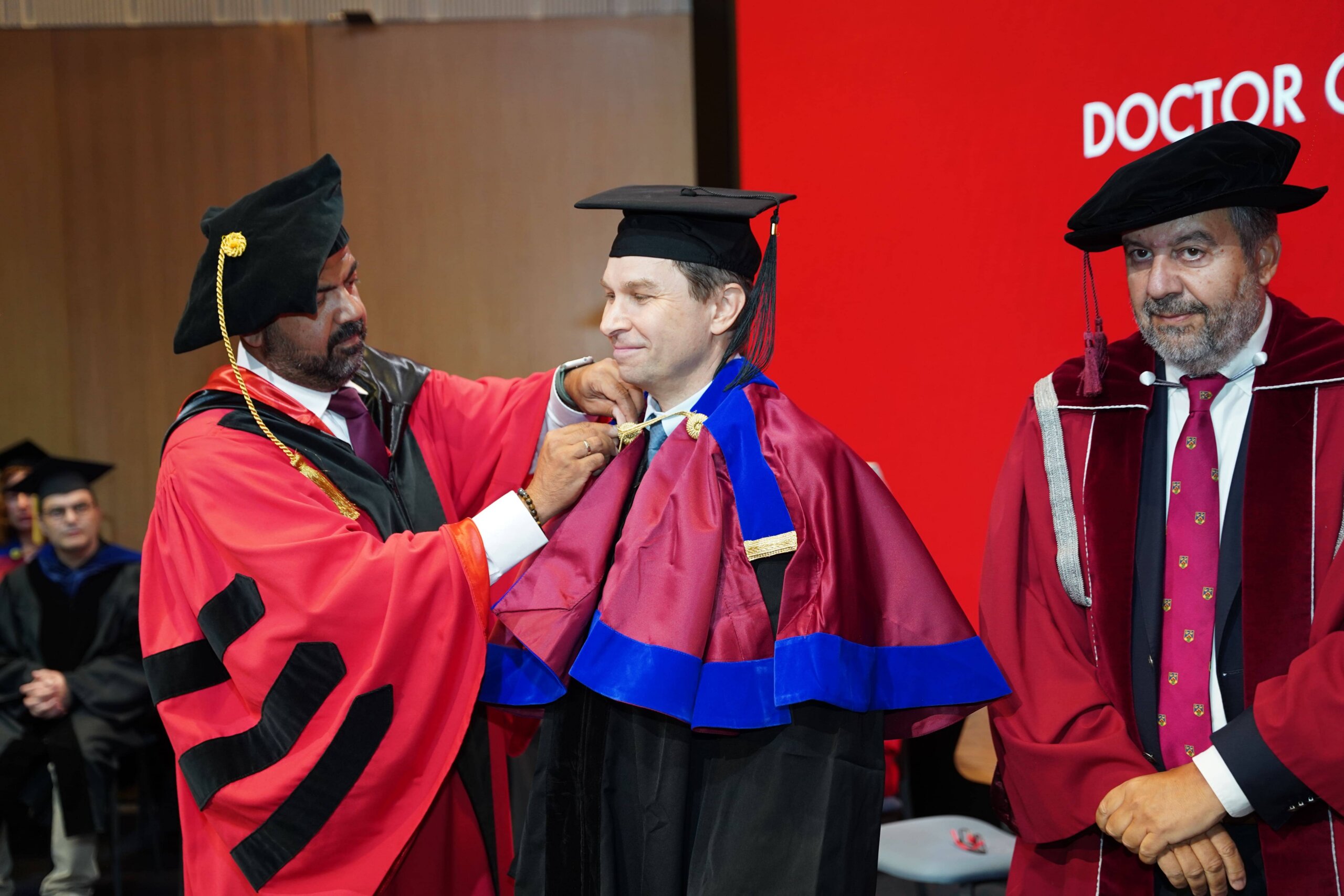
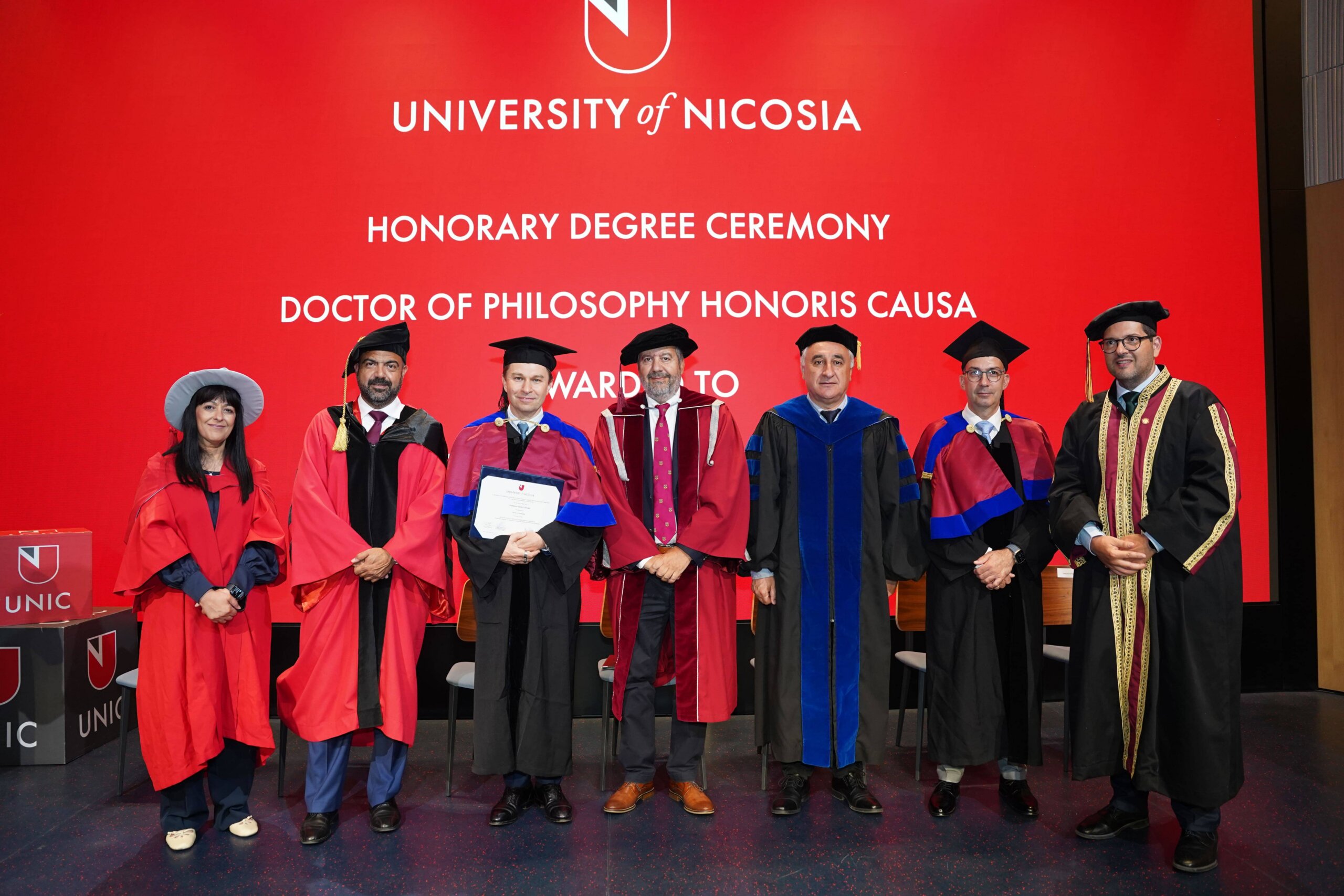
The University of Nicosia held an official honorary degree ceremony on Friday, 5 June 2026, during which the title of Doctor of Philosophy Honoris Causa was conferred upon David A. Sinclair, an internationally renowned scientist and Professor of Genetics at Harvard Medical School. The distinction was awarded by the University of Nicosia’s School of Life and Health Sciences in recognition of his outstanding contribution to the biology of aging, longevity science, translational medicine, and the broader public understanding of health.
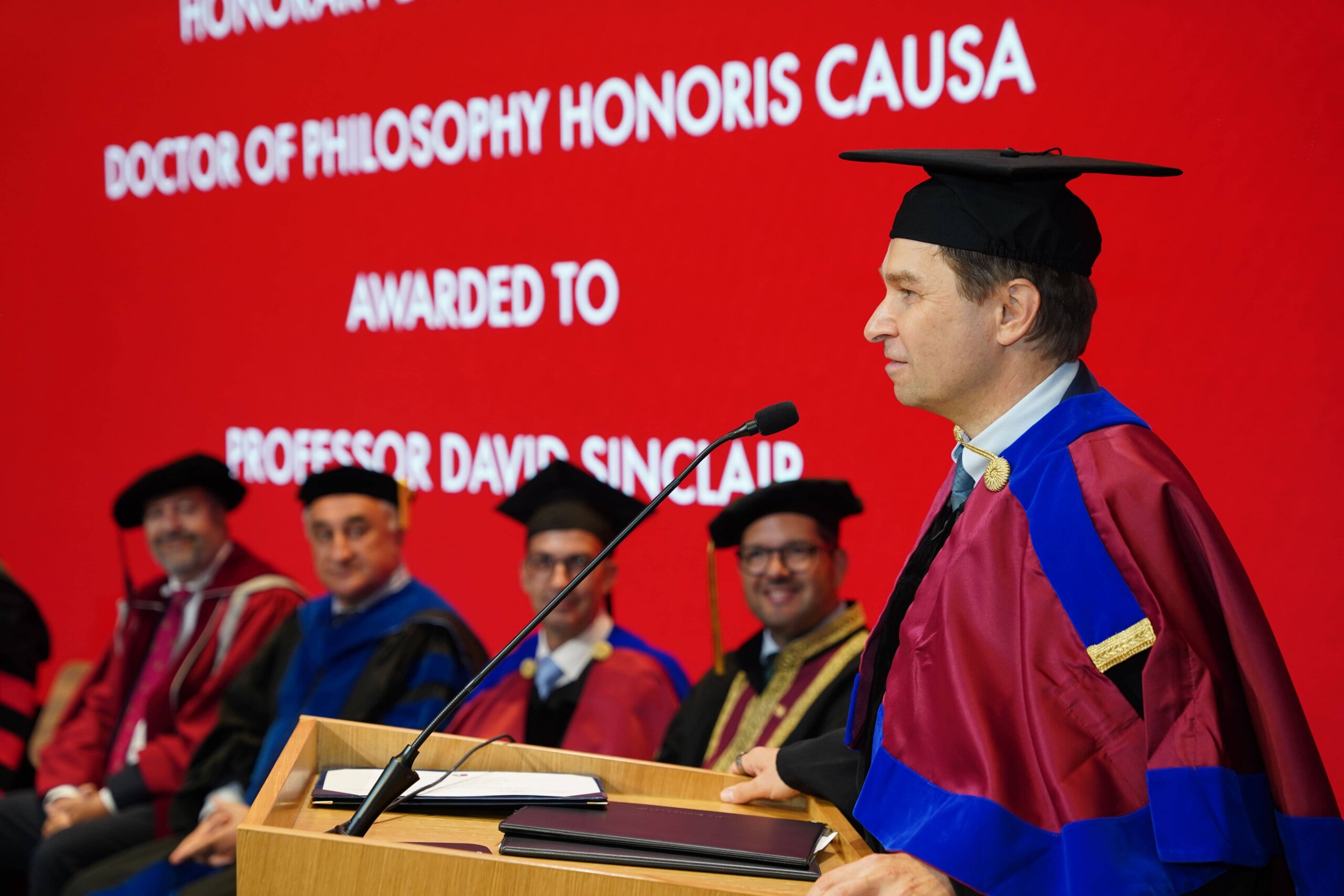
The ceremony included addresses by senior University officials, an academic procession, the presentation of the honouree, the conferral of the degree, the signing of the Register of Honorary Degrees, and an address by Professor Sinclair to an audience of academics, students, and invited guests.
Opening the ceremony, the Rector of the University of Nicosia, Professor Philippos Pouyioutas, welcomed those present, underscoring that the title of Honorary Doctorate represents the highest distinction that the University can bestow, reserved for exceptional individuals who have distinguished themselves through outstanding service to education, science, culture, and humanity.
The Dean of the School of Life and Health Sciences, Professor Kyriacos Felekkis, delivered a comprehensive presentation of Professor Sinclair’s scientific work. He noted that Professor Sinclair is a professor in the Department of Genetics at Harvard Medical School within the Blavatnik Institute and served as the founding director of the Glenn Center for Biology of Aging Research from 2005 to 2023. His scientific journey began in Australia, where he completed his PhD in molecular genetics at the University of New South Wales in 1995, before undertaking postdoctoral research at MIT, which Professor Felekkis noted helped shape a new era in the molecular biology of aging.
Professor Felekkis highlighted that from the very beginning of his career, Professor Sinclair has pursued a question of profound scientific and human significance: why do we age, and can the biological processes that drive aging be delayed, modified, or even partially reversed? He described how Sinclair’s laboratory was among the first to identify the role of sirtuins in regulating lifespan and to connect their activity to the biological effects of caloric restriction in mammals. Particular emphasis was placed on the information theory of aging – the proposal that aging is driven, at least in part, by the progressive loss of epigenetic information that enables cells to maintain their identity and function – as well as on the landmark study published in Nature in 2020, which demonstrated that the expression of reprogramming factors could restore youthful patterns of gene expression, promote nerve regeneration, and improve vision in mouse models. Professor Felekkis noted that the School’s mission – not only to understand disease but to prevent it, not merely to manage decline, but to preserve function, dignity, and quality of life – is fully aligned with Professor Sinclair’s work.
In his address, Professor Sinclair described the honour as one of the most meaningful moments of his career. He paid warm tribute to the people he credits for his success: his partner Serena, his son Benjamin, and his father Andrew, who, approaching his 87th birthday, has no aches, pains, or diseases, and whom Sinclair described as one of his heroes.
Reflecting on his scientific path, Professor Sinclair recalled advice from his postdoctoral mentor at MIT, Leonard Guarente, who told him: “Don’t do boring science – ask questions that no one else has the guts to ask yet.” He said that this spirit led him to ask why humans do not live for a thousand years and to develop the information theory of aging. He explained the theory in vivid terms:
“When you see an elderly person on the street who can barely walk, that’s not really an old person. That’s just someone whose cells need to be reset. They just need a new software installation.”
He went on to describe the broader moment now unfolding – one in which artificial intelligence and biological science are converging to make the previously impossible possible – and urged the students in the room to embrace it: “The winners will be students who embrace change, who have creativity, who can do things that have never been done before. Whenever there’s a revolution, the brave win.”
Closing his address with a direct message to the students in attendance, Professor Sinclair urged them to find their purpose: “Life is worth living, especially if you have a purpose. Find your passion and the good news is that those who have passion and purpose also live longer.” He expressed his admiration for the University of Nicosia, which he described as “a gem of the Mediterranean, like none other.”
Professor David Sinclair is Professor of Genetics at Harvard Medical School, author of the international bestseller Lifespan: Why We Age – and Why We Don’t Have To, the founder of numerous biotechnology companies, the holder of more than 50 patents, and a figure recognised by Time magazine as one of the world’s 100 most influential people. He has also been appointed an Officer of the Order of Australia for his distinguished service to medical research.
The honorary degree ceremony took place during Professor Sinclair’s visit to Cyprus, which also included a lecture the previous day at UNIC Athens, as part of the Evolve Lecture Series, on age reversal and the first human clinical trials aimed at addressing age-related decline.
Watch below the honorary degree conferral ceremony for David Sinclair, including his address.