Lab Overview
The Medicinal Chemistry Laboratory provides a focused environment for synthetic pharmaceutical chemistry, enabling students to translate principles of drug design, reaction chemistry, purification, and structure–activity relationships into practical laboratory competence. Its mission is to develop chemically literate pharmacy graduates and early-stage researchers who understand how molecular structure, synthesis, purity, and biological intent are connected.
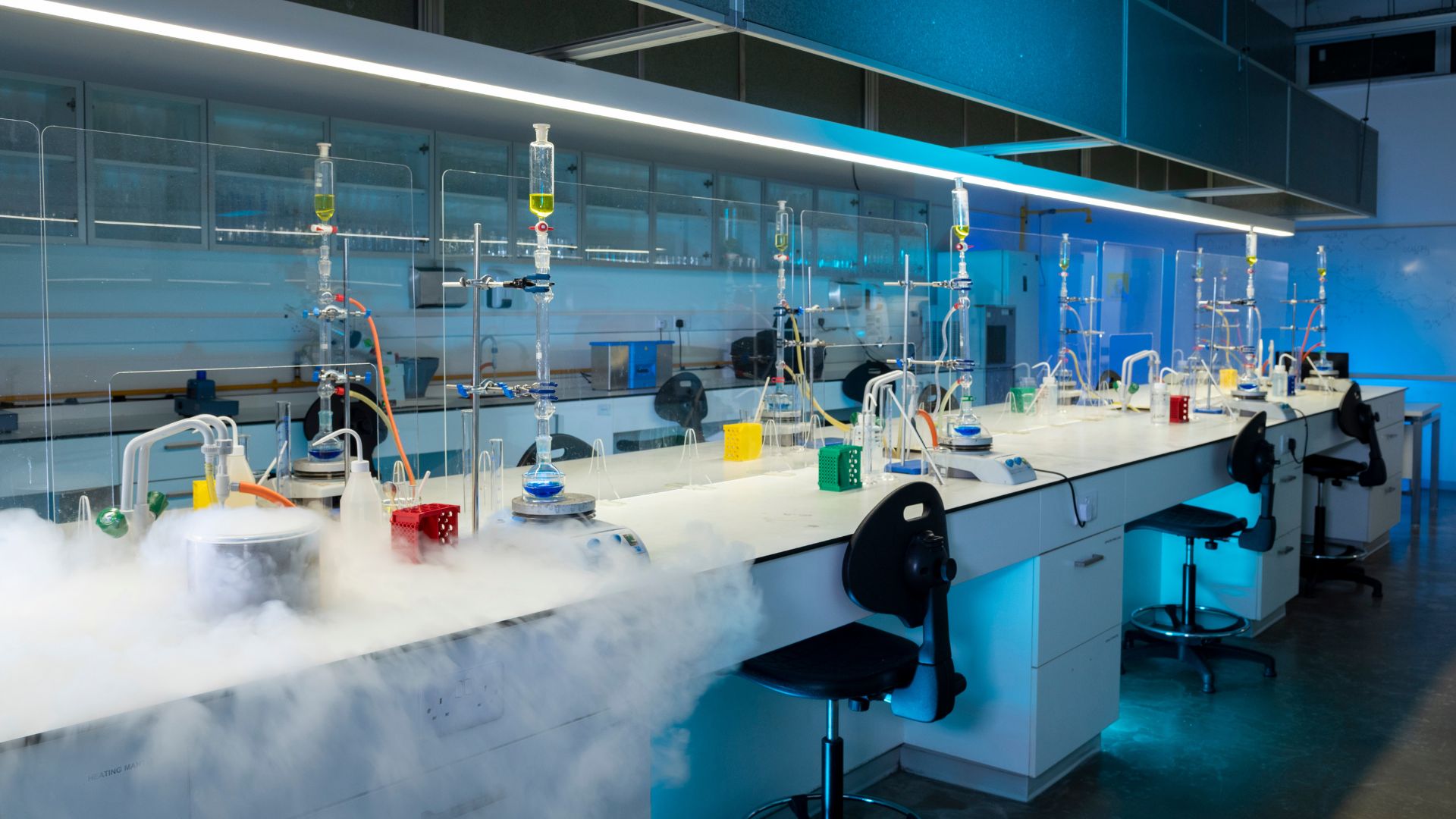
The laboratory supports the synthetic workflow from reaction set-up to intermediate isolation and preliminary purity assessment. Students learn how active pharmaceutical molecules and intermediates are generated, handled, purified, and evaluated. This provides a practical foundation for understanding medicinal chemistry not as an abstract design discipline, but as an experimental science shaped by yield, selectivity, safety, reproducibility, and analytical evidence.
The facility is strategically important for UNIC because it strengthens the chemical backbone of pharmaceutical education. It gives students direct exposure to the practical realities of molecule-making, supporting future work in drug discovery, process chemistry, analytical development, regulatory sciences, and pharmaceutical innovation.
Research & Innovation Focus
The laboratory enables teaching and project work in organic synthesis, medicinal chemistry methods, reaction optimisation, compound purification, thin-layer chromatography monitoring, melting point analysis, solvent handling, and structure–activity investigation. It supports educational models in which students connect drug-design rationale with experimental feasibility.
Teaching innovation is centred on the integration of theory and bench practice. Students learn to plan reactions, monitor progress, isolate products, assess purity, and interpret the limitations of experimental data. This is essential for developing scientists who can engage critically with drug-discovery literature, synthetic routes, and pharmaceutical development challenges.
Core Capabilities
The laboratory enables:
- Practical synthesis of active pharmaceutical molecules and intermediates.
- Reaction set-up, temperature-controlled synthesis, purification, and solvent removal.
- Preliminary compound characterisation through melting point assessment and TLC monitoring.
- Use of heating mantles, hot plates, rotary evaporators, UV viewing cabinets, drying ovens, refrigeration, and freezer storage.
- Training in safe handling of organic solvents, hazardous reagents, and standard synthetic chemistry workflows.
- Development of experimental competence in medicinal chemistry, organic synthesis, and structure–activity reasoning.
- Support for final-year projects and small-scale academic research in pharmaceutical chemistry.
Collaboration Opportunities
The Medicinal Chemistry Laboratory can support academic partnerships, early-stage synthetic feasibility studies, student research projects, and interdisciplinary work connecting pharmaceutical chemistry with pharmacology, natural products, formulation, and analytical science. It is well suited to collaborative educational projects with industry and research partners seeking to strengthen training in drug discovery, molecular design, and experimental medicinal chemistry.
Gallery