Oil, Gas and Energy Engineering
(MSc, 1.5 Years or 3 Semesters)
Duration
1.5 years
Qualification Awarded
Oil, Gas and Energy Engineering (MSc, 1.5 years or 3 semesters)
Level of Qualification
Master Degree (2nd Cycle)
Language of Instruction
English
Mode of Study
Full-time or Part-time
Minimum ECTs Credits
90
Apply Today
Oil, Gas and Energy Engineering (MSc, 1.5 Years or 3 Semesters)
| Duration | 1.5 years |
| Qualification Awarded | Oil, Gas and Energy Engineering (MSc, 1.5 years or 3 semesters) |
| Level of Qualification | Master Degree (2nd Cycle) |
| Language of Instruction | English |
| Mode of Study | Full-time and Part-time |
| Minimum ECTS Credits | 90 |
Apply Today
Profile of the Programme
Aims
The aims of the MSc in Oil, Gas and Energy Engineering are to:
- Prepare graduate students to succeed in a constantly growing, demanding, and highly competitive technological world;
- Provide specialization and extensive knowledge on the area of oil and gas energy engineering;
- Create an academic environment conducive to learning new oil and gas energy engineering concepts and technologies;
- Introduce graduate students to research on advanced oil, gas and energy engineering topics;
- Cultivate analytical skills and critical thinking;
- Promote engineering ethics and moral practices.
Objectives
The objectives of the programme are to:
- Provide specialized advanced knowledge and tools to our graduates in order to cope successfully in a technologically challenging environment;
- Facilitate learning in areas of oil, gas and energy engineering that are directly linked to industry and current state-of-the-art technology;
- Provide the theoretical and computational skills necessary for the solution of both theoretical and practical engineering problems;
- Provide practical and experimental hands-on experience that allows the students to link directly to fundamental knowledge and theory;
- Prepare graduates to work alone or in groups in order to provide engineering solutions;
- Prepare graduates to design/implement systems and processes towards the solution of engineering problems;
- Promote research, develop research skills and provide fundamental knowledge to support a successful career in research and development;
- Develop the ability of the graduates to write technical reports and scientific papers as well as to present their work before an audience;
- Provide the graduates with the opportunity to develop a greater technical competence in their area and become successful professionals throughout their lifetime;
- Prepare graduates so that they may be admitted to and successfully complete a PhD program in Oil, Gas and Energy engineering or related fields.
Career Prospects
This field offers very good career opportunities. Energy consumption grows steadily around the world, and investments in drilling and exploitation of energy resources, in particular gas and oil, are anticipated to continue strong. Thus, the global employment outlook is promising. It is further expected that the discovery of oil and gas in the Cyprus Exclusive Economic Zone will prompt the establishment of new companies and operations with an increasing number of job opportunities. Graduates of the Master’s program can be employed in a number of sectors including off-shore exploration, product refineries, on-shore liquefying natural gas (LNG) terminal, chemical manufacturing industries and research.
Access to Further Studies
Graduates of the programme have direct access to 3rd cycle studies (PhD), in this or a related field, at the University of Nicosia or other institutions in Cyprus, the EU and the USA/Canada.
English Language Proficiency
Applicants satisfy the English requirements if their first degree was taught in English. Otherwise, the minimum English-language qualifications for admission are:
- IELTS – 6.5 and above
- Anglia Examinations – Proficiency or Mastery
- Cambridge GCE AS Level English Language – C and above
- Cambridge GCE English A Levels – C and above
- Cambridge IGCSE or GCSE English as a First language – C and above
- Cambridge IGCSE or GCSE English as a Second language – B and above
- IB English A: Literature SL & HL – 4 and above
- IB English Standard Level (SL) – 5 and above
- IB English High Level (HL) – 4 and above
- Michigan Language Assessment (also known as Proficiency of Michigan) – 750 and above
- Password Test – 6.5 and above
- TOEFL (IBT) – 79 and above
- Cambridge Exams (First Certificate) – 176 and above or Pass
- Cambridge Exams (Proficiency Certificate) – 180 and above or Pass
Applicants who do not hold one of the listed qualifications, are required to take UNIC’s NEPTON English Placement Test and achieve a score at the ENGL-100 level, which can substitute for the standardized tests typically required for admission to postgraduate programs. The test is offered free of charge.
The University offers English courses at different levels to assist students in meeting the required standard for admission to a graduate programme.
Course assessment usually comprises of a comprehensive final exam and continuous assessment. Continuous assessment can include amongst others, midterms, projects, and class participation.
Letter grades are calculated based on the weight of the final exam and the continuous assessment and the actual numerical marks obtained in these two assessment components. Based on the course grades the student’s semester grade point average (GPA) and cumulative point average (CPA) are calculated.
The student must complete 90 ECTS. A minimum cumulative grade point average (CPA) of 2.0 is required. Thus, although a ‘D- ‘is a PASS grade, in order to achieve a CPA of 2.0 an average grade of ‘C’ is required.
Upon successful completion of this programme the graduates are expected to:
- Utilize knowledge and understanding of oil and gas science and engineering and apply safety and risk management techniques;
- Identify, formulate and solve complex oil, gas and energy engineering problems;
- Design and conduct experiments, as well as to analyze and interpret data;
- Design a system, component, or process to meet desired needs within realistic constraints;
- Analyze and evaluate the economics of oil and gas industry and the oil and gas energy markets;
- Develop solutions that meet the desired needs within the economic, manufacturing and sustainability borders;
- Use the techniques, skills, and modern engineering tools necessary for engineering practice and research;
- Function and communicate effectively in multi-disciplinary teams.
| Course ID | Course Title | ECTS Credits |
|---|---|---|
| OGEE-522 | LNG Systems | 7.5 |
| OGEE-525 | Petroleum Refining Processes | 7.5 |
| OGEE-530 | Energy Security and Geopolitics | 7.5 |
| OGEE-531 | Energy Efficiency | 7.5 |
| OGEE-535 | Petroleum Systems Modelling and Simulation | 7.5 |
| OGEE-540 | Energy Market and Economics | 7.5 |
| OGEE-542 | Health, Safety and Risk Management | 7.5 |
| OGEE-545 | Oil and Gas Transport Networks | 7.5 |
| OGEE-550 | Environmental Impact Assessment | 7.5 |
| OGEE-567 | Renewable Energy Sources & Technologies | 7.5 |
| OGEE-568 | Carbon Dioxide Storage | 7.5 |
| OGEE-591A | Thesis I | 7.5 |
| OGEE-591B | Thesis II | 7.5 |
| OGEE-591C | Thesis III | 15 |
Semester 1
| Course ID | Course Title | ECTS Credits |
|---|---|---|
| OGEE-510 | Petroleum Geology | 7.5 |
| OGEE-520 | Drilling Engineering | 7.5 |
| OGEE-525 | Petroleum Refining Processes | 7.5 |
| OGEE-591A | Thesis I | 7.5 |
Semester 2
| Course ID | Course Title | ECTS Credits |
|---|---|---|
| OGEE-521 | Reservoir Engineering | 7.5 |
| OGEE-524 | Well Engineering | 7.5 |
| OGEE-591B | Thesis II | 7.5 |
| OGEE-542 | Health, Safety and Risk Management | 7.5 |
Semester 3
| Course ID | Course Title | ECTS Credits |
|---|---|---|
| OGEE-523 | Production Engineering | 7.5 |
| OGEE-560 | Geophysical Methods | 7.5 |
| OGEE-591C | Thesis III | 15 |
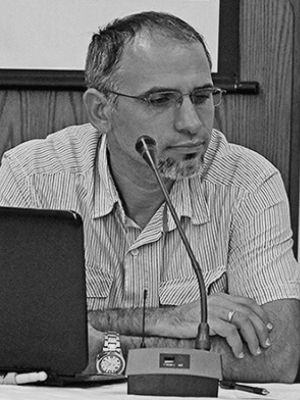

Professor Marios Nestoros
Associate Dean
Professor
School of Sciences and Engineering
Department of Engineering


Dr Stavroula Christou
Adjunct Faculty

Vassilis Gaganis
Adjunct Faculty

Dr Stefano Patruno
Adjunct Faculty
Dr Yianna Samuel
Adjunct Faculty

Dr Ernestos Sarris
Adjunct Faculty