

From Nicosia to Athens: Tropical Medicine lectures draw strong interest across both campuses
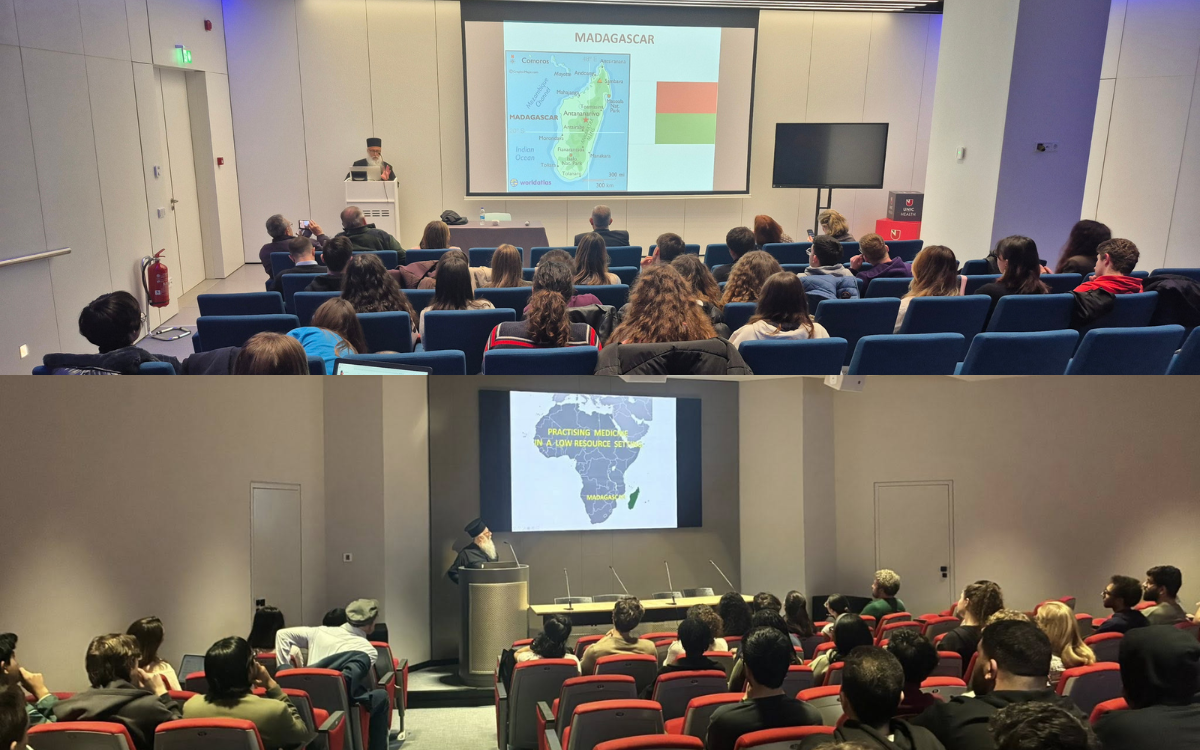
The Medical School recently had the pleasure of hosting two lectures on Tropical Medicine by Rev. Archimandrite Anastasios Poyiadjis, Honorary Professor of Tropical Medicine at the Medical School, first in Nicosia on 26 March and then in Athens on 31 March, bringing together students and faculty across both campuses.
With attendance exceeding 130 in total, the lectures offered participants a valuable opportunity to learn from the Archimandrite’s extensive experience as both a missionary priest and physician. Since 1993, he has dedicated much of his life to medical and pastoral service in several African countries, including Kenya, Uganda, Tanzania, Burundi, Rwanda, and Madagascar. Over the past 16 years, his work has been based in Madagascar.
The lectures gave attendees deeper insight into Tropical Medicine, a branch of medicine concerned with the prevention, diagnosis, and management of communicable and non-communicable diseases prevalent in tropical and subtropical regions. Drawing on his clinical and humanitarian work in rural Madagascar, the Archimandrite spoke about a wide range of health challenges commonly encountered in such settings.
These included parasitic and infectious diseases such as malaria and schistosomiasis, as well as conditions linked to environmental and working conditions, nutritional deficiencies, sanitation-related factors, and limited access to safe drinking water. Particular attention was also given to major public health concerns such as maternal and child mortality and malnutrition.
The lectures also explored the broader realities and challenges of practising medicine in low-resource settings, offering important perspectives for students and faculty with an interest in global health and tropical medicine.
During the sessions, Rev. Archimandrite Anastasios Poyiadjis also expressed his sincere thanks to the University of Nicosia for its continuous support, both financially and in terms of infrastructure, including the provision of furniture used to set up the laboratory of the clinic in Tulear, Madagascar.