Lab Overview
The Pharmacy Practice Laboratory at UNIC Athens is a high-fidelity professional environment designed to reproduce the clinical, operational, regulatory, and digital realities of contemporary community pharmacy. Its purpose is to train students to function as patient-facing healthcare professionals who can dispense safely, counsel effectively, manage risk, interpret medicines information, and operate within increasingly integrated care systems.
The laboratory positions the pharmacy not only as a medicines supply point, but as a regulated clinical service environment and a community health platform. Students practise the professional judgement required for prescription verification, OTC triage, patient counselling, chronic-disease support, health promotion, compounding, inventory control, cold-chain management, and digital workflow coordination.
Its “2030-ready” configuration gives students exposure to the service models and technologies that are reshaping pharmacy internationally. Electronic record systems, workflow stations, structured patient-care spaces, secure storage systems, and simulated good-practice environments allow students to understand pharmacy as a clinical, regulatory, digital, and operational profession. Within UNIC Athens Labs, the facility acts as the bridge between pharmaceutical science and real-world patient care.
Research & Innovation Focus
The laboratory enables innovation in pharmacy education, simulation-based clinical training, medication safety, professional communication, pharmacy informatics, service design, and pharmacist-led public-health interventions. Through structured scenarios and simulated patient encounters, students develop competence in counselling, adherence support, smoking cessation, diabetes care, minor-ailment triage, chronic-disease management, and risk communication.
The facility also supports applied exploration of how pharmacies can operate as more integrated primary-care nodes. Students and faculty can examine models for workflow redesign, expanded clinical services, patient-centred consultation, digital record use, stock governance, biologics handling, vaccine storage, and controlled-substance management. This makes the laboratory relevant not only for professional training, but also for the future development of community pharmacy practice, where prevention, data-enabled care, medicines optimisation, and service quality are becoming central expectations.
Core Capabilities
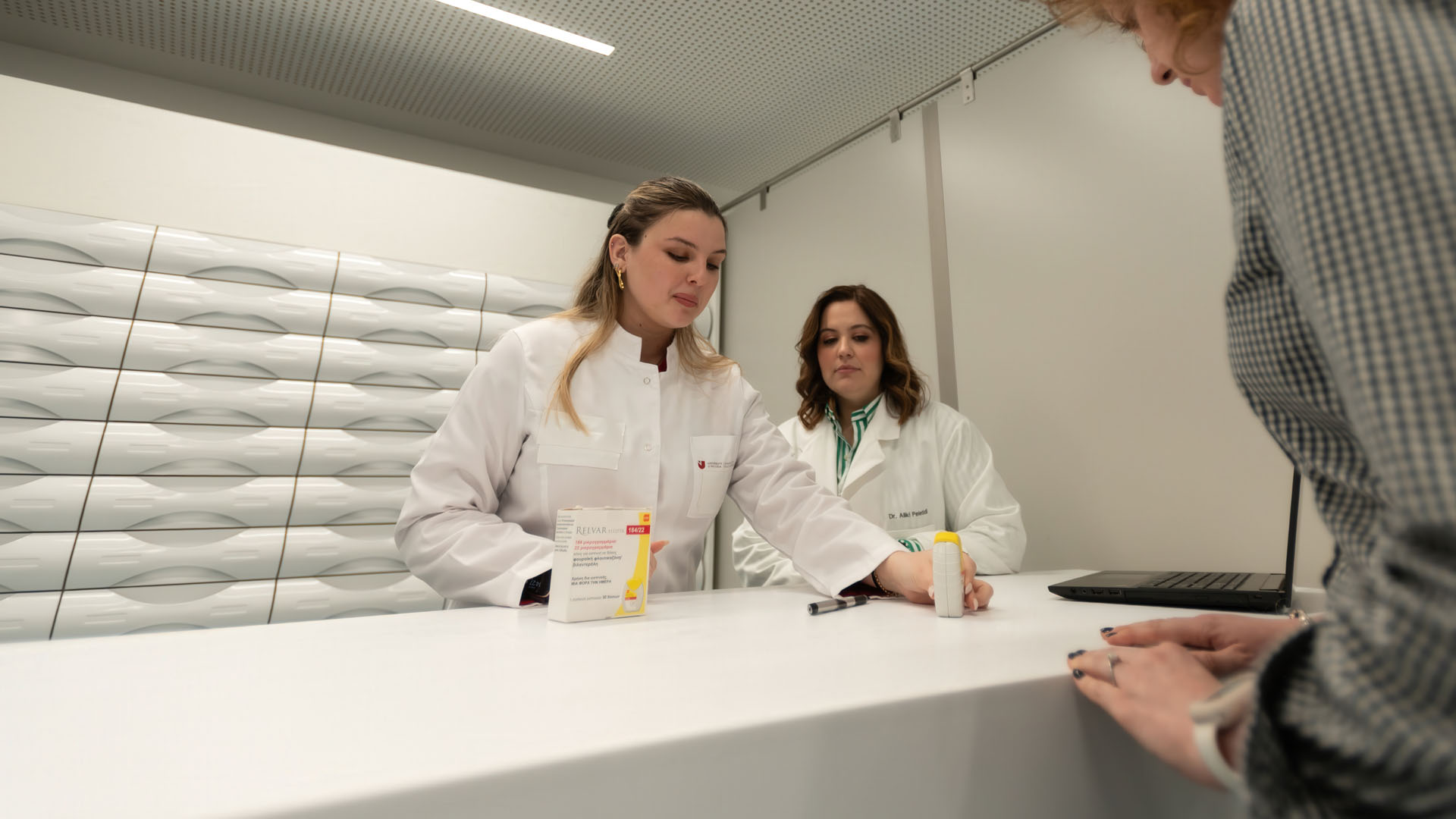
The Care & Services Room enables patient counselling, chronic-disease management simulation, smoking cessation support, diabetes-care scenarios, health-promotion interventions, adherence discussions, and structured communication training. It provides a professional environment where students can practise the clinical conversation, not merely the technical transaction.
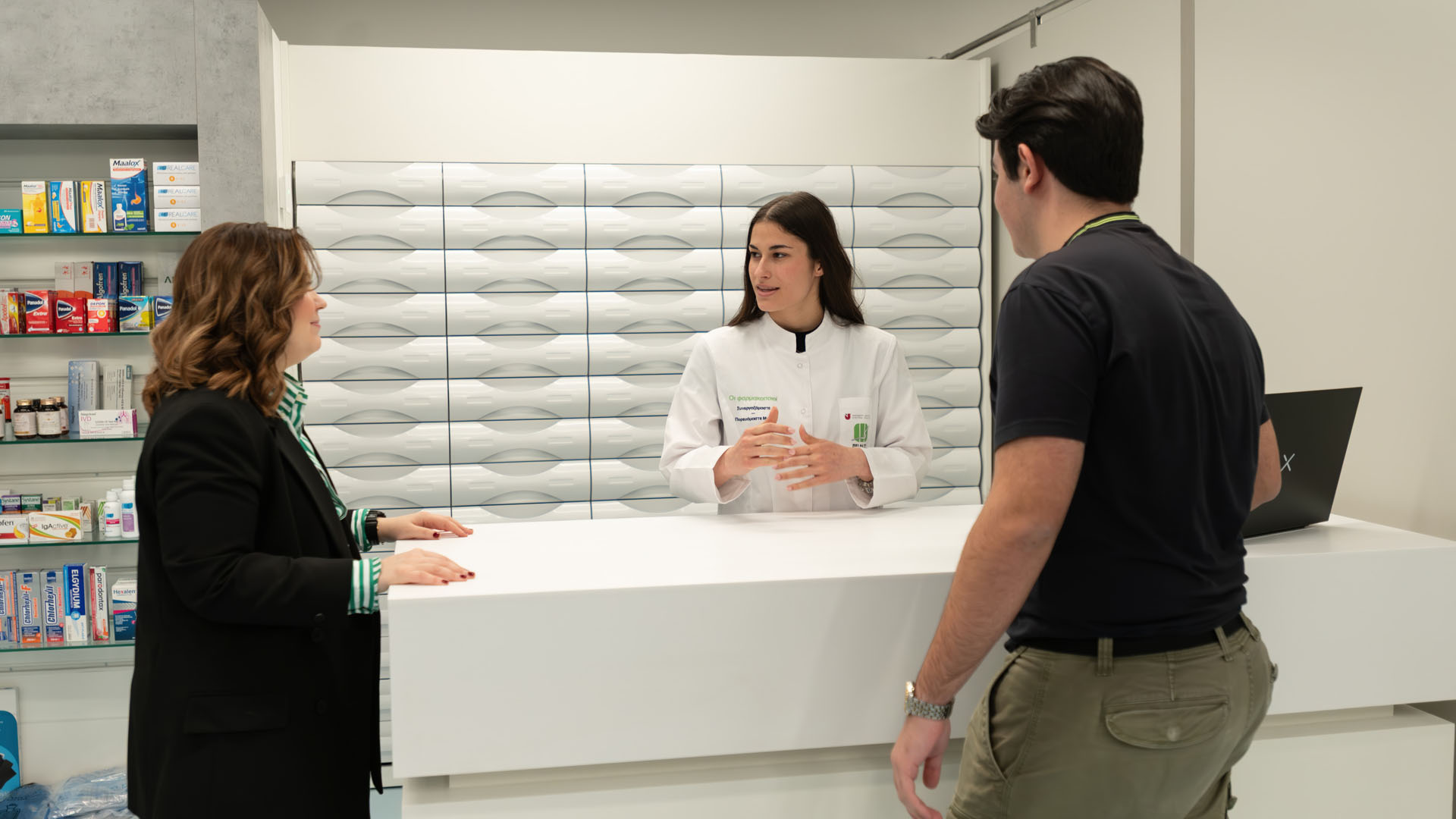
The Counter Area supports realistic dispensing workflows, prescription verification, OTC recommendation, patient interaction, medicines information delivery, and error-prevention training. Students learn to manage the pressures of frontline pharmacy while maintaining accuracy, confidentiality, and professional responsibility.
The Galenic Preparation Room provides hands-on experience in the compounding of creams, ointments, capsules, and sterile-preparation simulations under controlled good-practice conditions. This reinforces the relationship between pharmaceutical formulation, quality, documentation, hygiene, and patient safety.
The Practice-Based Training Suite integrates electronic record systems, workflow stations, informatics tools, and logistics scenarios. Students develop competence in modern pharmacy operations, including digital documentation, service coordination, inventory movement, workflow prioritisation, and the use of pharmacy information systems.
Specialized storage solutions, including secure and temperature-controlled cabinets, support training in controlled-substance governance, biologics handling, vaccine storage, cold-chain principles, inventory control, expiry management, and regulatory compliance. These capabilities allow students to understand that safe pharmacy practice depends on systems, not only individual knowledge.
Collaboration Opportunities
The Pharmacy Practice Laboratory is positioned for collaboration with pharmacy chains, independent pharmacy networks, healthcare providers, professional bodies, public-health agencies, digital-health companies, education-technology developers, and medicines-safety organisations. It can support projects involving medication adherence, pharmacy workflow redesign, patient communication, simulation-based professional training, pharmacy informatics, clinical-service implementation, and pharmacist-led prevention programmes.
The laboratory is also relevant for EU and government-funded initiatives focused on primary care access, community health, vaccination services, chronic-disease management, digital transformation in healthcare, and expanded roles for pharmacists. It provides a credible testbed for partners seeking to evaluate how pharmacy practice can evolve toward safer, more integrated, more preventive, and more data-enabled models of care.
Gallery