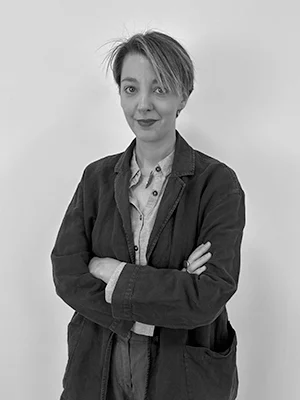
Dr. Gkolfo (Fenia) Ferra
Teaching and Research Faculty Member
School of Humanities and Social Sciences (UNIC Athens)
Social Sciences
Dr Fenia Ferra is a Teaching and Research Faculty Member in Legal Psychology at UNIC Athens. She obtained her PhD in Psychology from the University of Sheffield, UK, where her doctoral research focused on interviewing of child witnesses in Greece. She is a licensed psychologist in Greece and has completed training in Systemic Psychotherapy.
Prior to joining UNIC Athens, Dr Ferra served as a Lecturer in Forensic Psychology at the University of Derby, UK (2020-2021, 2025-2026). She has held postdoctoral research positions at several European institutions. At Vrije Universiteit Amsterdam, she worked on the European Research Council (ERC)-funded project Beyond WEIRD Witnesses: Eyewitness Memory in Cross-Cultural Contexts, examining cross-cultural communication in investigative interviewing (project led by Prof Annelies Vredeveldt). At Rostock University Medical Centre (Germany), within the Clinic of Forensic Psychiatry (led by Prof Birgit Völlm), she contributed to a Robert Bosch Stiftung-funded project exploring participatory research approaches in forensic mental health. She also worked at De Montfort University’s Cyber Security Institute (UK) (led by Prof Eerke Boiten) on projects focusing on cybercrime, cybercrime victimisation and investigative interviewing, funded by the EPSRC, the UK Home Office, and the National Cyber Security Centre.
In addition, Dr Ferra has worked with the European Asylum Support Office (now the European Union Agency for Asylum, EUAA) and Médecins Sans Frontières/Doctors Without Borders (MSF) in Lesvos, Greece. She has collaborated closely with police, legal practitioners, and other criminal justice professionals to improve investigative interviewing practices. She has also been involved in the design and delivery of specialised training programmes for police officers and other practitioners.
Her research focuses on investigative interviewing, particularly with children and other vulnerable populations, cross-cultural communication with interviewing contexts, asylum and refugee interviews, trauma, eyewitness memory and community involvement in research.