
Applied Clinical Practice in the Community Pharmacy
(MSc, 3 Semesters) - E-Learning/Distance Learning (Online)
Duration
1.5 Years
Qualification Awarded
Master of Science in Applied Clinical Practice in the Community Pharmacy
Level of Qualification
Master Degree (2nd Cycle)
Language of Instruction
English and Greek
Mode of Study
E-Learning/Distance Learning (Online)
Minimum ECTs Credits
90
Apply Today
Applied Clinical Practice in the Community Pharmacy (1.5 Years or 3 Semesters) – E-learning/Distance Learning (Online)
| Duration | 1.5 Year |
| Qualification Awarded | Master of Science in Applied Clinical Practice in the Community Pharmacy |
| Level of Qualification | Master Degree (2nd Cycle) |
| Language of Instruction | English and Greek |
| Mode of Study | E-Learning/Distance Learning (Online) |
| Minimum ECTS Credits | 90 |
Apply Today
Profile of the Programme
The MSc in Applied Clinical Practice in the Community Pharmacy (ACPCP) is an international postgraduate programme tailored to pharmacists who wish to lead and innovate within the evolving role of the community pharmacy. The programme targets MPharm/BPharm graduates and professionals working in or aspiring to work in community pharmacy settings—including early-career pharmacists, pharmacy employees, and pharmacy owners.
This Master’s programme focuses on providing the clinical, communication, public health, managerial, and research skills necessary to transform the traditional role of pharmacists into a more patient-centred, service-based profession. Graduates will be able to deliver pharmacy-led health promotion and disease prevention services, manage chronic and minor conditions, and optimise medication use—all within a community setting.
The MSc is aligned with the objectives of the International Pharmaceutical Federation (FIP) and the latest developments in pharmacy-led primary care, preparing graduates to respond to current and future health challenges and become leaders in the delivery of clinical pharmacy services at the community level.
Programme Objectives
The MSc programme aims to provide a deep and practical understanding of clinical pharmacy in the community context, equipping pharmacists with the competencies to:
- Deliver high-quality pharmaceutical and clinical services to patients and the public.
- Enhance the effectiveness, safety, and quality of pharmacotherapy.
- Promote health and prevent disease through proactive pharmacy-led interventions.
- Provide evidence-based, guideline-driven clinical services for acute and chronic conditions.
- Foster collaboration with patients and other healthcare professionals.
- Manage community pharmacy operations and participate in professional pharmacy organisations.
- Integrate new digital health technologies and innovations into pharmacy practice.
- Conduct independent research and contribute to academic and professional literature.
Key study areas include:
- Primary healthcare and public health in pharmacy
- Communication, behavioural and educational sciences
- Minor ailments and chronic disease management
- Preventive services (e.g. vaccination, screening, smoking cessation)
- Pharmacy-led service design and delivery
- Pharmacy management and leadership
- Applied research methods and health service evaluation
- Digital health, mHealth, and telepharmacy applications
Career Prospects
Graduates of the programme will be prepared for a wide range of clinical, managerial, and leadership roles within community pharmacy and related healthcare sectors, such as:
- Clinical Pharmacist in Community Pharmacy/Hospital Pharmacy
- Health Promotion and Preventive Services Lead
- Pharmacy Owner/Manager with Clinical Service Expertise
- Consultant in Community Pharmacy Innovation/Ministry of Health
- Interprofessional Care Coordinator
- Public Health Pharmacist
- Researcher in Pharmacy Practice
This MSc also provides a solid foundation for doctoral studies (PhD) in pharmacy practice including clinical pharmacy, pharmacy services research, pharmaceutical care, social pharmacy, medicines optimisation, public health or pharmacoepidemiology.
Access to Further Studies
Graduates are eligible to pursue doctoral (PhD or other third cycle) degrees in fields such as:
- Pharmacy Practice
- Health Services Research
- Pharmaceutical Care
- Social and Administrative Pharmacy
- Public Health
- Interprofessional Education
- Clinical Pharmacy
Minimum requirements include:
- A Bachelor’s degree in Pharmacy (BPharm/MPharm) from an accredited institution
- Official academic transcripts
- Curriculum Vitae (CV)
- A personal statement (approx. 1 page) of goals and interests
- Two recommendation letters (one academic preferred)
- Documentation of prior community pharmacy experience (if applicable)
- Supporting materials (e.g. publications, awards)
English Language Proficiency:
Required for students whose undergraduate degree was not taught in English. Accepted scores:
- TOEFL: ≥ 550 (paper), ≥ 213 (computer), or ≥ 79–80 (internet-based)
- IELTS: ≥ 6.5
- GCSE O-Level English: Grade “C” or above
- Cambridge Exams (First Certificate Grade B or above / Proficiency Grade C or above)
- Placement at ENGL-100 level on the University English Placement Test
Interview:
Applicants must successfully complete an admission interview.
English Language Proficiency
Applicants satisfy the English requirements if their first degree was taught in English. Otherwise, the minimum English-language qualifications for admission are:
- IELTS – 6.5 and above
- Anglia Examinations – Proficiency or Mastery
- Cambridge GCE AS Level English Language – C and above
- Cambridge GCE English A Levels – C and above
- Cambridge IGCSE or GCSE English as a First language – C and above
- Cambridge IGCSE or GCSE English as a Second language – B and above
- IB English A: Literature SL & HL – 4 and above
- IB English Standard Level (SL) – 5 and above
- IB English High Level (HL) – 4 and above
- Michigan Language Assessment (also known as Proficiency of Michigan) – 750 and above
- Password Test – 6.5 and above
- TOEFL (IBT) – 79 and above
- Cambridge Exams (First Certificate) – 176 and above or Pass
- Cambridge Exams (Proficiency Certificate) – 180 and above or Pass
Applicants who do not hold one of the listed qualifications, are required to take UNIC’s NEPTON English Placement Test and achieve a score at the ENGL-100 level, which can substitute for the standardized tests typically required for admission to postgraduate programs. The test is offered free of charge.
The University offers English courses at different levels to assist students in meeting the required standard for admission to a graduate programme.
Assessment methods include:
- Written assignments and service design projects
- Objective Structured Clinical Examinations (OSCEs)
- Online discussions and case study analysis
- Presentations and simulated consultations
- Final exams and capstone evaluations
- Research project
Assessment weights are typically split between final exams and continuous assessment, with a minimum cumulative GPA of 2.0 (average grade of ‘C’ or higher) required for graduation.
To be awarded the MSc degree, students must complete:
- 90 ECTS of coursework, including all core modules
- A cumulative GPA of 2.0 or higher
- Either:
- Non-Thesis Option: All core courses
- Thesis Option: Core courses + Research Methodology + MSc Thesis (30 ECTS)
Note: In some jurisdictions, a Master’s degree without a thesis may not be formally recognised. Applicants should check local regulations if they plan to use the qualification internationally.
Upon successful completion of this program, the students should be able to:
- Deliver evidence-based pharmacy-led services in community settings.
- Apply clinical guidelines, algorithms, and protocols in patient care.
- Identify and resolve pharmacotherapy-related issues effectively.
- Design and evaluate public health and disease prevention initiatives.
- Develop and implement pharmacy-led screening and detection services.
- Apply communication, psychological, and cultural knowledge in patient interactions.
- Collaborate across multidisciplinary teams in delivering primary healthcare.
- Conduct small-scale research and evaluate pharmacy practice outcomes.
- Manage and lead pharmacy operations, ensuring quality, safety, and innovation.
- Integrate digital tools and telehealth into clinical service delivery.
The MSc aligns with EQF Level 7, focusing on highly specialised knowledge, problem-solving, and strategic decision-making in complex pharmacy settings.
| Course ID | Course Title | ECTS Credits |
|---|---|---|
| PHPR-601G | Φαρμακευτική Πρακτική, Πρωτοβάθμια Φροντίδα Υγείας & Δημόσια Υγεία | 10 |
| PHPR-602G | Επικοινωνιακές, Κλινικές και Εκπαιδευτικές Δεξιότητες | 10 |
| PHPR-603G | Προαγωγή Υγείας και Υπηρεσίες Πρόληψης από το Κοινοτικό Φαρμακείο | 10 |
| PHPR-604G | Παθήσεις Ήσσονος Σημασίας | 10 |
| PHPR-605G | Χρόνια Νοσήματα και Παροχή Υπηρεσιών από το Κοινοτικό Φαρμακείο | 10 |
| PHPR-606G | Εφαρμοσμένες Κλινικές Υπηρεσίες από το Κοινοτικό Φαρμακείο | 10 |
| PHPR-607G | Μέθοδοι Έρευνας στη Φαρμακευτική Πρακτική | 10 |
| PHPR-608G | Μεταπτυχιακή Εργασία | 20 |
| PHPR-609G | Κοινωνιολογικές και Ψυχολογικές Προσεγγίσεις στο Κοινοτικό Φαρμακείο | 10 |
| PHPR-610G | Διαχείριση και Συμμετοχή Φαρμακείων σε Συλλογικές Οργανώσεις Φαρμακοποιών | 10 |
Semester 1
| Course ID | Course Title | ECTS Credits |
|---|---|---|
| PHPR-601G | Φαρμακευτική Πρακτική, Πρωτοβάθμια Φροντίδα Υγείας & Δημόσια Υγεία | 10 |
| PHPR-602G | Επικοινωνιακές, Κλινικές και Εκπαιδευτικές Δεξιότητες | 10 |
| PHPR-603G | Προαγωγή Υγείας και Υπηρεσίες Πρόληψης από το Κοινοτικό Φαρμακείο | 10 |
Semester 2
| Course ID | Course Title | ECTS Credits |
|---|---|---|
| PHPR-604G | Παθήσεις Ήσσονος Σημασίας | 10 |
| PHPR-605G | Χρόνια Νοσήματα και Παροχή Υπηρεσιών από το Κοινοτικό Φαρμακείο | 10 |
| PHPR-606G | Εφαρμοσμένες Κλινικές Υπηρεσίες από το Κοινοτικό Φαρμακείο | 10 |
Semester 3
| Course ID | Course Title | ECTS Credits |
|---|---|---|
| PHPR-607G | Μέθοδοι Έρευνας στη Φαρμακευτική Πρακτική | 10 |
| PHPR-608G | Μεταπτυχιακή Εργασία | 20 |

Assistant Professor
School of Life and Health Sciences
Department of Health Sciences

Assistant Professor
School of Life and Health Sciences
Department of Health Sciences

Assistant Professor
School of Life and Health Sciences
Department of Health Sciences

Assistant Professor
School of Life and Health Sciences
Department of Health Sciences
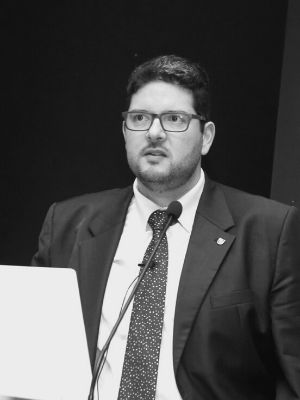
Head of Department
Professor
School of Life and Health Sciences
Department of Health Sciences
Member of the Senate
Senior Vice Rector
Professor
School of Humanities and Social Sciences
Department of Social Sciences
Member of the Council
Member of the Senate

Adjunct Faculty
Adjunct Faculty
Adjunct Faculty