

Professor Dimitris Drikakis Highlights AI’s Transformative Impact on Academia and Industry at THE Europe Universities Summit 2026
University of Nicosia Vice-President for Global Partnerships joined Times Higher Education panel on university preparedness for global technological shifts in Milan
Professor Dimitris Drikakis, Vice-President for Global Partnerships and Dean of the School of Sciences & Engineering at the University of Nicosia, participated as a speaker at the Times Higher Education Europe Universities Summit 2026, held in Milan, Italy, from 5–7 May 2026.
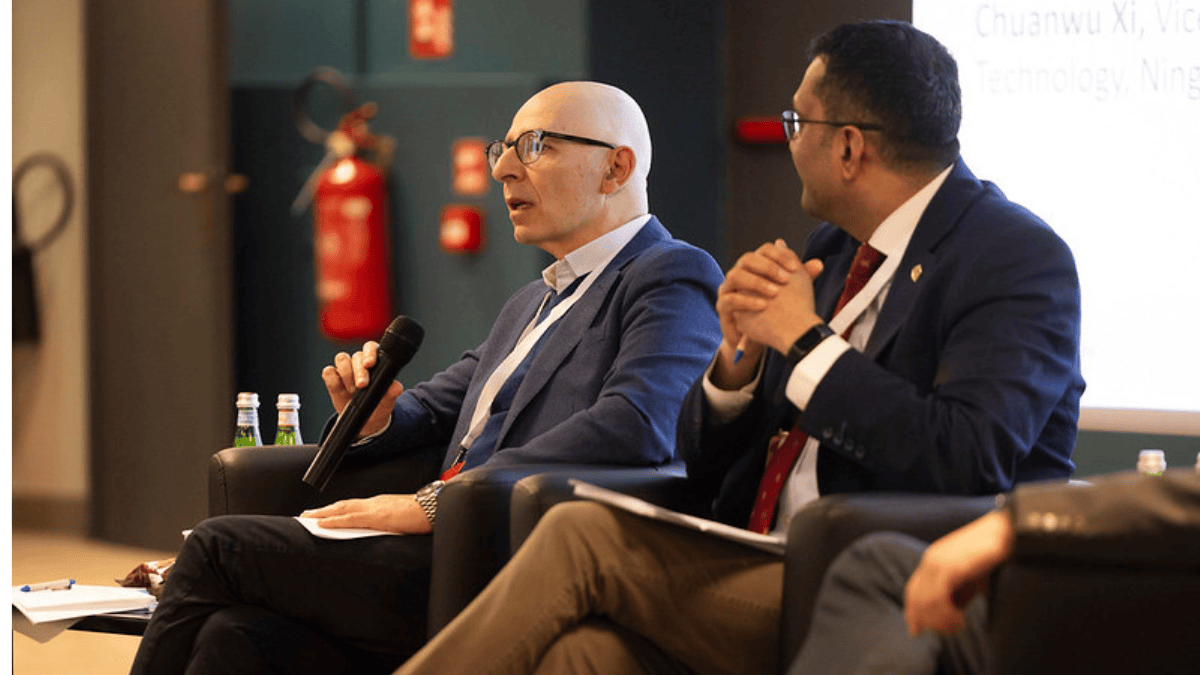
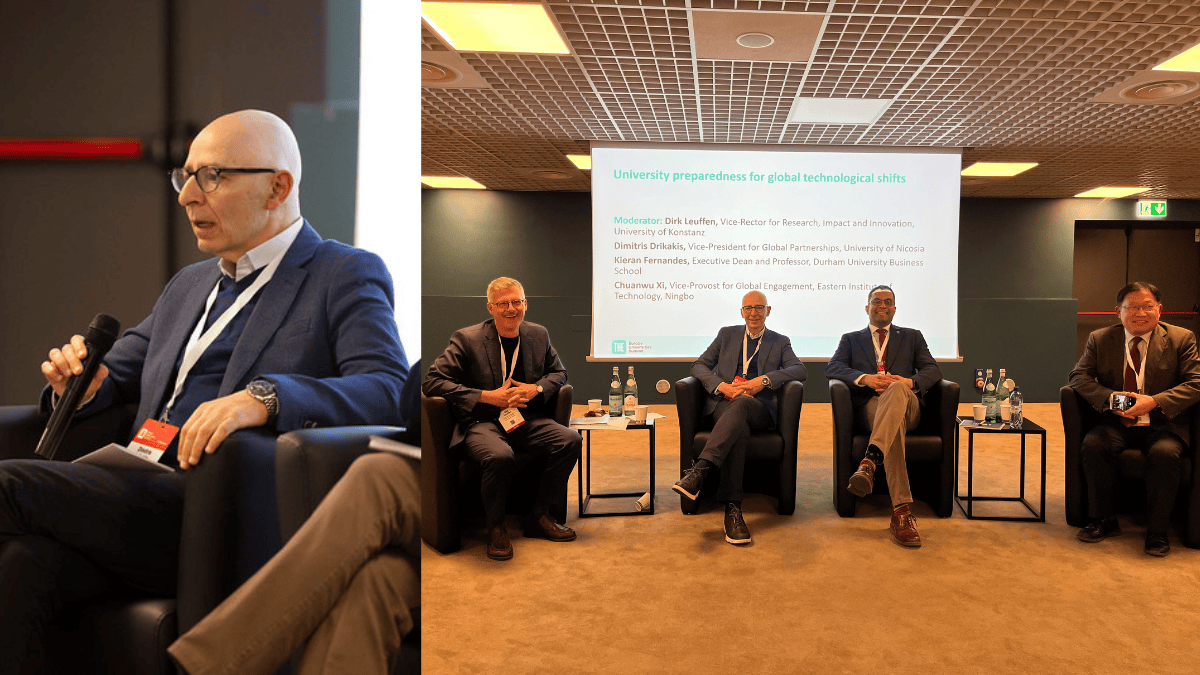
Professor Drikakis joined the panel “University Preparedness for Global Technological Shifts”, a workshop-style session addressing how universities can respond strategically to rapid technological change, including artificial intelligence, digital platforms and data-driven decision-making. The session took place on 7 May 2026 at the Quark Hotel Milano and was moderated by Dirk Leuffen, Vice-Rector for Research, Impact and Innovation at the University of Konstanz.
During the discussion, Professor Drikakis addressed the enormous changes artificial intelligence is bringing to academia and industry. He highlighted that AI is no longer a peripheral digital tool but a structural force reshaping the way universities teach, conduct research, manage operations and engage with external partners.
In teaching, he discussed how AI is influencing curriculum design, student assessment, personalised learning and the evolving role of educators. In research, he noted AI’s growing capacity to accelerate discovery, support modelling and simulation, analyse large-scale datasets and transform publication and research workflows. He also underlined the implications for university operations, including student services, quality assurance, administrative efficiency, strategic planning and institutional governance.
Professor Drikakis further emphasised that AI’s impact extends beyond higher education into industry, where it is changing productivity models, innovation cycles, workforce skills and the relationship between universities and employers. He argued that universities must respond not only by adopting new tools, but by preparing students, researchers and institutions for a labour market and innovation ecosystem increasingly shaped by intelligent systems.
“AI is changing how knowledge is produced, taught and applied. Universities must move quickly, but not uncritically. Real preparedness means combining innovation with academic quality, ethical oversight, risk management and a clear understanding of how AI will reshape the talent and research pipelines that connect higher education with industry,” said Professor Drikakis.
The panel examined what genuine institutional preparedness for technological change means in practice. Key themes included leadership readiness, responsible investment, academic quality, ethics, risk management, data governance and the need to avoid both technological inertia and uncritical adoption.
Professor Drikakis stressed that successful AI integration requires a whole-institution strategy. This includes robust governance frameworks, AI literacy for staff and students, responsible use policies, investment in digital infrastructure and a commitment to ensuring that technological adoption strengthens rather than weakens the academic mission.
The THE Europe Universities Summit 2026, held under the theme “Unite to lead: Elevating Europe’s global role in higher education,” brought together leaders, innovators and changemakers from academia, policy and industry to explore how European higher education can strengthen its global position through collaboration, innovation, interdisciplinarity and strategic leadership.
Professor Drikakis’s participation underscored the University of Nicosia’s engagement in international dialogue on the future of higher education, emerging technologies and university-industry collaboration.