Ερευνητικα Κεντρα
Comparative Democratic Studies Unit (Uni-CDS)
The Comparative Democratic Studies Unit (Uni-CDS) is a research unit established in July 2025. It is affiliated with the Department of Politics and Governance of the School of Law.
About
The Unit is the first such centre in Cyprus, focusing on the study and comparative political analysis of democracy, democratisation, democratic backsliding/authoritarianism, and democratic practice from a broad perspective. The main objective of the Unit is to promote high-level comparative research on topics such as political and party systems, political institutions, political culture, the impact of digitalisation and artificial intelligence on democratic processes and institutions, governance, and social movements. Through its activities, Uni-CDS aims to provide information, training, guidance, and funding opportunities to undergraduate, post-graduate, and postdoctoral researchers; encourage interdisciplinary collaboration with other departments and international partners, creating a dynamic network of researchers around democracy and governance in the digital age; and actively participate in research funding programmes, as well as organise frequent seminars and other activities.
Mission and Vision
The Unit’s vision is to contribute to global debates on democracy by examining political and institutional change, the dynamics of democracy, and the challenges it faces, both endogenous and exogenous. The field of comparative politics is crucial for understanding the diverse political systems, governance models, and democratic processes across the globe.
Comparative political analysis, geared towards exploring and explaining diversity and similarity across time and space, constitutes, therefore, a fundamental tool for addressing the threats and challenges democracy faces today. Across many countries, recent years have witnessed rapid changes in the political landscape, including the rise of authoritarianism, populism, democratic backsliding, challenges to traditional governance models, and the emergence of new political movements.
At the same time, technological advancements like artificial intelligence (AI), digital platforms, and global connectivity have significantly reshaped political communication, conflict, and policy-making. These changes present new challenges and opportunities in strengthening democratic engagement, yet they also introduce risks such as misinformation, digital surveillance, and polarisation. Uni-CDS aims to address these dynamics through rigorous research and its public outreach, fostering a deeper understanding of how democratic systems evolve and adapt in the face of technological, social, economic, and political shifts.
Uni-CDS focuses on democratic practice broadly conceived and connected to comparative political analysis, and its ambit of intervention aims to include Cyprus, Greece, southern Europe, the Eastern Mediterranean, Europe, and other regions of the globe, drawing on the expertise and networks of both department and other university staff, and external collaborators.
Uni-CDS is positioned at the intersection of pressing debates in contemporary political science and aims to contribute to critical global debates on the future of democracy amid social and political transformations. Key issues include the resilience of democracies against authoritarian tendencies, the effectiveness of democratic institutions, the impact of AI on political communication, and the role of digital platforms in shaping public opinion and political behaviour.
Additionally, the centre will engage in discussions on how emerging technologies, such as AI, can be leveraged to promote political accountability while addressing the ethical challenges of digital surveillance.
Uni-CDS offers a comparative perspective on these issues by examining both well-established and emerging democracies, exploring how different political systems address the challenges posed by technological change, social polarisation, the surge of the far right, and democratic threats. By engaging with these debates, the centre aims to provide scholarly insights essential to academic circles, the classroom, the media, civil society, political leaders, and policy-makers.
Objectives
The primary objectives of Uni-CDS
Advancing Scholarly Research
To conduct high-quality, comparative research on political systems, democracy, and the impact of digitalisation, resulting in publications in top-tier academic journals, monographs, and edited volumes.
Securing Research Funding
To actively participate in research grants and funding opportunities from national and international organisations, including European Union frameworks, foundations, and firms.
Engaging the Public
Public outreach is a key objective of the unit. Accordingly, the aim is to organise events systematically for the public and generate informational texts accessible to non-academic audiences.
Training and Mentorship
To provide training, mentorship, and funding opportunities for PhD students and postdoctoral researchers, both from within the University of Nicosia and from other institutions nationally and internationally.
Facilitating Interdisciplinary Collaboration
To encourage collaboration with other departments such as computer science, law, communication, and sociology, as well as international partners, creating a cross-disciplinary network of researchers focused on democracy and governance.
Servicing Policy-Makers
To act as a bridge between academia, technology experts, and policy-making bodies, offering evidence-based recommendations for managing the intersection of democracy and technological change.
Research
Uni-CDS focuses on a broad range of research topics. This is an indicative list.
Comparative Analysis of Democratic Systems
Examining the differences in institutional structures, electoral systems, political parties, and party systems across established and emerging democracies, including the impact of digital transformation.
Problems and Opportunities for Democratic Politics
Scrutinising the actors, organisational structures, and procedural features of democracy, searching for innovative democratic responses to collective action problems and dilemmas.
Populism, Radicalism, Extremism
Distinguishing between the types of forces that challenge liberal democracy, with a view to an interactive understanding between them.
AI and Political Processes
Investigating the role of AI in political communication, campaign strategies, ideological frames, and voter behaviour, as well as ethical considerations surrounding AI in governance.
Digital Technology and Democracy
Exploring the impact of digital media, misinformation, and surveillance on democratic political processes and public discourse, specifically by assessing how technology can influence processes of political participation, representation, the circulation of information, and accountability.
Democratic Backsliding and Authoritarianism
Investigating the factors contributing to the weakening of democratic norms and the rise of authoritarian practices, and how digital technologies play a role in these processes.
Governance and Technology
Studying how different political systems integrate or not, pressures for transparency, accountability, good governance, and public service delivery.
Social Movements and Political Participation
Analysing how grassroots movements and civil society actors contribute to democratic resilience and change, how they interact with parties and institutions, and what explains their mobilisation dynamics.
Political Economy of Democracy
Critically examining how democracy interacts with economic systems and other systemic variables that affect the operation of the national polity, the regional or global nature of democratic norms, and the circulation of political ideas.
Members
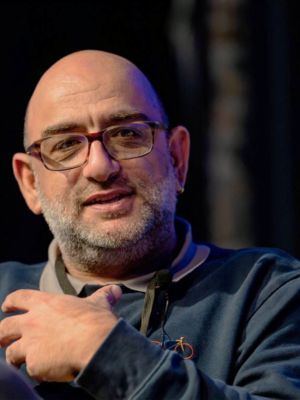
Co-Director
Associate Professor of Political Science
Dr Giorgos Charalambous is Associate Professor of Political Science at the University of Nicosia, Department of Governance and Politics. He completed his Msc (in European Public Policy) at UCL, and his BA (in Economic Studies and Government) and PhD (in Politics) at the University of Manchester. Dr Charalambous is a comparativist specialising in political ideas, party politics, mobilisation, political behaviour, and the interplay between domestic socio-political conflict and international developments. He has published widely in the domains of comparative European politics and political sociology, and frequently authors essays and op-eds in local and international outlets. He is a member of the Research Advisory Group of the A. G. Leventis Research Innovation Programme at the Hellenic Observatory, LSE, the co-convenor of the Left Radicalism specialist group of the Political Studies Association, and a member of the editorial board at the EJPR’s Political Data Yearbook. His latest monograph, published in 2022 by Pluto Press, is titled The European Radical Left: Movements and Parties since the 1960s.

Co-Director
Associate Professor of Comparative Politics
Dr Yiannos Katsourides is Associate Professor of Political Science (Comparative Politics) at the University of Nicosia, Department of Governance and Politics. He holds a PhD in Political Science from the University of Cyprus. He was previously Director of Prometheus Research Institute and adjunct lecturer at the Department of Social and Political Sciences of the University of Cyprus. He has held visiting fellowships from the Hellenic Observatory of the European Institute of the LSE, the Institute of Commonwealth Studies of the University of London for 5 years (2010-2015) and the British School at Athens. His research interests include South European politics, radical left and far right political parties, political participation, political institutions, Cyprus and Greek politics and history, political sociology, colonialism and nationalism. He is the author of four books: The History of the Communist Party in Cyprus (I.B. Tauris, 2014); The Radical Left in Government: the cases of SYRIZA and AKEL (Palgrave Macmillan, 2016); The Greek Cypriot Nationalist Right in the Era of British Colonialism (Springer, 2017); Red Traces (Rizes 2025, in Greek). His articles have appeared in Party Politics, Government and Opposition, West European Politics, South European Society and Politics, Nations and Nationalism, Nationalism and Ethnic Politics, and the Journal of European Integration, among others.

Antrea Kosta
Research Associate
Antrea Kosta is a PhD Candidate at the Department of Politics and Governance, University of Nicosia. Her research focuses on far-right politics, party families, democratic representation, political participation, and issues of inclusion and human rights. She holds an MA in Political Sociology and Comparative Politics and a BA in Political Science. Her academic work includes publications on parliamentary representation, gender, labour market inequalities, and social policy, as well as conference presentations on far-right politics and democratic transformation. Antrea has extensive professional experience as a Project Manager and Researcher in EU-funded initiatives (Erasmus+, ISF, AMIF, CERV, KA2, KA3). She has contributed to and coordinated projects addressing youth participation, social inclusion, gender equality, migration, and security, including VIRTUOUS, UNICOPS, ENFEM, HerStory, and Get Political. Alongside her academic work, Antrea has gained substantial practical experience as a Scientific Researcher in European-funded projects, especially those supported by the Asylum, Migration and Integration Fund (AMIF) and the Citizens, Equality, Rights and Values (CERV) programme.

Olga Popeta
Research Associate
Olga Popeta is a research associate at the Comparative Democratic Studies Unit (Uni-CDS). She has a BA in International Relations from the University of Nicosia and an MA in Politics from the University of Otago. Her research focuses on radical politics, national discourses and the emergence of political identities within the context of postcolonialism. Her Master's dissertation, entitled The Effects of British Colonialism on Ethnic Relations in Cyprus, assessed the sociopolitical emergence of the two main nationalist movements in Cyprus and examined the role played by the postcolonial infrastructure in the developing ethnic conflict. Olga continues to engage with critical literature aiming to contribute to further research within the field of politics.
Activities
Explore our Annual Lectures, Seminars, Workshops, and Projects.