3 October 2026
The Creative Trade-off In Generative Video: Control For Possibility
AI video can give small teams extraordinary production reach—but often at the cost of precise creative control, predictable workflows and the time supposedly saved.
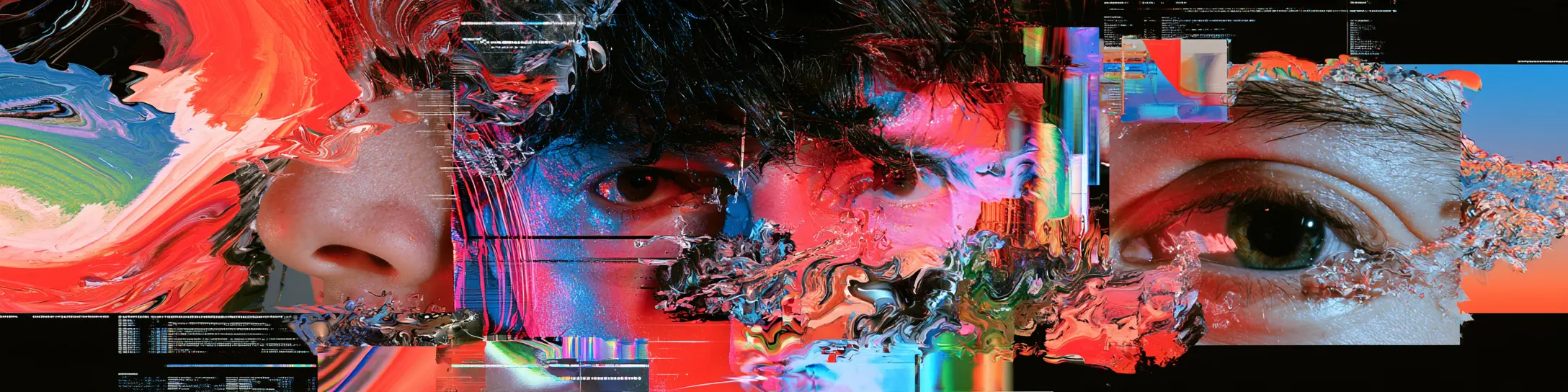
AI-generated video can give small teams the production reach of much larger ones.
At the AI Learning Centre, we sometimes create AI-generated videos for social media, and the response has been encouraging.
For example, the video accompanying this post was created for our MA in TESOL distance-learning programme. It shows what this technology can enable a small team to produce, and we are pleased with the result.
But a polished final product does not reveal the process behind it: the discarded generations, creative compromises, repeated corrections and production time required to reach that point.
It raises a question: are we creating what we conceived—or finding something usable among what the model produces?
In practice, we have found that the process involves three Cs:
CONCEIVE — decide what we want to communicate.
CURATE — generate alternatives and select useful material.
CORRECT — refine the result until it matches our original intention.
Generative video gives small teams real advantages. It lets us explore ambitious concepts, create striking visuals and attempt work that a conventional production budget might put out of reach.
But it often gives disproportionate power to the second C: curation.
We generate. Review. Adjust. Generate again.
A clip may contain a few excellent seconds alongside an implausible movement, an inconsistent character or a distracting detail. With traditional production and editing tools, we might correct that specific element. With generative video, the answer is often another generation.
That new generation may fix the error while losing everything that worked.
The final result can therefore be shaped less by our original conception and more by what the model happens to produce that is both usable and correctable.
This is also why claims that AI always “saves time” need qualification. It can reduce the resources needed for a shoot while shifting substantial effort into prompting, sorting, regenerating, editing and quality control.
There is a wider concern, too. As social feeds and video platforms fill with quickly generated content—sometimes even dismissed as “AI slop”—viewers may begin to approach AI-generated video with greater scepticism. Thoughtful work can then be judged alongside, or through the lens of, the lowest-effort examples.
If people disengage as soon as they recognise—or suspect—that something is AI-generated, the efficiency gained in production may be offset by lower attention and trust.
The issue is not that AI-generated video is automatically inferior. It is that generation has become much easier, while intention, judgement and refinement have not.
Are other creators experiencing the same trade-off?