
Apply Today
Undergraduate Entry – Doctor of Medicine Degree (MD)
Duration:
6 Years
Qualification Awarded:
Doctor of Medicine
Language:
English
The University of Nicosia Medical School, the largest in Cyprus, offers a 6-Year MD degree programme designed for high school leavers.
What Our Students Say
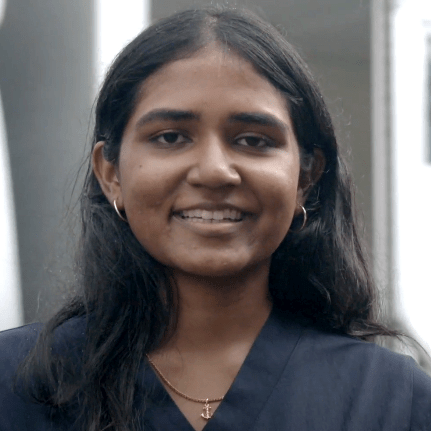
My involvement with the Mobile Clinic has allowed me to gain hands-on experience with real patients from year 1. This is a crucial part of becoming a doctor, as you gain experience and understand the true nature of the profession we are dedicating our lives to. It is a great chance to also meet and interact with other medical students and give back to the local community.

Since day one, the University of Nicosia (UNIC) Medical School has been very supportive every step of the way and has made my overall experience very welcoming and friendly. Being the first medical student in my family, there was so much I had to learn. The staff and professors have been so helpful and understanding in helping me navigate through Medical School. They did an amazing job in helping me make UNIC Medical School my home away from home.

My career intends to help the needy and the distressed, especially the ones in my home country, Sudan. Because many people find it hard to help themselves, I want to empower them. Studying at the University of Nicosia Medical School, an EU accredited medical degree, will open many doors for me that will help to fulfill my dreams.

It is important as medical students to keep track of the updated requirements for applying to residency programs prior to graduating. This is why I am so thankful for UNIC Medical School’s Career and Alumni Office, which has kept us constantly updated about our options and allowed alumni to speak to the cohort about their experiences in gaining access to prestigious residency programs around the world. I was able to understand better how to prep for exams such as the USMLE and think more closely about which field of medicine I would wish to train in through the experiences of students before me.
Career Prospects
With our devoted Student Success Team, students are matched with a personal tutor, and students meet one-on-one with Career Advisers to track their studies and steps, for practice after graduation. The MD programme has been designed to meet, and exceed, the requirements of the EU Directive on the recognition of professional qualifications (2005/36/EC) so as to enable nationals of EU, EEA / EFTA member states and Switzerland to have their award recognised when applying to practise in those countries, following graduation. Each member state has its own regulations as to which stage of its training programme you will enter, and any additional requirements that you will need to demonstrate (such as language proficiency). While the MD degree is recognised by many different countries internationally, applicants are advised to check with their own individual national authorities, if they wish to practise in their own country. Throughout the journey, students will find support and guidance in aligning with national licensure exams, such as USMLE based on their preferred postgraduate pathway. Our Student Success Team hosts alumni and career experts to advise in best practice for working in different regions of the world to support student goals.
With more than 90 nationalities of students, you will study and practice with colleagues and faculty that provide a competitive advantage in the global healthcare market. This accredited medical degree enables pathways to medical practice, with support and preparation for postgraduate placement. Our graduates have been offered positions at over 350 medical centres around the world for residency training, fellowships, internships, and research.
Our Admissions Advisors can provide further information on your career options with this MD degree and licensure requirements.
General Objectives
This programme of study provides students with the opportunity to receive high quality education in Medicine. The general programme objectives are to:
- Train students to become highly competent physicians and equip them with the knowledge, skills and attitudes that will enable them to respond to the challenges of modern medicine.
- Produce competent and caring graduates, safe to practise initially as junior doctors, and with the potential to develop fully their careers in their chosen branch of medicine.
- Provide each student with the evidence-based knowledge and experience necessary to advance both scientifically and humanistically in the care and treatment of those who are ill including immediate care of medical emergencies.
- Foster the development of lifelong commitments to scholarship and service toward individual patients and the community.
- Encourage students to practise medicine holistically including ethical, legal, psychological and social considerations.
- Promote health and wellness through disease prevention and research.
- Contribute toward the establishment of Cyprus and Greece as regional centres of excellence in medical education.
Programme Learning Outcomes
Knowledge
Upon completion of the programme students should be able to:
- Explain normal human structure and function at the molecular, cellular, tissue, organ and whole-body level from conception to old age.
- Explain the scientific principles underlying common and important disease processes including inflammation, infection, neoplasia and trauma.
- Describe basic pharmacological principles together with the pharmacology of commonly used medications, including their modes of action, pharmacokinetics, medication interaction and side effects.
- Describe the role of genetics in predicting the risk of disease and in personalised medicine.
- Explain the determinants of normal human behaviour at an individual and societal level.
- Explain how psychological and sociological factors might impact on the risk of disease and the outcome of treatment.
- Describe how individuals adapt to major life changes, including the onset of illness.
- Explain the concept of ‘wellness’ and describe the importance of promoting lifestyle factors in achieving the best possible health.
- Describe the role of epidemiology in evaluating the health of a population.
- Discuss the role of environmental, ecological, social, behavioural, occupational and cultural factors in determining health at individual, community and societal levels.
- Describe the principles of primary, secondary and tertiary disease prevention, together with the role of immunisation and screening.
- Describe the basic principles of communicable disease control in both hospital and community settings.
- Discuss the role of nutrition in health and illness.
- Discuss the determinants of health from a global perspective and recognise the impact that global factors may have on local health.
- Describe the utility of qualitative and quantitative methods in scientific research.
- Interpret common statistical methods used in medicine and in medical research.
- Critically appraise the research literature in terms of study design, results, analysis and conclusions.
- Discuss the role and contribution of doctors in the collection and analysis of patient data.
- Describe the principles of health informatics.
Skills
Upon completion of the programme students should be able to:
- Communicate compassionately and effectively with patients and when relevant, with significant others including taking a relevant focused history.
- Communicate effectively with colleagues in all professional settings, including group situations.
- Communicate effectively by written and by electronic means as well as orally.
- Keep accurate clinical records and demonstrate skills in the recording, organisation and management of information including the use of appropriate information technology.
- Conduct an examination of the major body systems in a clinical environment.
- Assess, investigate and manage patients in a safe, competent and caring manner applying sound clinical reasoning at all stages of the process.
- Prescribe drugs safely under supervision including dosage calculation, prescription and dispensing.
- Recognise and manage life-threatening conditions and provide the immediate core of medical emergencies including First Aid and resuscitation.
Competencies
Upon completion of the programme students should be able to:
- Discuss and apply the principles of medical professionalism and its importance in patient care recognising that the care and safety of patients is central to their everyday practice.
- Work effectively with members of the multidisciplinary team and understand their own personal roles and responsibilities within the team as well as those of other healthcare professionals.
- Discuss and apply the basic principles that underpin good ethical practice including the need to respect patients regardless of their lifestyle, culture, beliefs, religion, race, colour, gender, sexuality, disability, age, and social or economic status.
- Be aware of and be able to discuss and apply the principles governing the major ethical issues in healthcare as may be encountered in everyday clinical practice including concern for confidentiality and respect for individual autonomy.
- Explain, and apply, the importance of maintaining patient confidentiality and of respecting the autonomy, dignity and privacy of patients.
- Explain one’s professional and legal responsibilities when accessing information in relation to patient care, research and education, and put them into practice.
- Demonstrate an understanding of the importance of always acting with honesty and integrity, including the duty of open disclosure when things go wrong, and put these principles into practice.
- Demonstrate an understanding of when patient consent is required and how it is best obtained, and put this into practice. This includes an understanding of when and how consent needs to be obtained from a third party.
- Recognise the potential impact on patient care of one’s personal beliefs and biases and describe and implement the strategies that mitigate this.
- Describe and apply the principles of safeguarding of children and vulnerable adults.
- Display a life-long commitment to scholarship and service towards the individual patient and the community.
- Practise medicine holistically taking into account ethical, legal, psychological and social considerations.
- Promote health and wellness through disease prevention and research.
- Contribute toward the establishment of Cyprus and Greece as regional centres of excellence in medical education.
Curriculum
The curriculum is innovative and builds on the major advances in medical education that have occurred internationally over recent decades and the latest research in the field. This includes student-centredness, interactive small-group teaching, technological innovations, vertical and horizontal integration across the basic and clinical sciences and community orientation.
Accreditation
The MD programme is accredited by the Cyprus Agency of Quality Assurance and Accreditation in Higher Education (CYQAA). CYQAA holds Recognition Status by the World Federation for Medical Education (WFME) and the MD programme is thus assessed against the rigorous standards for Basic Medical Education of WFME. The framework for WFME accreditation has been developed jointly with the World Health Organisation. This ensures that the quality of education is at an appropriate and comprehensive global standard.
Curriculum and Delivery
The curriculum of the MD Programme is innovative and is based on the most recent research in the field of medical education. In addition to compliance with the WFME standards, this curriculum has focused on the guidelines of professional bodies in Cyprus, Greece and the EU. The MD programme curriculum has also been informed by internationally accepted guidelines for undergraduate medical programmes, including those of the United Kingdom’s General Medical Council.The MD programme spans six years and totals 360 ECTS credits. It is divided into the Health and Disease (pre-clinical, basic science years, Years 1-3) followed by the Transitional (Year 4) and Clinical Years (Years 5-6). The curriculum is designed to achieve specific educational outcomes, incorporating recent advances in medical education like digital health and climate and health, while adhering to the standards of higher education in Cyprus, Greece and the European Union.
Curriculum:
The curriculum is structured to provide a comprehensive medical education, beginning with a strong foundation in the basic sciences in Year 1, complemented by courses in social sciences and research that introduce concepts of holistic medicine, including ethical, legal, psychological, and social considerations. Early development of clinical and communication skills is encouraged through Integrated Clinical Practice (ICP) courses and short-term clinical placements in various healthcare environments, with an emphasis on primary care settings. In Year 2, the focus on basic sciences continues but transitions into a system-based, integrated learning approach covering anatomy, physiology, biochemistry etc. Students continue to build on their clinical and communication skills through ICP courses, which also include clinical placements. These allow students to gain experience with history-taking and examinations in a real-world context.
Years 3 and 4 revisit organ systems with an emphasis on disease mechanisms and therapeutics, integrating topics such as pathology, pathophysiology and pharmacology. Year 4 is a critical transition year, which includes a research project, alongside an elective component for further clinical exposure or research. Alongside their taught courses, students complete clinical rotations (Primary Care, General Surgery, Internal Medicine), as part of their ICP course, which further familiarize them with learning in the clinical environment, in preparation for Years 5 and 6, which are almost entirely based in a clinical setting.
Another key element in the design and development of the programme has been the use of curriculum streams that run longitudinally through the programme and its courses. The streams are designed to promote integrated and contextual learning aligned with the design of the learning weeks and their thematic areas. The streams include Health Psychology and Sociology, Health Law & Ethics, Research Methods, Global Health, Public Health, Populations & Epidemiology, Cultural Competence and Professional Behaviour, Leadership, Artificial Intelligence and Digital Health and Climate and Health.
The first four years of the MD programme are designed to best prepare students for the final two years of the programme, where students build on their knowledge and put into practice their knowledge, skills and competencies in a predominantly clinical environment. They are exposed to the major clinical disciplines in preparation for the first year of medical practice. Curriculum delivery in Years 5 and 6 utilizes both horizontal and vertical integration. Medical and surgical disciplines are integrated horizontally, for example, gastroenterology and GI surgery; nephrology and urology; rheumatology and orthopaedics. Vertical integration is utilized to build on previous knowledge acquired, including formal structured revisiting of the basic sciences. Students revisit the conditions encountered in the earlier years, as well as less common disorders. Whereas the focus in earlier years is on reaching a diagnosis e.g. through history, examination and appropriate investigations, in Years 5 and 6, students are expected to place increasing emphasis on patient management. During the senior clinical years, the level of responsibility is gradually increased through revisiting topics previously encountered, which culminates in assistantship-type attachments in Year 6, in preparation for the first year of clinical practice. Students also complete an Elective in Year 6, which allows them to gain further experience in a medical specialty or healthcare system of their choosing, that is relevant to their future career in medicine. Students may alternatively conduct research as their Elective.
The Medical School maintains a student-centred learning environment, which promotes the active participation of learners and has developed objectives and a framework to further reinforce student-centred education across programmes. The instructional learning methods utilized are based on well-founded pedagogical principles of medical education, including experiential learning, social cognitive theory, adult learning, self-directed learning, reflective practice, situated learning and learning in communities of practice.
The overall approach is based on interactive learning. Small group activities in various forms underpin the educational strategy of the programme and are appropriately complemented by directed delivery in selected key topics, interactive large group sessions, directed self-learning, group work, practical skills and education in the community and the clinical environment. Spiral learning is also an important aspect of curriculum delivery and students’ previous experiences are taken into consideration in the design and delivery of courses. Contextualized learning is emphasized and the connections between course material and real-life issues are emphasized through case studies.
Programme Structure
The programme is structured around 12 academic semesters over a period of 6 years. In each semester students are required to take 30 ECTS credits, completing 360 ECTS credits after 12 semesters of full-time tuition.
| REQUIREMENTS | ECTS |
|---|---|
| Health and Disease Years | 180 ECTS |
| Year 1 | 60 ECTS |
| Year 2 | 60 ECTS |
| Year 3 | 60 ECTS |
| Transitional Year and Clinical Years |
180 ECTS |
| Year 4 | 60 ECTS |
| Year 5 | 60 ECTS |
| Year 6 | 60 ECTS |
| Total Requirements | 360 ECTS |
Years 1-3 (Health and Disease Years)
Year 1: Pre-medical Basic Medical Sciences
In Year 1, students embark on a foundational education in biomedical sciences, encompassing research skills, social sciences, and clinical competencies. The courses “Molecules, Cells, Tissues, and Organs” cover essential topics including cell biology, metabolism, and histology, preparing students to understand body systems. Students develop basic clinical skills, including history-taking and performing fundamental tests such as urinalysis and blood glucose measurement. Early exposure in general practice and other healthcare centres in the community foster a patient-centred approach to care. The curriculum includes courses in social sciences and research, equipping students with a holistic view of medical practice. These courses cover aspects of sociology, psychology, research methods, and ethics. Students gain insights into the sociocultural and psychological dimensions of health, diversity in healthcare, bioethics, and doctor-patient relationships, alongside foundational statistics and research methodologies applicable to epidemiology and public health.
Years 2 and 3: Basic and Clinical Sciences
Building on the foundation set in Year 1, Year 2 delves deeper into human body systems with a thematic, systems-based approach. Students explore the body systems through different themes, for example, in the cardiovascular system, learning is based on themes such as “The Heart as a Pump” and “Circulation and Haemostasis” allowing the integration of anatomy, physiology, and biochemistry. Other systems covered include respiratory, gastrointestinal, renal, musculoskeletal, nervous, reproductive, endocrine, and immune systems, including growth and development in childhood. During this year, students continue to develop clinical skills, particularly focusing on patient relationships and clinical reasoning, primarily through case analysis and primary care clinical placements. This approach ensures the effective integration of basic and clinical sciences, emphasizing history-taking and examination skills within the clinical setting while aligning with systems-based learning methodologies.
In Year 3, the curriculum revisits the body systems, this time focusing on disease mechanisms and therapeutics. The ‘Mechanisms of disease and therapeutics’ courses aim to explore how biological disturbances lead to disease and how these can be managed and treated. Additionally, students refine their clinical examination techniques and communication skills with diverse populations, covering topics such as cultural competence and sensitive communications. Year 3 represents a critical transition point where students begin applying their growing medical knowledge to real-world pathological situations, making connections between the theoretical aspects of basic sciences and the practical applications of clinical practice.
Years 4-6 (Transitional Year and Clinical Years)
Year 4: Transitional Year
In Year 4, the emphasis on disease mechanisms and therapeutics continues, further exploring how biological disturbances relate to diseases. Students study the pathology and management of various conditions in the “Mechanisms of Disease and Therapeutics” course. This year also includes an advancement of clinical examination techniques, with a continued emphasis on improving communication skills with diverse patient populations. Students undertake a research project, applying skills from prior years to original research or literature reviews. The integration of clinical placements in General Surgery, General Practice, and Internal Medicine further allows students to apply theoretical knowledge in practical settings. This hands-on experience consolidates clinical skills and helps relate basic sciences to real-world clinical practice.
Years 5 and 6: Clinical Years
The penultimate and final years, Years 5 and 6, involve extensive clinical training within hospitals and community settings. This phase focuses on enhancing clinical, communication, diagnostic, and reasoning skills, building on previous knowledge to ensure that students learn about comprehensive patient management from medical, therapeutic, surgical, psychosocial, and caregiving perspectives.
Year 5 includes rotating clinical placements in specialties such as cardiology, respiratory medicine, and gastroenterology, integrating medical and surgical perspectives. Learning is primarily through clinical experience, supplemented by lectures and discussions. Students develop skills in taking patient histories, performing systematic examinations, and interpreting diagnostic data. Observation of surgical procedures enhances practical understanding.
In Year 6, students assume more responsibility akin to an assistantship, continuing learning in the clinical environment. The core specialties of internal medicine, general surgery and primary care are revisited in a spiral manner and at a higher level of engagement for the students. Placements such as care of the elderly, emergency medicine and critical care are also introduced with the aim of preparing students for their clinical roles. These experiences emphasize continuity of care and teamwork in clinical practice. Additionally, a six-week Clinical Attachment Elective allows Year 6 students to explore specialties aligned with their career interests or to conduct research.
Overall, the curriculum ensures comprehensive training across essential domains such as social, behavioural, and clinical sciences. This preparation equips graduates to operate safely and effectively, providing holistic, patient-centred care as they transition into their roles as junior doctors, ready to meet diverse patient needs.
Students remaining in Cyprus for clinical training will need an appropriate knowledge of Greek so that they can better communicate with patients. The Medical School provides Greek-language lessons throughout all years of the programme to prepare students for this requirement.
Semester Breakdown
| YEAR 1 | |||||
| SEMESTER 1 | SEMESTER 2 | ||||
| Course code/Title | ECTS | Course code/Title | ECTS | ||
| MD-101 Molecules, cells, tissues and organs I | 15 | MD-104 Molecules, cells, tissues and organs II | 15 | ||
| MD-102 Integrated Clinical Practice I | 5 | MD-105 Integrated Clinical Practice II | 5 | ||
| MD-103 Social Sciences and Research I | 10 | MD-106 Social Sciences and Research II | 10 | ||
| 30 | 30 | ||||
| YEAR 2 | |||||
| SEMESTER 3 | SEMESTER 4 | ||||
| Course code/Title | ECTS | Course code/Title | ECTS | ||
| MD-201 Structure and function of the human body I | 11 | MD-204 Structure and function of the human body III | 11 | ||
| MD-202 Structure and function of the human body II | 11 | MD-205 Structure and function of the human body IV | 11 | ||
| MD-203 Integrated Clinical Practice III | 8 | MD-206 Integrated Clinical Practice IV | 8 | ||
| 30 | 30 | ||||
| YEAR 3 | |||||
| SEMESTER 5 | SEMESTER 6 | ||||
| Course code/Title | ECTS | Course code/Title | ECTS | ||
| MD-301 Mechanisms of disease and therapeutics I | 20 | MD-303 Mechanisms of disease and therapeutics II | 20 | ||
| MD-302 Integrated Clinical Practice V | 10 | MD-304 Integrated Clinical Practice VI | 10 | ||
| 30 | 30 | ||||
| YEAR 4*
*Courses MD-401A/B, MD-402A/B & MD-403A/B (Mechanisms of disease and therapeutics III, Research Project and ICP VII) are delivered throughout the year with their grades and ECTS awarded at the end of the year. |
|||||
| SEMESTER 7 | SEMESTER 8 | ||||
| Course code/Title | ECTS | Course code/Title | ECTS | ||
| MD-401A Mechanisms of disease and therapeutics III | 10 | MD-401B Mechanisms of disease and therapeutics III | 10 | ||
| MD-402A Research Project | 2.5 | MD-402B Research Project | 2.5 | ||
| MD-403A Integrated Clinical Practice VII | 17.5 | MD-403B Integrated Clinical Practice VII | 17.5 | ||
| 30 | 30 | ||||
| YEAR 5*
* Course MD-501 (A/B) Clinical Specialties is delivered throughout the year with sub-rotations in Gastroenterology (Medical and Surgical), Endocrinology; Nephrology, Urology; Cardiology, Respiratory; Rheumatology, Orthopaedics, Dermatology; Paediatrics; Obstetrics and Gynaecology; Psychiatry; and, Neurology, ENT, Ophthalmology. Each student will complete all Year 5 courses & sub-rotations by the end of the academic year. The sequence of sub-rotations is based on clinical capacity of affiliated hospitals. Its grade and ECTS are awarded at the end of the year. |
|||||
| SEMESTERS 9 & 10 | |||||
| Course code/Title | ECTS | ||||
| MD-501A Clinical Specialties | 30 | ||||
| MD-501B Clinical Specialties | 30 | ||||
| 60 | |||||
| YEAR 6
**Course MD-601 (A/B) Clinical Practice is delivered throughout the year with sub-rotations in Internal Medicine; General Surgery; General Practice & Geriatric Medicine; and Emergency Medicine & Intensive Care. Each student will complete all Year 6 courses & sub-rotations by the end of the academic year. The sequence of sub-rotations is based on clinical capacity of affiliated hospitals. Its grade and ECTS are awarded at the end of the year. |
|||||
| SEMESTERS 11 & 12 | |||||
| Course code/Title | ECTS | ||||
| MD-601A Clinical Practice | 30 | ||||
| MD-601B Clinical Practice | 18 | ||||
| MD-602 Clinical Elective | 12 | ||||
| 60 | |||||
|
Total ECTS |
360 | ||||
Assessment
The assessment in the six years of the medical programme is designed to thoroughly evaluate the knowledge, skills and professional competencies that medical students will need to attain to allow them to practice medicine.
Academic knowledge is assessed by:
- Midterm exams
- Final exams
- Coursework
Practical skills (Clinical and communication skills) are assessed by Objective Structured Clinical Examinations (OSCEs). OSCEs are practical exams that assess the students’ clinical and communication skills with the involvement of real and simulated patients in a setting similar to clinical practice. OSCEs are marked by trained examiners.
Competencies (Professional Values and Behaviours) are assessed longitudinally in every year, for example through monitoring of attendance, professional behaviour and reflective portfolio entries and in Years 4-6 by Workplace-Based Assessments.
The details of assessment for each year of the MD Programme are thoroughly described in the Scheme of Assessment, which is available to students upon enrolment in the programme.
Assessment of the Highest Quality
In the MD Programme, several mechanisms are in place to ensure assessment is of the highest quality. All assessments are blueprinted against the curriculum and thoroughly reviewed by Internal Moderators, an Assessment Panel and External Examiners. Pass marks are established via a standard setting approach, as appropriate for the type of exam. The results of each exam, including relevant psychometric analysis, are reviewed during Results Meetings.
Formative assessments are an integral part of the programme and play an important role in the support of learning. They are followed by plenary feedback sessions delivered by the responsible academics and individual meetings, if needed.
Admission Requirements
- High School Leaving Certificate
High School Leaving Certificate with 90% overall score (18/20 overall in the Greek/Cypriot High School Leaving Certificate), to include similar grades in Biology and one of either Chemistry, Physics or Maths.
Or: GCE A’ Levels with grades ABB, to include Biology and one of either Chemistry, Physics or Maths, and one more subject.
Or: International Baccalaureate with 32 overall and a combined score of 16 at Higher Level, to include Biology and at least one of either Chemistry, Physics or Maths.
Candidates are reviewed holistically, so all grades will be reviewed including in Chemistry, Physics and Maths to ensure your knowledge and achievement in these areas meet the demands of our curriculum.
The Medical School may also consider applicants from other education systems. For any other qualifications please contact us so we can assess your eligibility.
Candidates who hold a Bachelor’s Degree in a field relevant to Medicine can be considered for admission to the first year of the programme.
- English Language Requirements:
6.5 overall in the IELTS (with 6.5 in writing and a minimum of 6.0 in all other elements), or an equivalent exam,
Or TOEFL iBT: 79 or 4 (new scale score applicable from 22 Jan 2026)
Or grade 5 in the GCSE (or B with the old grading system),
Or a score of 5 in English in the International Baccalaureate Standard Level (SL),
Or a score of 8 in English in the European Baccalaureate.
Students whose native language is English and who originate from the UK, Ireland, USA, Australia and New Zealand, are exempt from this requirement.
Students from English speaking provinces in Canada are required to provide an official letter from their high school that confirms that the language of instruction was English. Otherwise, they are required to provide proof of their English proficiency as per our admissions requirements.
- An online Interview
The objective of the interview is to establish whether the applicant has the appropriate skills and attributes to complete the programme successfully and to practise medicine professionally.
Applicants need to demonstrate through volunteer experience that they have an understanding of the biological, psychological and social dimensions of medicine to support their application displaying suitability for a career in medicine.
Applicants need to meet academic and non-academic conditions or requirements before enrolment, and a conditional offer may not be converted to an unconditional offer solely based on meeting minimum grade requirements. The Admissions Committee reviews applicants holistically throughout the Admissions process.
*Applicants from accredited Medical Schools, in good academic standing can be considered for transfer into the second or third year of the UNIC Doctor of Medicine programme. This opportunity will be based on a thorough review of the completed courses by an Academic Panel.
While the MD degree is recognised by many different countries internationally, applicants are advised to check with their own individual national authorities, if they wish to practise in their own country.
For more information, please contact [email protected]
Tuition and Living Costs
Annual tuition is €22,000 per year. Living costs depend on your lifestyle. Students doing their clinical training at our international partner institutions pay an additional supplement during the last two years of the programme, depending on the location.
For further information on the additional supplement, please contact [email protected]
On average, staying in Nicosia for the whole year will cost a minimum of €12,000.
In addition to tuition, the following fees also apply:
| LOCAL/EU(€) | INTERNATIONAL(€) | |
|---|---|---|
| Application fee (one-off/non refundable payment) | 60 | 60 |
| Administrative fee (deducted from the first semester tuition upon completion) | 1,500 | 1,500 |
| Seat Reservation Deposit ( deducted from the first semester tuition upon completion/ fully refundable for students who will decide not to join the University) | 3,500 | 3,500 |
| Entry Visa application and Alien’s registration fee (one-off/non refundable payment) | – | 150 |
| Annual health insurance fee (compulsory for non-EU only) | 180 | 180 |
| Annual malpractice insurance fee (Years 1-4) | 300 | 300 |
| Annual malpractice insurance fee (Years 5-6, pending clinical site) | 600 – 1,250 | 600 – 1,250 |
| International student guarantee (one-off/refundable payment) | – | 400 |
| Renewal of visa after one year (international/non-EU) | – | 55 |
| Annual Personal accident insurance (Year 1-6) | 50 | 50 |
| Annual Clinical Training supplement for eligible students who will attend UK /USA placements (Years 5 – 6) | 6,000 | 6,000 |
| Annual Clinical Training supplement for eligible students who will attend Switzerland and Germany placements (Years 5 – 6) | 3,000 | 3,000 |
*Please note that the above fees may be subject to change.
Financial Assistance
Our Medical School has established a scholarship fund that is designed to assist students in partially funding their studies. Scholarships will be awarded based on demonstrated financial need and can cover up to 20% of tuition fees per year. Students from certain countries may be entitled to financial support from their home governments – our admissions team can advise further.
An applicant must first meet our admissions requirements, successfully complete the interview, and be offered a place, before they can apply for such a scholarship. If you are considering to apply, please review your offer letter for relevant deadlines to ensure you apply in a timely manner, to be considered for a scholarship.