
UDC: From diversity competence to more inclusive healthcare
The Unit for Diversity Competence (UDC) in Healthcare and Healthcare Education was launched in September 2023 to operate under UNIC Health with a focus on helping healthcare professionals, faculty and students work more effectively with people from different cultural and social backgrounds.
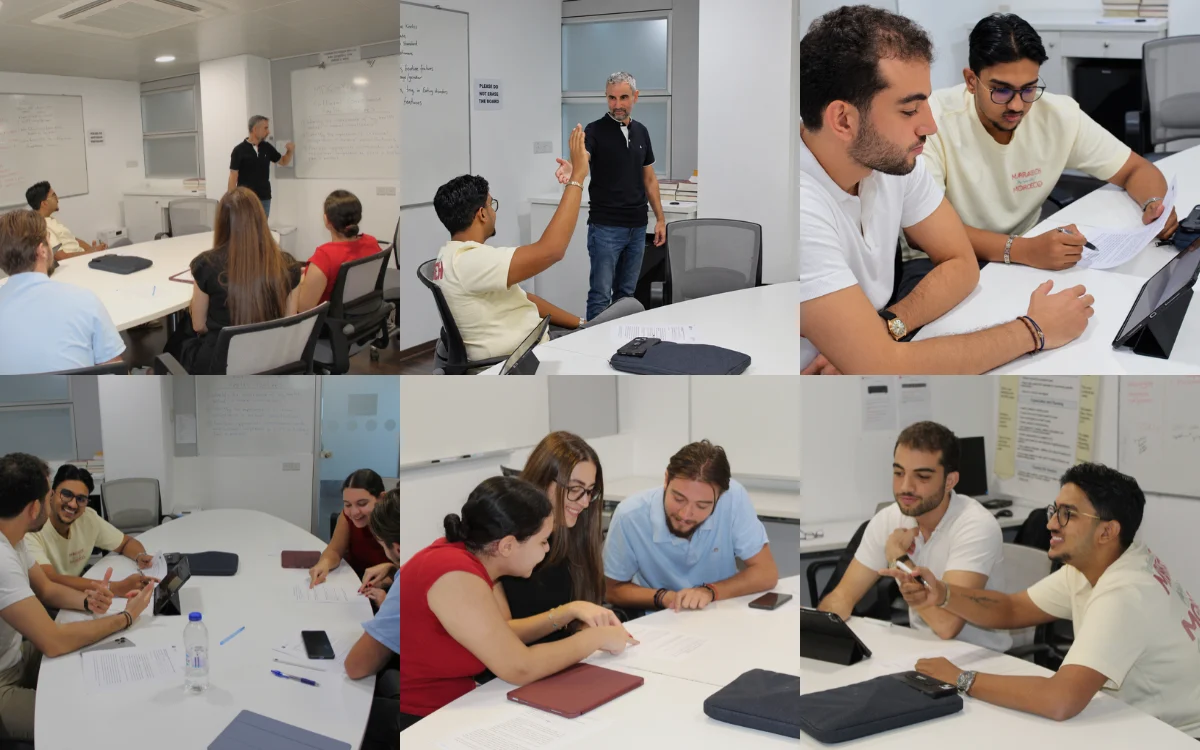
Training is one of the UDC’s primary objectives. Since its establishment, the Unit has trained 75 UNIC Health faculty and staff at the Nicosia and Athens campuses, while its work has progressively expanded beyond individual training sessions into the curriculum. In the 2025-26 academic year, diversity and cultural competence were well integrated into the Medical and Veterinary Medicine programmes, with more than 65 hours of theory and skills delivered across the undergraduate and graduate-entry MD programmes and the DVM programme.
One of UDC’s significant developments has been its growing engagement with healthcare professionals beyond the University. In 2025–26, in collaboration with the University of Nicosia, UDC delivered diversity and cultural competence training in Greek to professional nurses through the Cyprus Ministry of Health. It also organised a session on medical ethics and patient diversity as part of the Ministry’s specialisation programme for General Practice/Family Medicine residents. Building on this initiative, UDC aims to expand its training to more healthcare professionals across the country, contributing to more inclusive healthcare in Cyprus.
At the same time, the Unit’s work has gained an increasingly international and research-oriented dimension. UDC researchers have published journal articles and conference proceedings, edited special issues, and participated in research projects, covering a range of issues, including discrimination against older transgender people in healthcare, ageing and the use of technology, diversity and social inequalities, cultural competence in diabetes care, diversity competencies in healthcare education, nurses’ attitudes towards LGBTQI+ health concerns and nurses’ cultural competence and attitudes towards refugees in healthcare settings. The team has also presented its work internationally, including through a keynote presentation at the European Congress on Multiculturalism in Medicine and Health Sciences in Poland. Its growing international profile is further reflected in invitations to peer-review journal papers on diversity and cultural competence and to provide expert advice to international research programmes and organizations, including ERA4Health (Fostering Research Area for Health Research) and the Swiss National Science Foundation.
UDC is now proposing to bring ethics and cultural competence closer together, reflecting the Unit’s experience that working effectively with diversity cannot be separated from ethical medical practice. A proposal to broaden its scope is planned for consideration by the University Senate.
From its initial focus on training, UDC is therefore moving towards a wider ambition: helping shape healthcare professionals who are not only clinically competent, but also better equipped to understand difference, challenge inequality and provide more inclusive care.
Find more about UDC here.