
UNIC Athens lecture highlights urgent need for global pandemic preparedness
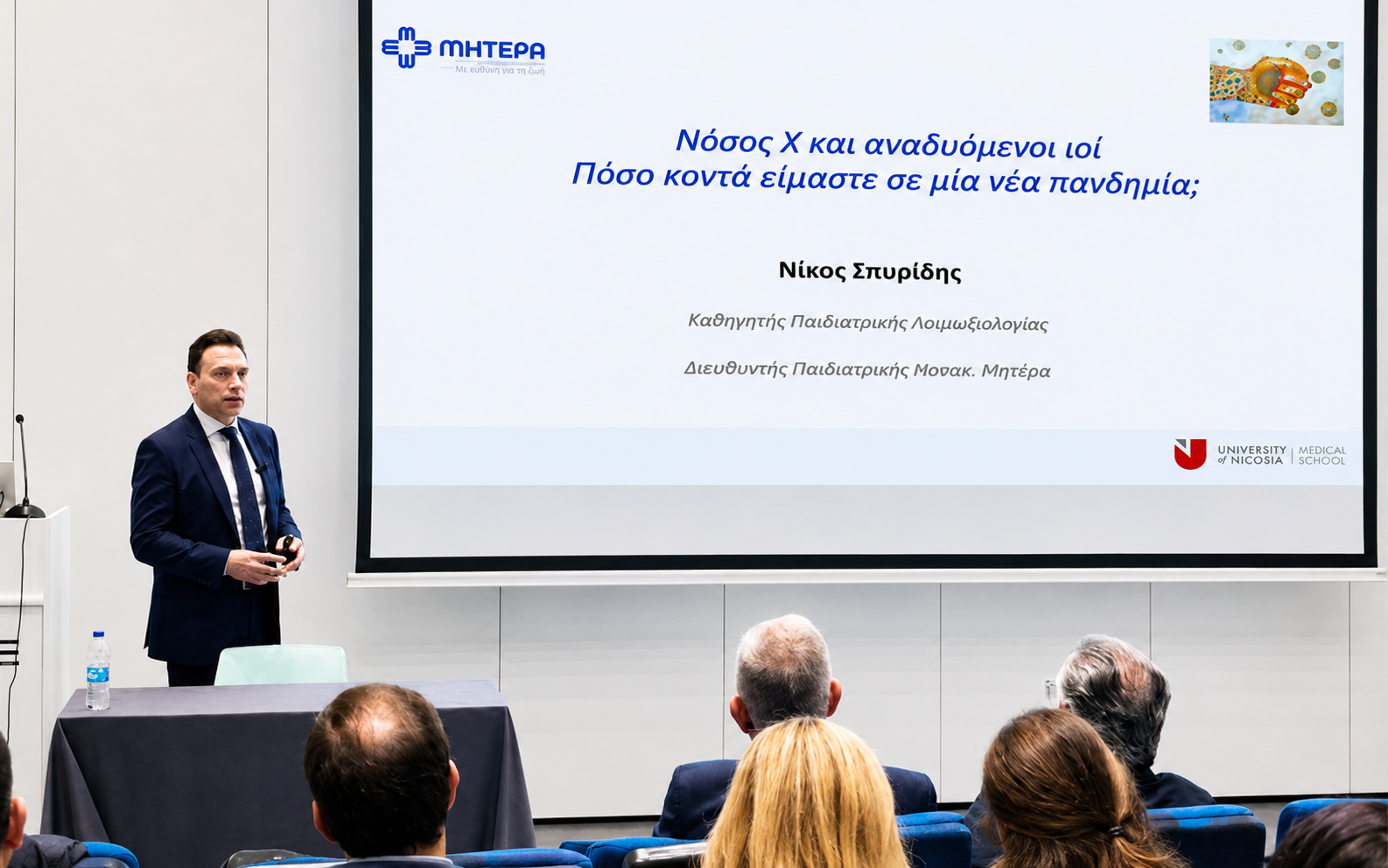
The Medical School’s Public Health lecture series at UNIC Athens, organised in collaboration with the Municipality of Elliniko-Argyroupoli, continued last Tuesday with a timely and thought-provoking lecture by Professor Nikolaos Spyridis on the growing threat of emerging infectious diseases and future pandemics.
In his presentation, titled ‘Disease X and Emerging Viruses: How Close Are We to the Next Pandemic’?, Prof. Spyridis warned that future global health crises are statistically inevitable, stressing that the world must move away from asking if another pandemic will occur and instead focus on when it will happen and how prepared health systems are to respond.
Drawing on data from the 21st century, Prof. Spyridis noted that epidemics now occur approximately every three to four years, while major pandemics emerge roughly every seven years. He emphasized that rapid and coordinated international action will be critical in mitigating the impact of future outbreaks.
A key focus of the lecture was the importance of what he described as the ‘100-day response window’ — the period within which global health authorities should be able to identify new pathogens and develop effective treatments and vaccines. According to Prof. Spyridis, accelerating scientific collaboration and preparedness mechanisms will be essential in limiting the spread of future ‘Disease X’ scenarios.
The lecture also highlighted the dangers posed by information gaps and delayed public awareness. Referring to the ongoing Ebola outbreak in the Democratic Republic of the Congo, Prof. Spyridis described the situation as a stark reminder that serious viral threats can remain underreported internationally despite being classified as public health emergencies.
Reflecting on lessons learned from the COVID-19 pandemic, he noted that delays in recognising and officially classifying outbreaks often contribute to underestimating their severity, ultimately hindering effective response efforts. Early intervention, transparent communication and institutional readiness, he argued, are essential to preventing similar shortcomings in the future.
Rather than encouraging panic, Prof. Spyridis called for stronger global preparedness systems, improved international coordination and clearer communication of health risks to the public.
The lecture forms part of the Medical School’s ongoing Public Health lecture series, which aims to strengthen dialogue between academia, healthcare professionals and the wider public while promoting informed discussion on prevention, early diagnosis and advances in modern medical practice.