Ερευνα
Virus spreading in cruiser cabin

Professor Dimitris Drikakis, Dr Ioannis Kokkinakis and Dr Konstantinos Ritos University of Nicosia
As COVID-19 initially swept across the world, its impact was notably profound within the realm of cruise ships. Remarkably, compared to various other groups, passengers aboard these vessels encountered a disproportionate infection rate, often finding themselves paradoxically marooned onboard for quarantine purposes. Consequently, considerable attention has been channelled towards addressing the imperative for enhanced ventilation systems on cruise ships.
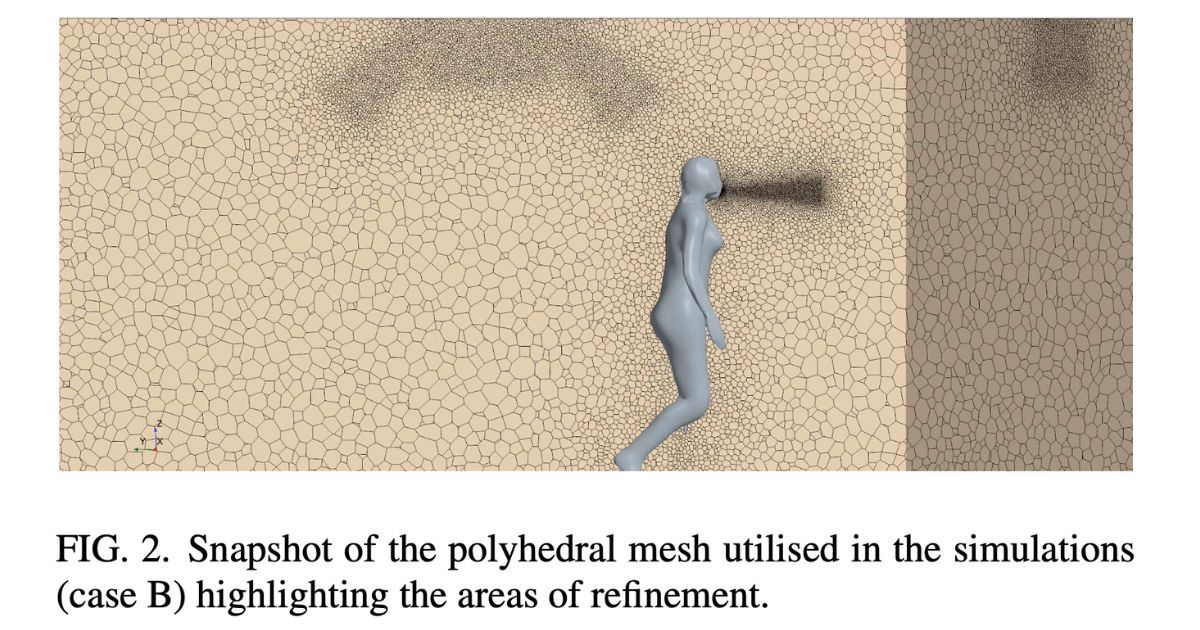
This paper concerns virus droplet simulations in a typical cruiser’s cabin. Effects of ventilation rates and positions of the coughing person were investigated. The study also emphasises the importance of including evaporation models to simulate the process accurately.
Objectives of the study
- To better understand the spread of airborne diseases in concealed spaces, such as a cruiser’s cabin
- To suggest the ideal ventilation strategy to avoid the spread of airborne diseases on cruise ships
What Does This Mean?
- The effective dispersion of fresh air within cabins and enclosed areas is a crucial measure in curbing the transmission of viruses.
- A higher ventilation rate is not always the best strategy to avoid the spread of airborne diseases, as saliva droplets can spread further at high ventilation rates.
- The authors propose using ventilation systems at medium flow rates of around 120 m3/h or three air changes per hour when a cabin is occupied. This value is also close to the recommended value of 108 m3/h from the latest standard by the American Society of Heating, Refrigerating and Air-Conditioning Engineers.
- The suggested value minimizes droplet spreading while maintaining good ventilation, comfort, and energy consumption.

Non-Technical Summary
The paper entitled ‘Virus spreading in cruiser cabin’ concerns virus droplet simulations in a typical cruiser’s cabin. The effects of ventilation rates and positions of the coughing person were investigated.
The study also emphasizes the importance of including evaporation models to simulate the process accurately. A higher ventilation rate is not always the best strategy to avoid spreading airborne diseases, as saliva droplets can spread further at high ventilation rates.
Regardless of the ventilation strategy, they evaporate faster than the room’s air renewal. One should aim for minimum droplet spreading inside the cabin and different ventilation strategies for occupied cabins.
The authors propose using ventilation systems at medium flow rates of around 120 cubic meters per hour or 3 air changes per hour when a cabin is occupied. This value is also close to the recommended value of 108 cubic meters per hour from the latest standard by the American Society of Heating, Refrigerating and Air-Conditioning Engineers. The suggested value minimises droplet spreading while maintaining good ventilation, comfort and energy consumption.
Media and Press Materials
Contact Information
For more information about this study, please contact Professor Dimitris Drikakis, UNIC Vice President for Global Partnerships and Executive Director of Research & Innovation Office, at drikakis.d@unic.ac.cy.