Περιγραφή
Το Εργαστήριο Φαρμακευτικής Τεχνολογίας στο UNIC Athens είναι ένα εργαστήριο φαρμακοτεχνικής ανάπτυξης, πιλοτικής παρασκευής και αξιολόγησης φαρμακοτεχνικών μορφών σε εργαστηριακή κλίμακα. Έχει σχεδιαστεί για να συνδέει τον φαρμακευτικό σχεδιασμό με τη μετρήσιμη απόδοση του τελικού προϊόντος.
Ο ρόλος του είναι η εκπαίδευση των φοιτητών και η υποστήριξη της εφαρμοσμένης έρευνας σε όλη τη λογική της φαρμακευτικής ανάπτυξης: από την επιλογή δραστικών ουσιών και εκδόχων, τη διαμόρφωση φαρμακοτεχνικής στρατηγικής και την παρασκευή πρωτοτύπων, έως την αξιολόγηση ποιότητας, την ερμηνεία της απόδοσης και τη σύνδεση με τις απαιτήσεις της φαρμακευτικής παραγωγής.
Το εργαστήριο κατέχει στρατηγική θέση στο πλαίσιο των UNIC Athens Labs, συνδυάζοντας φαρμακοτεχνία, βιοφαρμακευτική, επιστήμη υλικών, ανάπτυξη διεργασιών, αναλυτικό έλεγχο και σχεδιασμό φαρμακοτεχνικών μορφών με επίκεντρο τον ασθενή. Οι φοιτητές εργάζονται με πραγματικά συστήματα φαρμακοτεχνικής ανάπτυξης και εξοπλισμό σχετικό με τη φαρμακευτική παραγωγή, αποκτώντας εμπειρία στις πρακτικές αποφάσεις που καθορίζουν αν μια φαρμακευτική ιδέα μπορεί να εξελιχθεί σε σταθερό, παραγωγικά εφικτό και κλινικά χρήσιμο προϊόν.
Η εκπαιδευτική του αξία έγκειται στο ότι καθιστά τη φαρμακευτική τεχνολογία (όργανα και μεθόδους) άμεσα προσβάσιμη στους φοιτητές. Οι φοιτητές δεν μελετούν απλώς θεωρητικά τις φαρμακοτεχνικές μορφές, αλλά τις παρασκευάζουν, τις επεξεργάζονται, τις ελέγχουν, τις συγκρίνουν και ερμηνεύουν την απόδοσή τους. Το εργαστήριο υποστηρίζει εκπαίδευση σε δισκία, κάψουλες, κόνεις, κοκκία, εναιωρήματα, γαλακτώματα, γέλες, κρέμες, αλοιφές και αναδυόμενες εξατομικευμένες φαρμακοτεχνικές μορφές, συμπεριλαμβανομένων πρωτοτύπων μέσω τρισδιάστατης εκτύπωσης.
Εστίαση στην Έρευνα και την Καινοτομία
Το εργαστήριο υποστηρίζει διδασκαλία και εφαρμοσμένη καινοτομία σε στερεές, υγρές και ημιστερεές φαρμακοτεχνικές μορφές, συστήματα ελεγχόμενης και τροποποιημένης αποδέσμευσης, τεχνολογία κόνεων, μηχανική σωματιδίων, γαληνικές παρασκευές και αξιολόγηση της απόδοσης φαρμακευτικών προϊόντων.
Είναι ιδιαίτερα σημαντικό για έργα στα οποία οι αποφάσεις φαρμακοτεχνικής ανάπτυξης πρέπει να συνδέονται με μετρήσιμα χαρακτηριστικά ποιότητας, όπως η διάλυση, η αποσάθρωση, η ευθρυπτότητα, η σκληρότητα ή αντοχή σε θραύση, η ρεολογική συμπεριφορά, η περιεκτικότητα σε υγρασία, η κατανομή μεγέθους σωματιδίων, η ομοιομορφία και η αποδέσμευση της δραστικής ουσίας.
Η ενσωμάτωση δισκιοποίησης, πλήρωσης καψουλών, άλεσης, ανάμειξης, κοσκίνισης, αξιολόγησης φαινόμενης και κτυπημένης πυκνότητας, διασποράς υψηλής διάτμησης, ομογενοποίησης, υπερήχησης, ρεολογικής ανάλυσης και λυοφιλοποίησης προσφέρει στο εργαστήριο μια συνεκτική ροή ανάπτυξης σε εργαστηριακή κλίμακα. Οι φοιτητές και οι ερευνητές μπορούν να μεταβούν από τον χειρισμό πρώτων υλών στη δημιουργία πρωτότυπων φαρμακοτεχνικών μορφών και στη συνέχεια σε ελέγχους σχετικούς με την ποιότητα και την απόδοση.
Το εργαστήριο υποστηρίζει επίσης την καινοτομία στη φαρμακοτεχνική ανάπτυξη με επίκεντρο τον ασθενή, συμπεριλαμβανομένων φαρμάκων κατάλληλων για διαφορετικές ηλικιακές ομάδες, φαρμακοτεχνικών μορφών που υποστηρίζουν την προσήλωση στη θεραπεία, αναδιαμόρφωσης υφιστάμενων προϊόντων και αρχικής διερεύνησης εξατομικευμένης ή μικρής κλίμακας παραγωγής μέσω τεχνολογιών τρισδιάστατης εκτύπωσης.
Βασικές Δυνατότητες
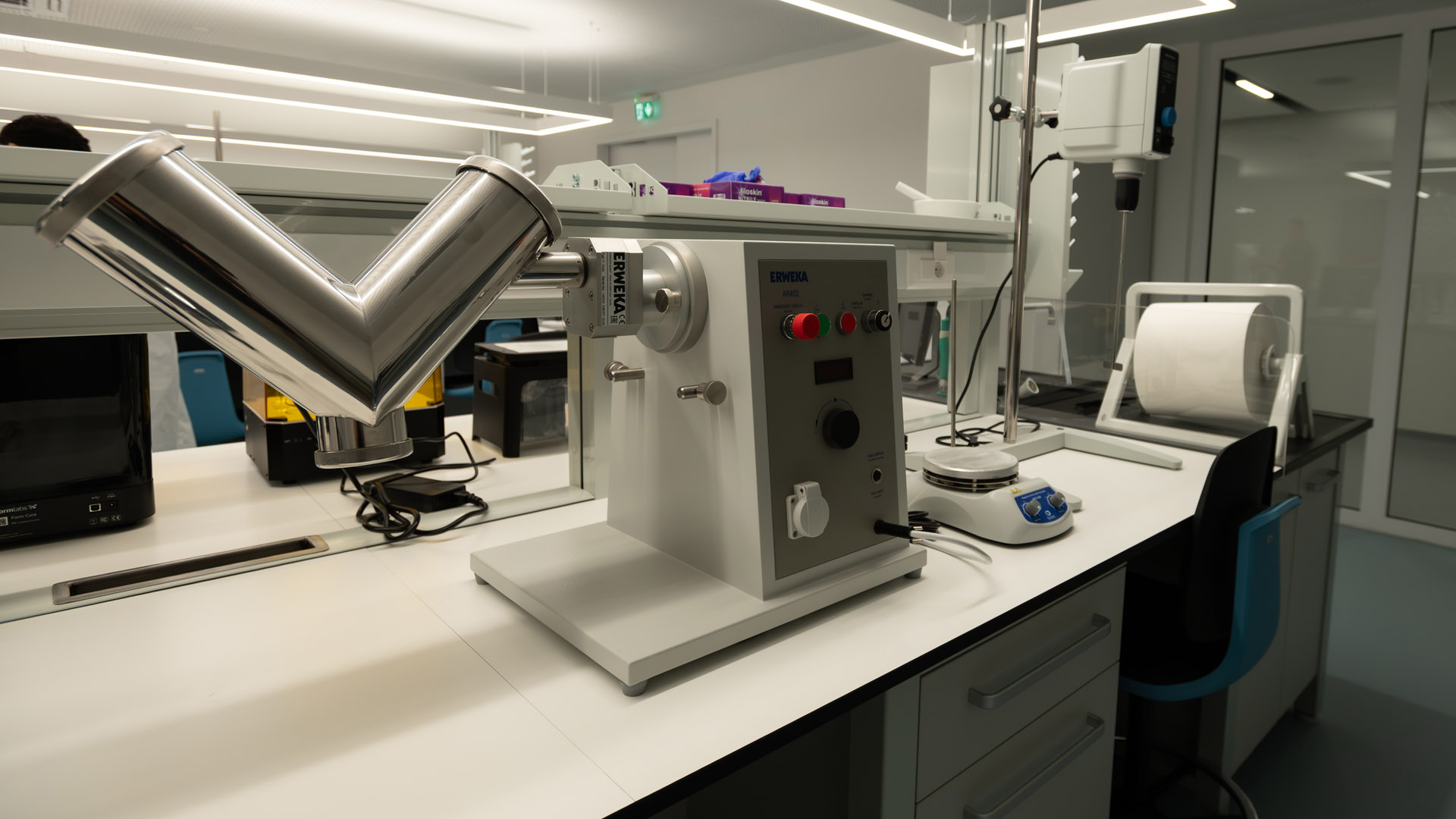
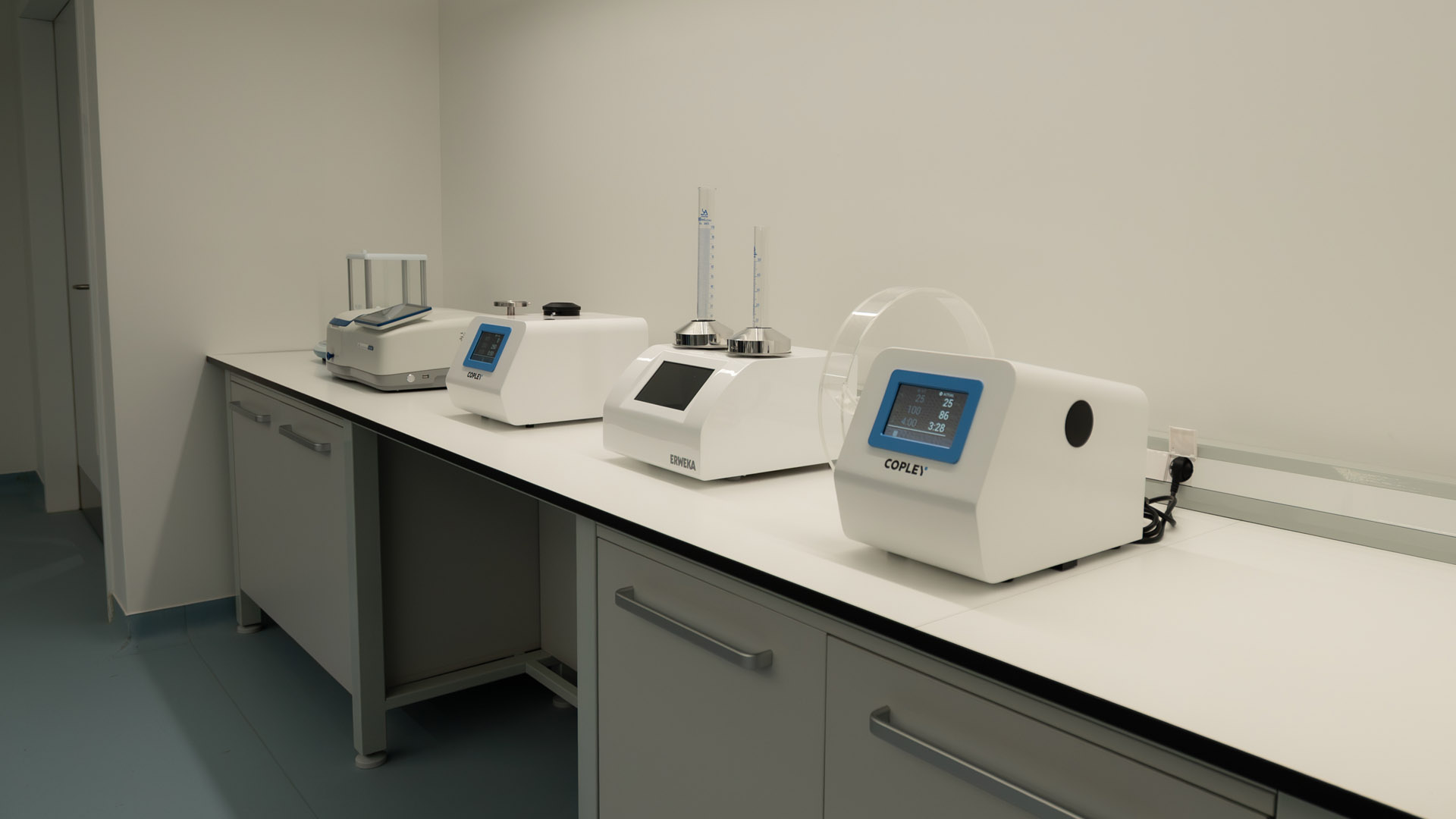
Το εργαστήριο υποστηρίζει την ανάπτυξη και αξιολόγηση δισκίων, καψουλών, κόνεων, κοκκίων, εναιωρημάτων, γαλακτωμάτων, κρεμών, γελών, αλοιφών και άλλων φαρμακευτικών μορφών σε εργαστηριακή κλίμακα. Οι δυνατότητες παρασκευής και επεξεργασίας περιλαμβάνουν δισκιοποίηση, χειροκίνητη πλήρωση καψουλών, άλεση με μίνι κωνικό μύλο, ανάμειξη με αναμίκτη μειγμάτων κόνεων , αναλυτική κοσκίνιση με σειρά κόσκινων ISO, μέτρηση κτυπημένης πυκνότητας, μηχανική ανάδευση άνωθεν, μαγνητική ανάδευση, ομογενοποίηση υψηλής διάτμησης, ομογενοποίηση με υπερήχους και ελεγχόμενη θέρμανση.
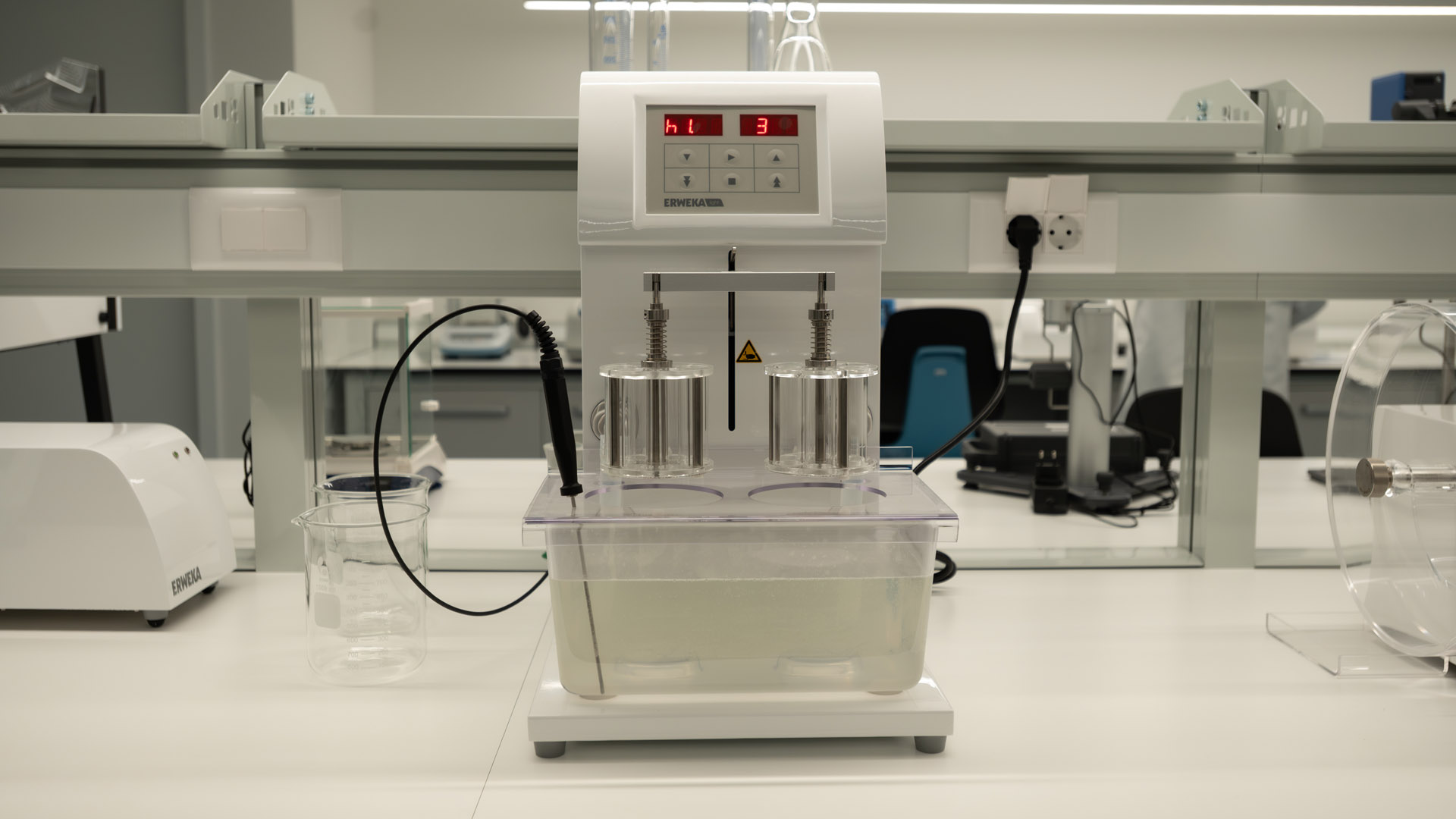
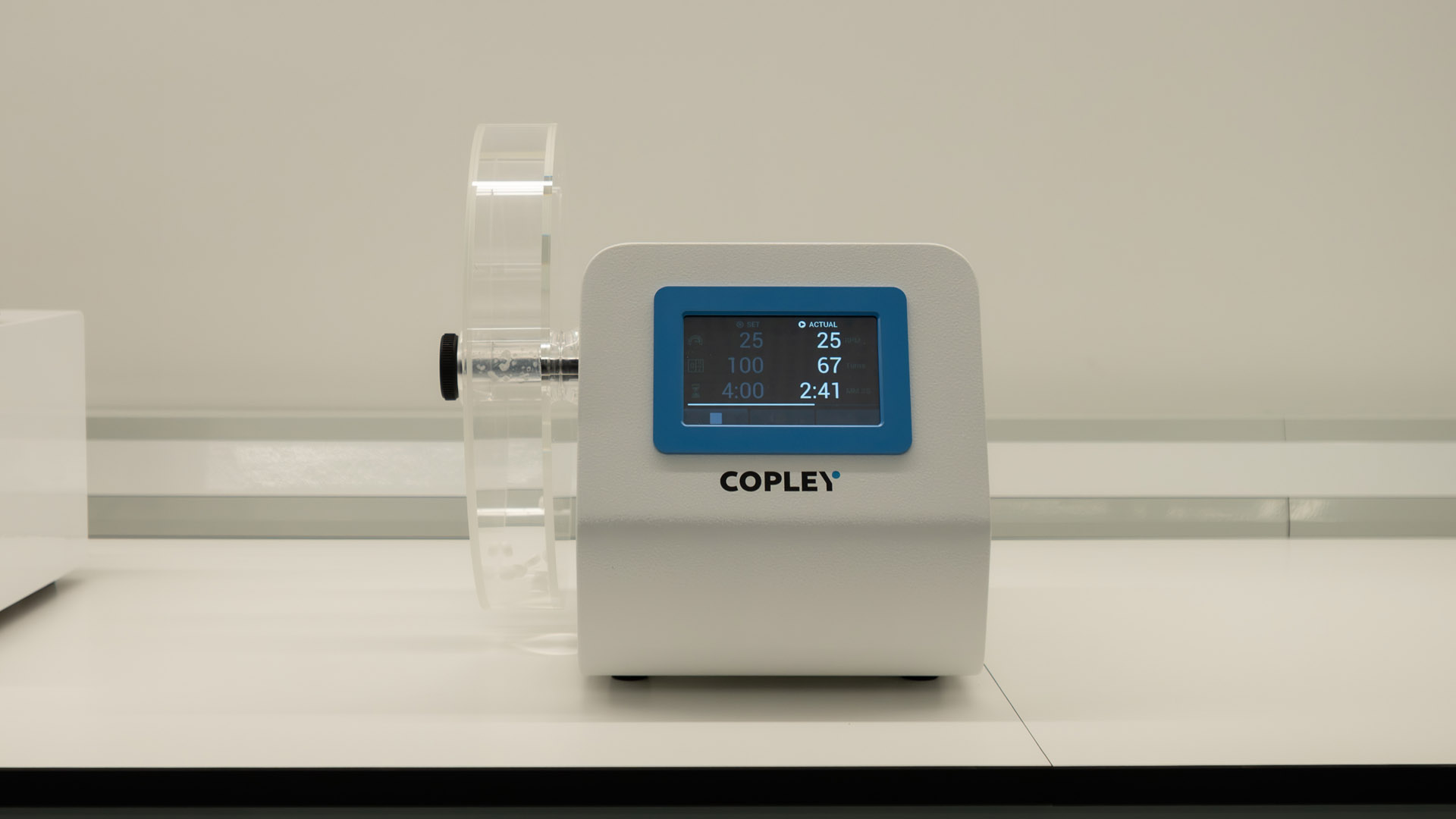
Ο έλεγχος απόδοσης των φαρμακοτεχνικών μορφών υποστηρίζεται μέσω δοκιμών διάλυσης, δοκιμών αποσάθρωσης, δοκιμών ευθρυπτότητας, ελέγχου σκληρότητας δισκίων, μέτρησης διαστάσεων με ψηφιακό παχύμετρο ή μετρητή πάχους και ανάλυσης υγρασίας με τιτλοδότηση Karl Fischer. Τα συστήματα αυτά επιτρέπουν στους φοιτητές να κατανοήσουν πώς η σύνθεση του σκευάσματος και οι παράμετροι επεξεργασίας επιδρούν στην ποιότητα του προϊόντος, στην παραγωγική του εφικτότητα και στη φαρμακοποιητική του απόδοση.
Οι δυνατότητες φυσικοχημικού και αναλυτικού χαρακτηρισμού περιλαμβάνουν φασματοφωτομετρία UV-Vis με κυψελίδες χαλαζία, φασματοσκοπία υπερύθρου μετασχηματισμού Fourier (FTIR) με δυνατότητα ATR ή/και δισκίων KBr, υποστήριξη με μήτρα KBr και υδραυλική πρέσα όπου απαιτείται, ρεομετρία / ιξωδομετρία, παρακολούθηση θερμοκρασίας και υγρασίας, αναλυτικές ροές με Υγρή Χρωματογραφία Υψηλής Επίδοσης (HPLC), αναλυτικούς ζυγούς και ζυγούς ακριβείας, καθώς και φυγοκέντρηση με κατάλληλους ρότορες για μικρούς και μεγαλύτερους όγκους δείγματος.
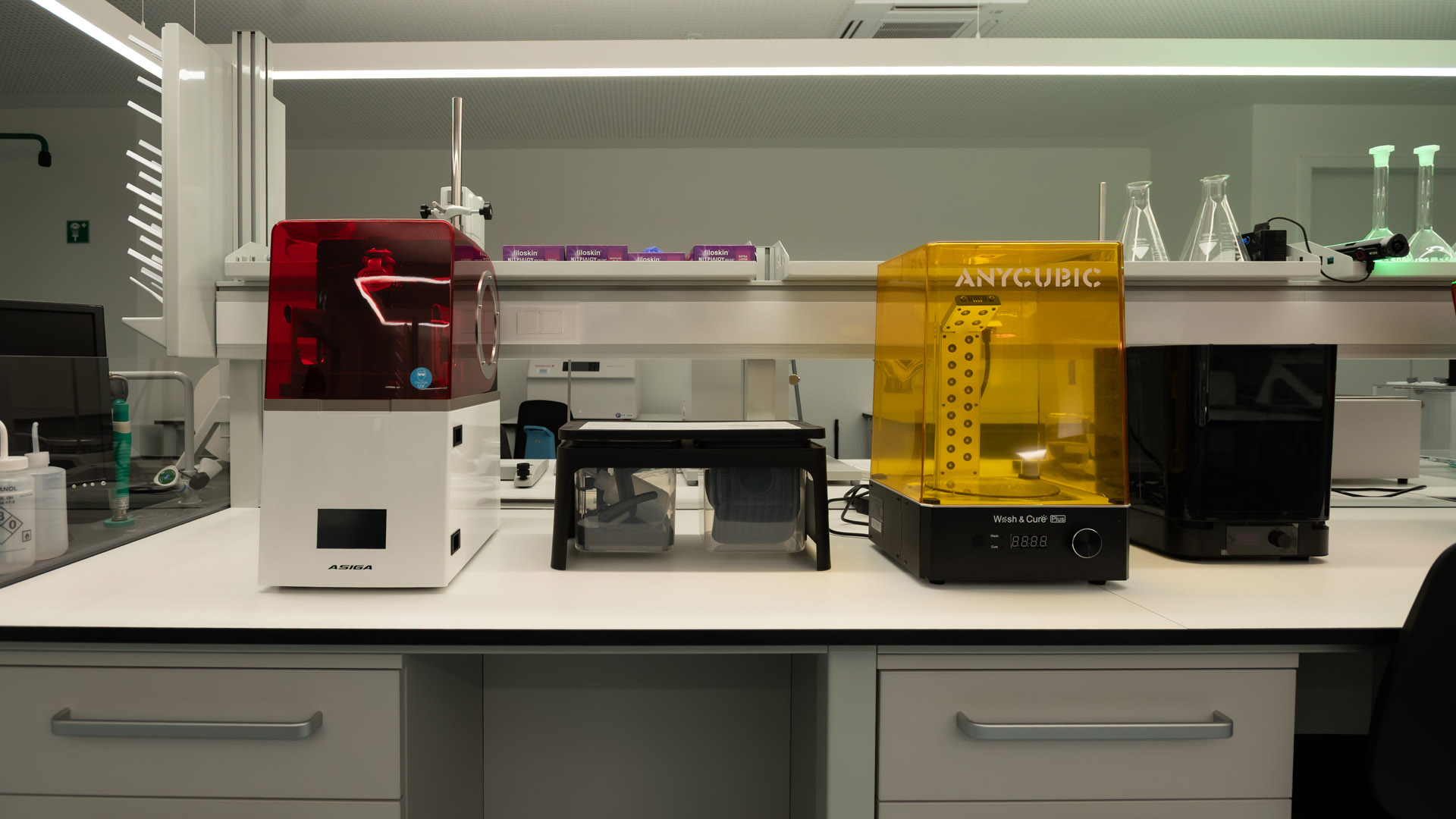
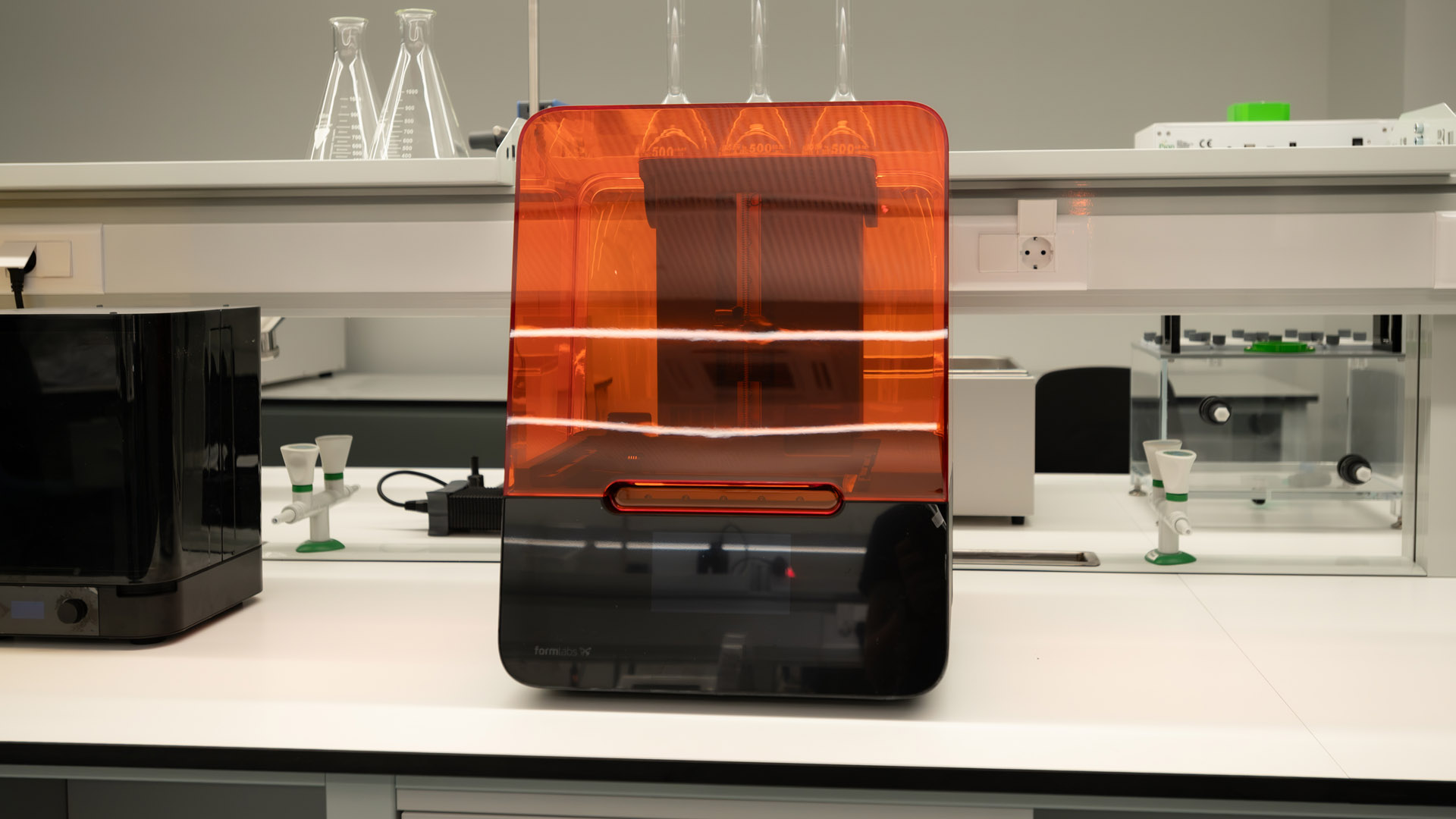
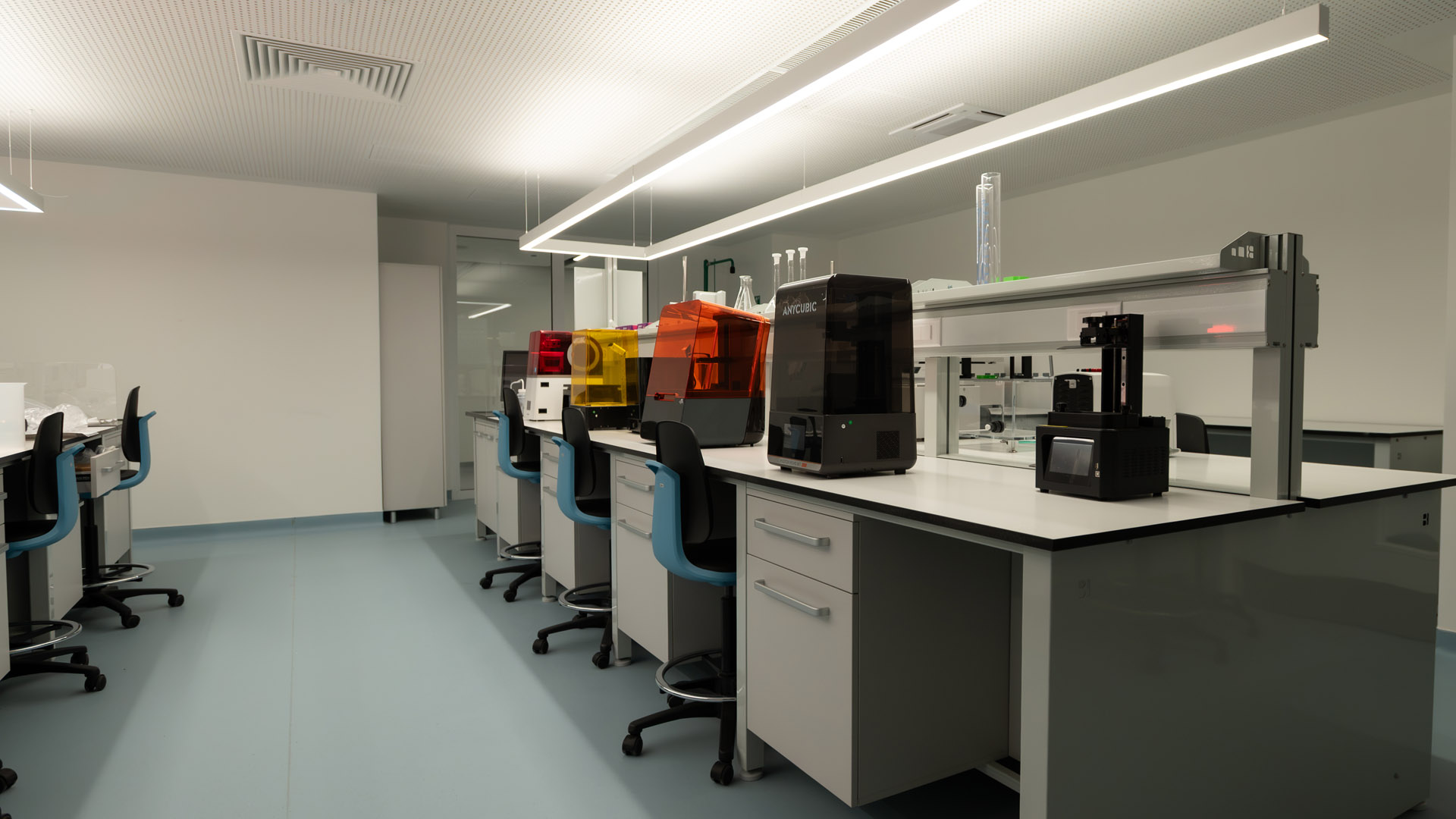
Το εργαστήριο περιλαμβάνει επίσης υποστηρικτική υποδομή, όπως λυοφιλοποιητή με αντλία, αυτόκαυστο, υδατόλουτρο, μαγνητικούς αναδευτήρες, θερμαινόμενους αναδευτήρες και συναφή εξοπλισμό φαρμακοτεχνικής υποστήριξης. Οι τρισδιάστατοι εκτυπωτές επεκτείνουν τις δυνατότητες του εργαστηρίου στον σχεδιασμό πρωτοτύπων, στην ανάπτυξη εξατομικευμένων φαρμακοτεχνικών μορφών και στη διδασκαλία αναδυόμενων τεχνολογιών φαρμακευτικής παραγωγής.
Συνολικά, οι δυνατότητες αυτές επιτρέπουν στους φοιτητές και στις ερευνητικές ομάδες να μεταβαίνουν από τη φαρμακοτεχνική ιδέα στη μετρήσιμη φαρμακευτική απόδοση. Το εργαστήριο έχει σχεδιαστεί ώστε οι αποφάσεις ανάπτυξης να βασίζονται σε δεδομένα, να είναι αναπαραγώγιμες και να ευθυγραμμίζονται με την πραγματικότητα της φαρμακευτικής ανάπτυξης, της διασφάλισης ποιότητας, των ρυθμιστικών απαιτήσεων και της χρήσης από τον ασθενή.
Ευκαιρίες Συνεργασίας
Το Εργαστήριο Φαρμακευτικής Τεχνολογίας είναι κατάλληλα τοποθετημένο για συνεργασίες με φαρμακευτικές εταιρείες, εταιρείες βιοτεχνολογίας, φορείς ανάπτυξης ιατροτεχνολογικών προϊόντων, φαρμακεία γαληνικών παρασκευών, νεοφυείς επιχειρήσεις φαρμακοτεχνικής ανάπτυξης, προμηθευτές εκδόχων, συνεργάτες ψηφιακής παραγωγής και ακαδημαϊκές ερευνητικές ομάδες.
Μπορεί να υποστηρίξει αρχική αξιολόγηση φαρμακοτεχνικής εφικτότητας, ανάπτυξη πρωτοτύπων, συγκριτική αξιολόγηση φαρμακοτεχνικών μορφών, μελέτες αναδιαμόρφωσης προϊόντων, έργα συνεργασίας φοιτητών και βιομηχανίας, καθώς και επιλεγμένες ερευνητικές υπηρεσίες επί συμβάσει, όπου απαιτείται φαρμακευτική ανάπτυξη σε εργαστηριακή κλίμακα.
Η ισχυρότερη συνεργατική του αξία βρίσκεται στη σύνδεση της επιστημονικής ιδέας με την απόδοση του προϊόντος. Το εργαστήριο μπορεί να βοηθήσει συνεργάτες να διερευνήσουν αν μια υποψήφια ένωση, μια στρατηγική χορήγησης, ένα σύστημα εκδόχων, μια παραγωγική προσέγγιση ή μια φαρμακοτεχνική μορφή με επίκεντρο τον ασθενή μπορεί να αναπτυχθεί σε αξιόπιστη φαρμακευτική μορφή με μετρήσιμα ποιοτικά χαρακτηριστικά.
Gallery