Lab Overview
The Biology, Microbiology, Biochemistry and Pharmacology Teaching Laboratory is a multidisciplinary undergraduate training environment designed to give students early, structured exposure to experimental life sciences and applied biomedical methods. Its mission is to build scientific competence at the bench: observation, measurement, interpretation, safety, reproducibility, and the disciplined handling of biological and chemical systems.
The laboratory supports core teaching across biology, microbiology, biochemistry, and pharmacology. It provides students with the practical foundation required to understand living systems at cellular, molecular, microbial, biochemical, and pharmacodynamic levels. Rather than functioning as a general teaching room, the laboratory is organised as a capability platform where students learn how experimental evidence is generated, how biological responses are measured, and how laboratory data are translated into scientific reasoning.
A distinctive element of the laboratory is its role in pharmacology education. Through organ simulation and pharmacological response instruments, students can explore fundamental principles such as receptor activation, agonism, antagonism, concentration–response relationships, tissue responsiveness, and drug effect interpretation. These systems allow students to connect theoretical pharmacology with observable biological response, strengthening their understanding of how medicines act on physiological systems.
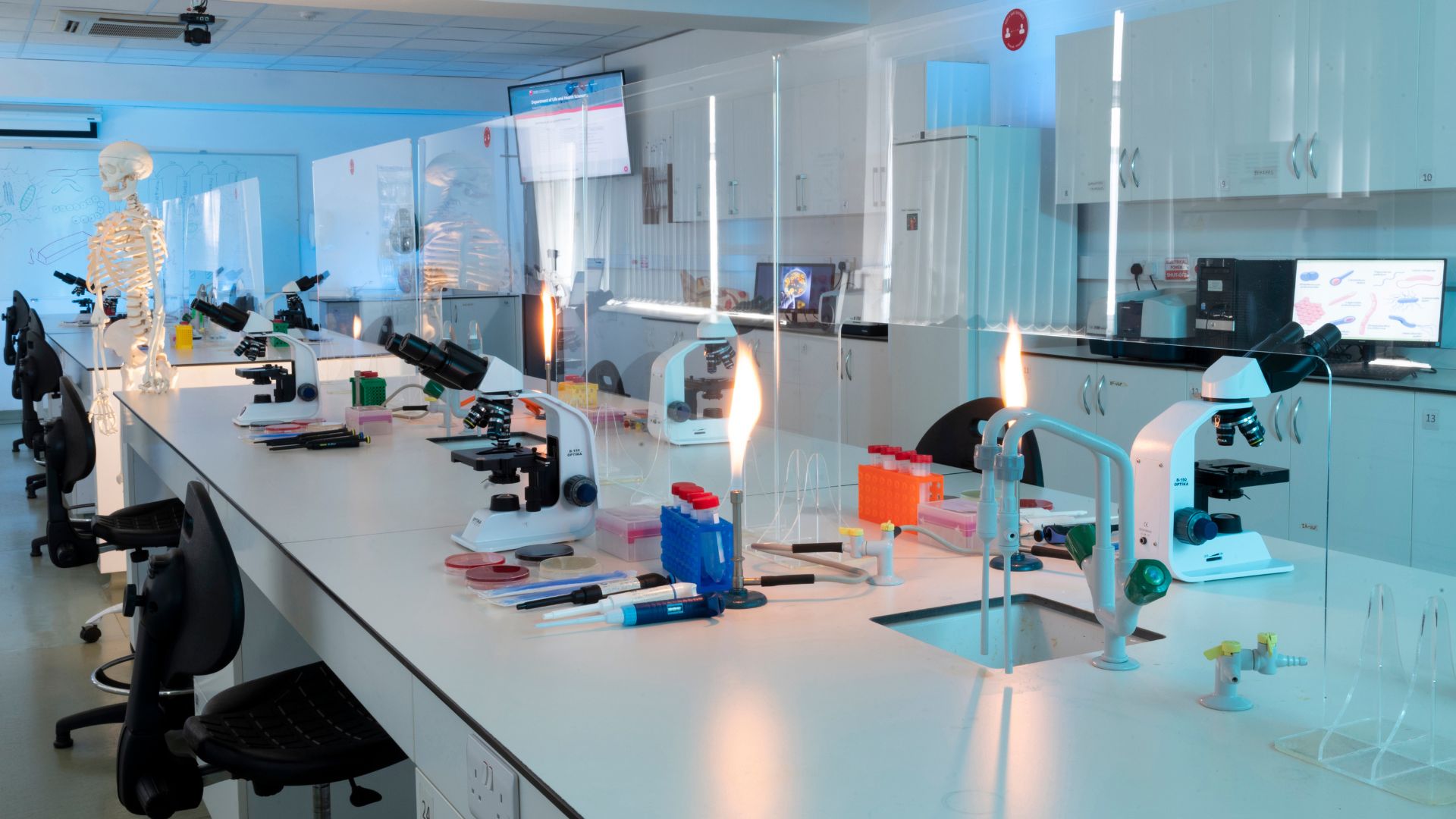
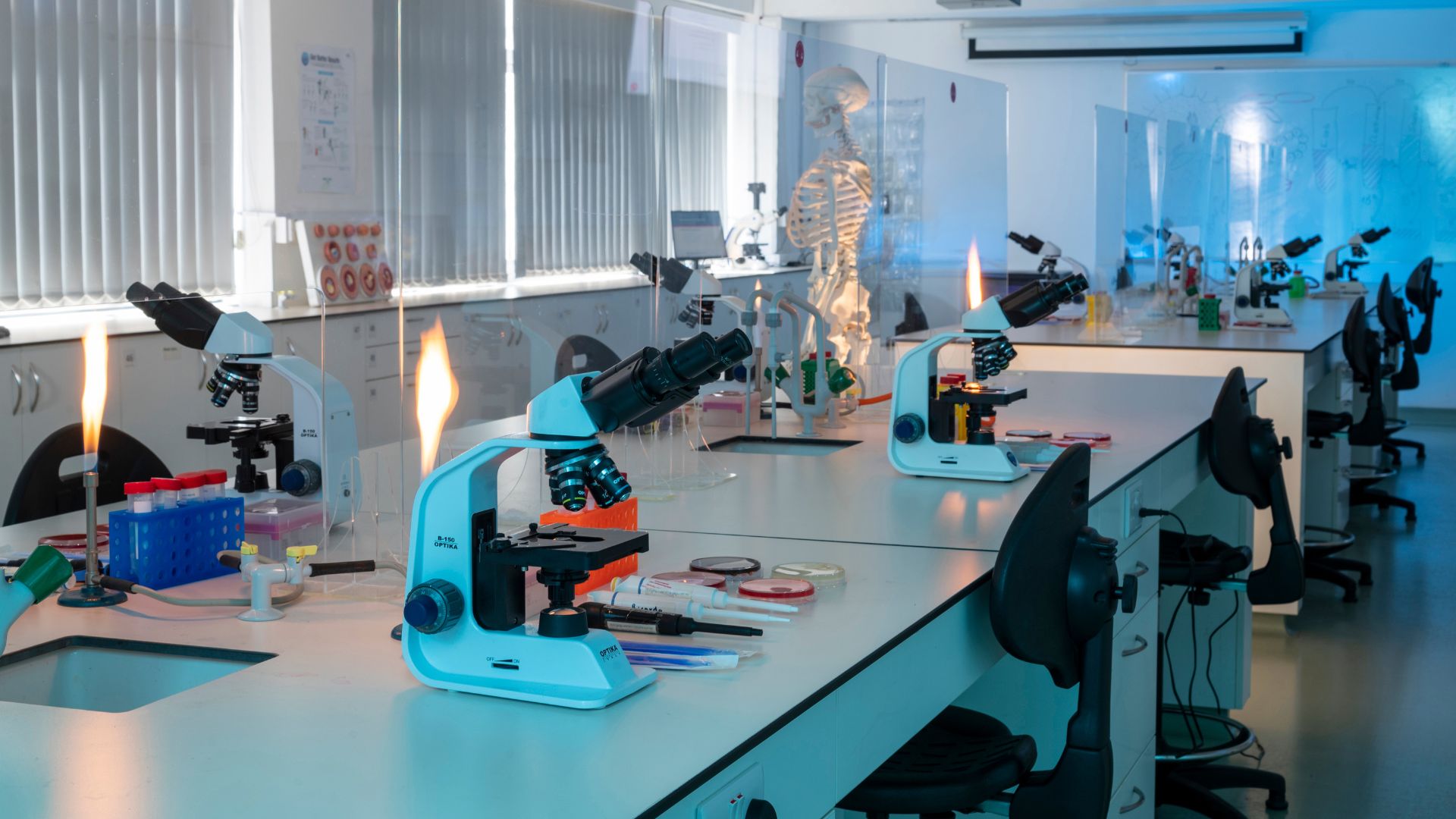
The facility is equipped to support safe and effective undergraduate learning. Each student station is supplied with running water, gas, and electricity, allowing small-group experimental work under controlled teaching conditions. Integrated safety infrastructure, including fume cupboards, gas leakage detectors, eyewash stations, safety shower, and fire detection systems, supports laboratory practice aligned with professional expectations.
Research & Innovation Focus
The laboratory enables teaching innovation at the interface of biomedical science and pharmaceutical education. Students are trained to move from biological concept to experimental method, from raw observation to quantitative output, and from measured response to interpretation. This is particularly important in pharmacology, where the meaning of a drug effect depends on experimental context, tissue response, dose, receptor interaction, and analytical judgement.
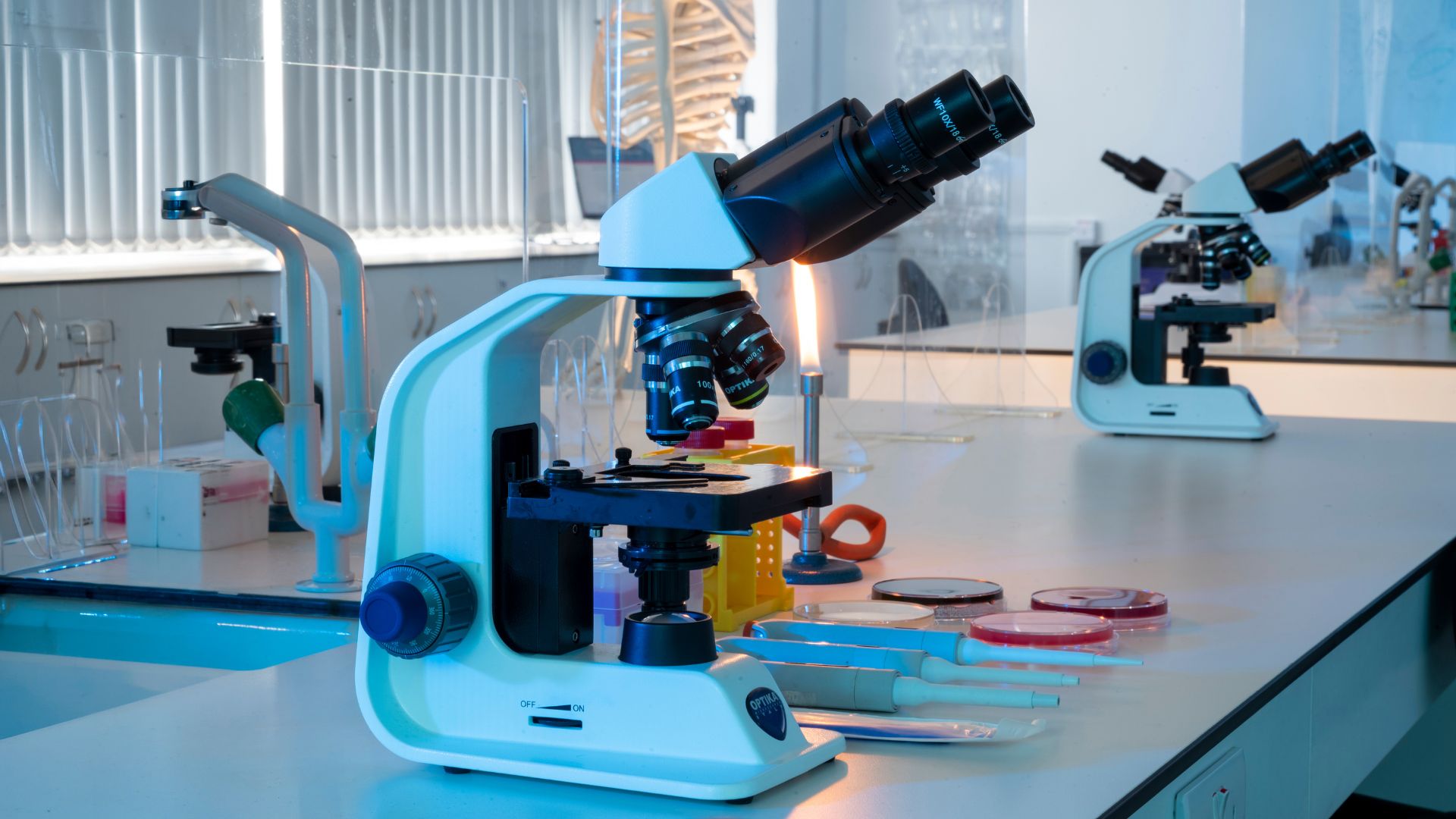
In biology and microbiology, the laboratory supports practical learning in microscopy, microbial handling principles, staining, observation, growth-related experiments, and the interpretation of cellular and microbial structures. In biochemistry, students gain experience in spectrophotometric measurement, protein and nucleic-acid-related workflows, gel imaging, and the analysis of biomolecular processes. In pharmacology, organ simulation instruments provide a controlled environment for demonstrating drug action, pharmacodynamic variability, dose–response behaviour, and the experimental basis of therapeutic and toxic effects.
The laboratory therefore supports a teaching model in which students do not simply follow protocols, but learn how experimental systems generate evidence. It develops habits that are essential for future professionals in pharmacy, biomedical sciences, health sciences, clinical research, biotechnology, and pharmaceutical development.
Core Capabilities
The laboratory enables:
- Undergraduate practical training in biology, microbiology, biochemistry, and pharmacology.
- Quantitative biomolecular analysis using fixed and portable UV-visible spectrophotometers.
- Microscopy-based teaching using a Zeiss Primo Star microscope connected to a projector, supporting real-time demonstration, group interpretation, and guided observation.
- Gel documentation and image analysis using a G Box system for fluorescence and visible applications.
- Pharmacology teaching through organ simulation instruments and response-based systems that demonstrate receptor-mediated effects, agonist and antagonist behaviour, concentration–response curves, and pharmacodynamic interpretation.
- Demonstration of drug action on simulated organ or tissue preparations, allowing students to connect pharmacological theory with measurable biological outcomes.
- Training in experimental design, sample handling, measurement accuracy, data recording, and interpretation of biological and biochemical results.
- Safe use of laboratory gases, reagents, and biological teaching materials through fume cupboards, gas leakage detection, eyewash facilities, safety shower, and fire detection systems.
- Student-centred practical workstations equipped with water, gas, and electricity to support structured laboratory teaching.
The laboratory provides an essential scientific foundation for health and life sciences education at UNIC Athens. It trains students to think experimentally, interpret evidence critically, and understand the biological mechanisms that underpin modern biomedical and pharmaceutical practice.
Gallery