23 September 2026
When AI Sounds Like Me—but Students Still Want Me
What multilingual avatars taught me about authenticity, human presence and why “humanware” may be the hardest part of AI adoption.
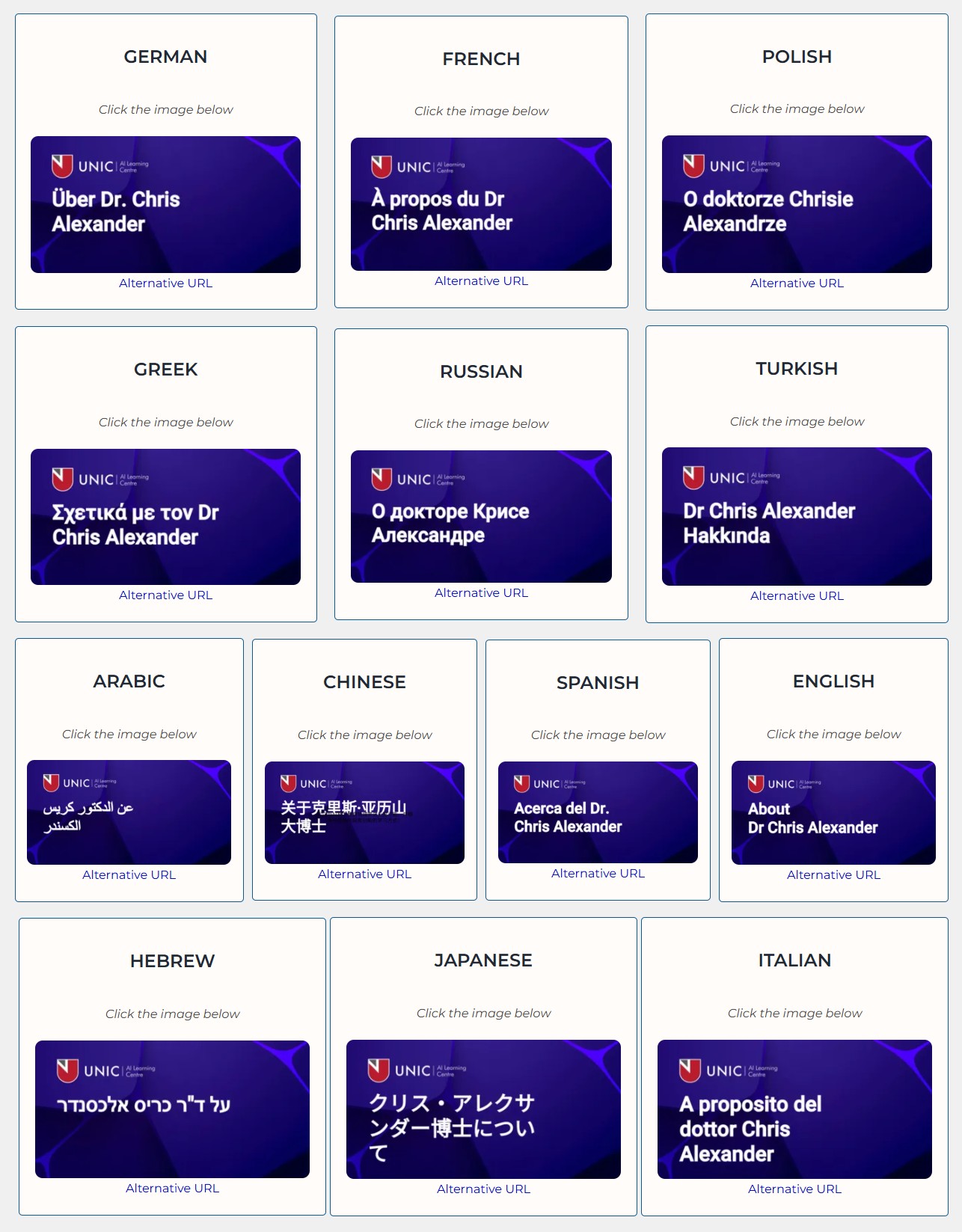
A few years ago, I cloned my voice for two minutes—and somehow ended up speaking 13 languages! 😁
Using HeyGen, we created showcase videos in 13 languages—from Chinese and Arabic to Greek, Japanese and Hebrew—with a rough combined estimate of 4.9 billion speakers.
An LLM drafted the translations. Expert native speakers corrected them, then reviewed the videos for pronunciation and fluency.
Feedback was positive. Yet human review still mattered: small changes could separate understandable from genuinely natural. Newer models can still have translation issues.
Then the humanware had its say.
Recently, when some lecturers—including me—used a few avatar videos as supporting material, some students responded cautiously, and some comments were negative:
“We prefer listening to the lecturer’s natural speech.”
“It’s too fast…”
These were informal observations from a small teaching use case—not findings from a formal study.
Of course, implementing innovation requires us to reflect on resistance and then innovate again. It is cyclical: introduce, observe, listen, adapt and repeat.
Human communication blends words, tone, timing, facial expression and physical presence. The technology may not yet reproduce enough of that mixture.
So was something deeper going on here?
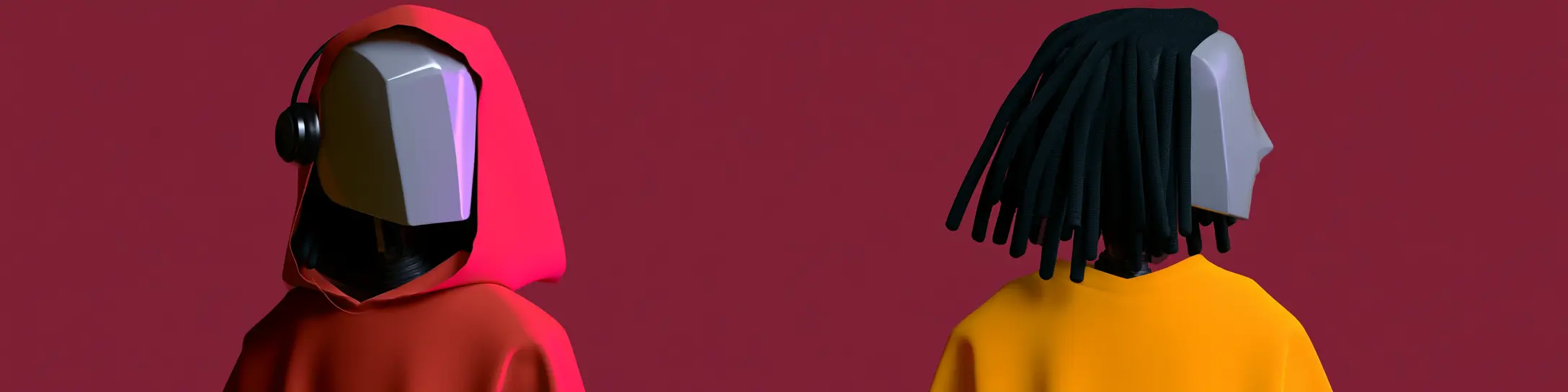
Did the students simply want the real McCoy: the actual me, with my natural voice, pauses and imperfections, rather than Synthetic Me—my digital stand-in?
Was this merely a technical limitation—or a broader preference for authentic human presence?
I’m tempted to call it “carbon-copy recoil”: the moment the carbon-based human steps back from a silicon-based replica.
Humanware is idiosyncratic, to say the least. Yet we often concentrate on software and hardware, assuming we have the humanware covered.
That may be a dangerous assumption.
Think… the metaverse, or an automated system that works perfectly—yet still makes us plead, “Can I speak to a human?”
Why people reject some technologies is, for me, far more interesting than why they accept them.
Could, for instance, an AI avatar eventually become more like a human teacher, assessing what your roughly 86-billion-neuron, battle-tested brain might be thinking and feeling, then trying to adapt uniquely to you?
I doubt it. Even if it came close, would students want it?
On screen, human–machine tension ends in The Uprising. In my course, it arrived as a comment: “We prefer the real lecturer.” 😀
I’m not anti-AI; I love a lot of what it can do. But if you assume humanware is the easy part of an AI project, be warned: it may be the hardest part of all. ⚠️