4 November 2025
Engageli: The Power of the Poll: Igniting Active Learning in Your Virtual Classroom
The Power of the Poll: Igniting Active Learning in Your Virtual Classroom (by Anita Chawla, VP of Global Partner Success-Engageli)

Anita Chawla
VP of Global Partner Success: Engageli

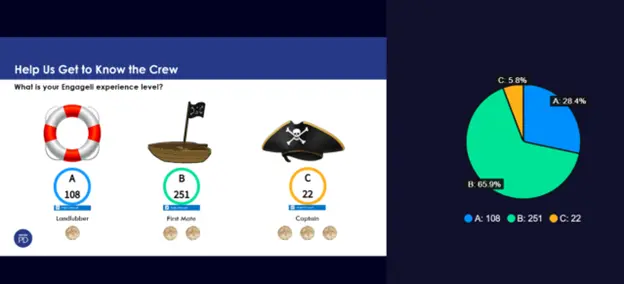
Pedagogical uses for polls include gauging learner understanding, igniting subsequent discussions, and identifying areas of misconception. These in-the-moment poll strategies promote active engagement and can be continually infused at various points in the class. Learners can respond both in live sessions and in playback rooms, and instructors will have insights into all responses, regardless of learning modality
1. Check for Understanding
Use polls throughout a class to perform quick, formative assessments. This provides instructors with real-time feedback on how well—or not so well—learners are grasping new concepts, so they can adjust their instruction or teaching style accordingly.
"Example: After introducing a new concept, ask learners a multiple-choice question to check for comprehension. If a large number of learners answer incorrectly, that will indicate a need to re-explain the concept in a different way or move into a group discussion using tables for concept reinforcement".
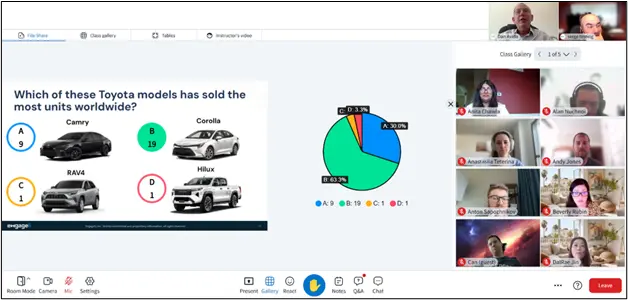
Engageli Platform Polls
2. Spark Class Discussion and Peer Instruction
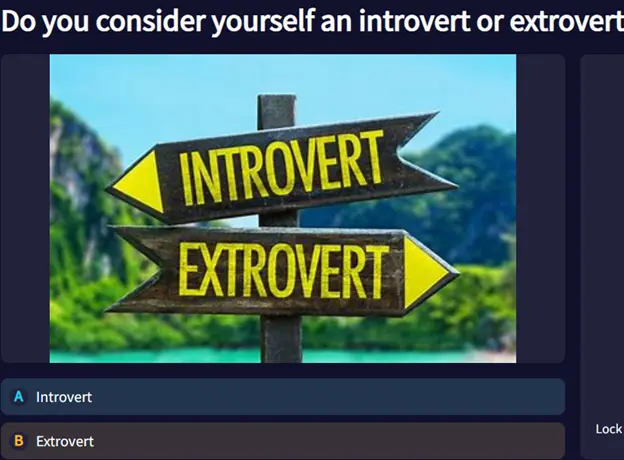
A poll can be an effective way to begin a conversation using the summary of responses. The anonymity encourages all learners to participate, providing a safe way to share opinions on sensitive or controversial topics.
"Example: Use a "Think-Pair-Share" activity with a poll. First, pose a question and have all learners answer it via the poll. Then, pair learners at each table according to the diversity of their poll responses and have them discuss their differing viewpoints with one another. Finally, run the poll again to see if the discussion changed the direction of the responses".

3. Identify Common Misconceptions
By designing polls around common misconceptions, instructors can uncover and address misunderstandings early on, helping to build a firm foundation.
"Example: In a business class, use a poll to ask students to predict the outcome of an economic event. The results will highlight any common errors in micro- or macroeconomics, which can then be addressed with a class discussion before revealing the actual outcome".
4. Initiate an Agile, Learner-Driven Class
Instead of sticking to a rigid lesson plan, use a poll at the beginning of a class to see what learners already know or what they are most interested in reviewing. The results can inform the focus on topics and help maximize class time effectiveness.
"Example: Before a review session, ask learners to vote on which of three topics they would like to spend more time discussing. The vote will indicate the class's biggest areas of confusion and allow class time to be dedicated to the most pressing needs".
5. Collect Learners’ Feedback
Use polls as mini-surveys—asking about the difficulty of an assignment or getting a general temperature check on the class's mood.
"Example: Ask learners to identify the difficult points from the class. The feedback can help instructors plan the next session to reinforce unclear concepts. If many learners find the assignment difficult, consider scheduling an additional office hour to provide live support and address their challenges".
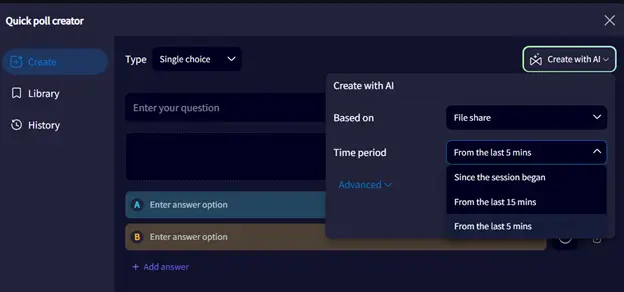
"Fun Fact: If you did not create a poll ahead of time, the AI assistant can generate one in seconds based on class material or room discussion. There will be an opportunity to review and edit the AI-created poll before sharing it with learners".